Calum Price
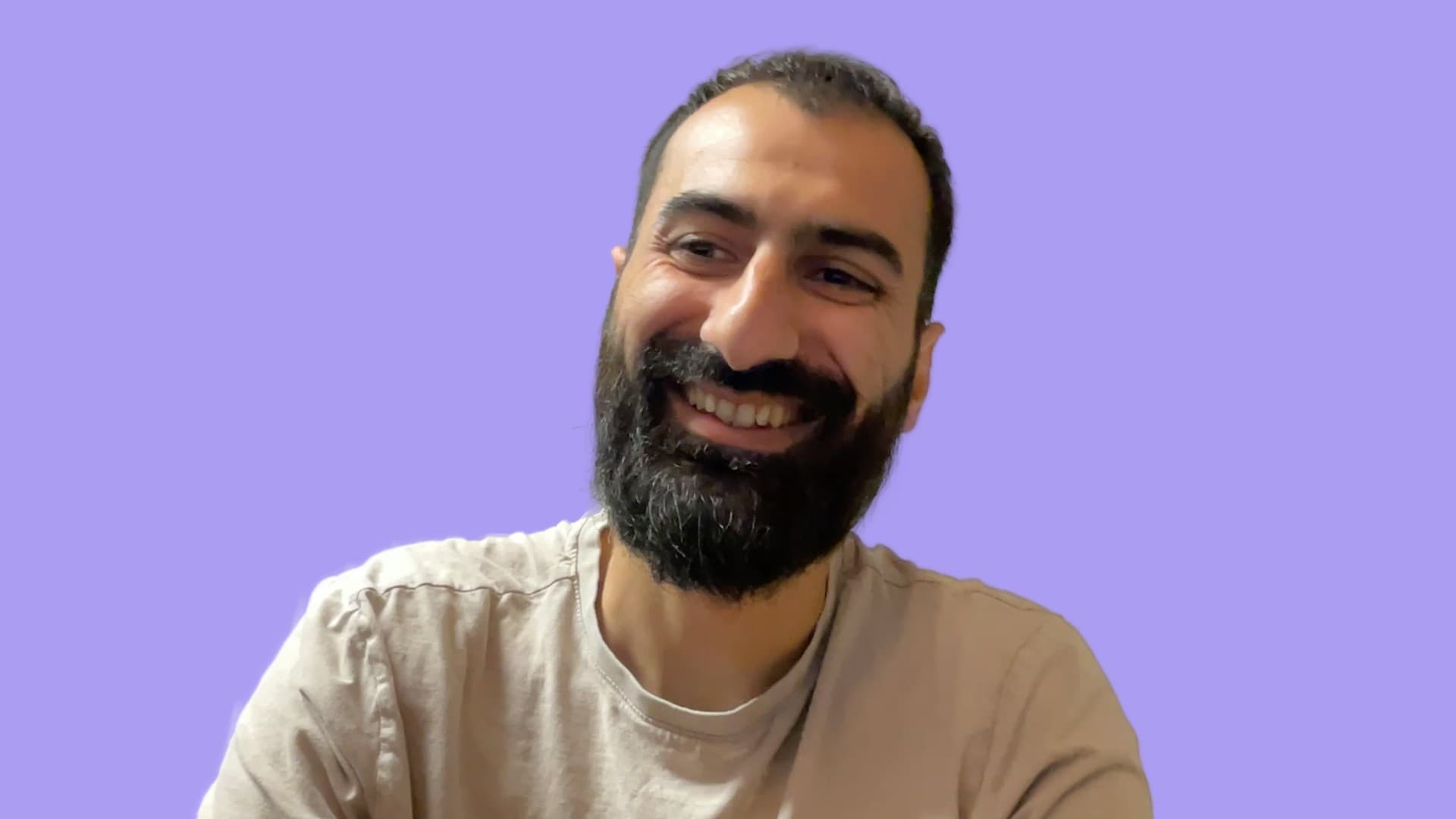
Meet Calum, a creative strategist at a sonic branding agency who loves shaping how brands sound and working with great teams.
So my name's Calum, I'm based in Leicester but work in London. So I'm a creative strategist at Massive Music, the world's leading sonic branding agency.
So I guess really like in a sort of like a top line would be translating a brand's identity into sound and helping them show up more strategically across their touch points.
So helping them navigate, you know, anything from being more consistent and cohesive to actually defining what do they sound like.
I mean, it honestly, it really varies like day to day. And it's probably one of the things that I love the most about it is that, you know, no two days are the same.
So that can be anything from client meetings and presentations, so presenting ideas to clients, running sessions with them to help understand what is the sound of their brands and what kind of... anything from genre, instrumentation, vibe of music, particular artists to how could they use sound, voice and music more strategically and in a sort of smarter way.
But yes, so it's anything from sort of speaking to clients, be that presentations, meetings, to working with teams to form ideas, think creatively about how brands can differentiate themselves in the market.
I mean, there's so much. Like, I genuinely feel like insanely lucky to be able to do this job. Like, I honestly feel like I'm kind of living, you know, my dream.
I worked very hard to sort of get to where I am and to actually sort of be in a position where I'm in a sort of fully creative role is kind of insane to me.
So I think, you know, just the... sort of the best thing for me is to just doing it. You know, like I said, I feel very, very privileged to be in that position.
I think the honest answer, if I'm being totally honest with myself, probably to, it's to sort of overcome the kind of, the sense of like imposter syndrome that you can feel in like creative roles, I think.
It's very easy, I think, to internalise like the feelings that like, you know, you don't deserve a sort of position or something like that.
So yeah, I mean, I think honestly, that would probably be the sort of the biggest, the biggest challenges to like, you know, just sort of back yourself.
So my background is in production and then before that I was playing in bands and sort of, you know, being on tour and played Reading and Leeds and yeah, was sort of making and still do make techno and DJ.
So I've always had a background in music that sort of then continued into production. I was always around the music industry and realised that I wanted to, I needed to forge a career and actually make that my nine to five, you know.
And so I moved to London, I did a master's in audio production. And whilst I was studying, my best mate worked at an advertising agency and sort of introduced me to this area of the music industry called Sync.
And basically he just called me up and said, you know, I'm working with this guy at Universal Publishing, there's this area called Sync, I think you'd be great at it.
So I had to learn more about the area and was like, okay, wow, this is like, this is kind of exactly what I want to do.
This is, you know, it's taking a sort of brand's or a campaign's narrative and message and enhancing that and really kind of forming that with music and later sound.
So I spent like a number of years just networking, applying for jobs, lots of rejections, you know, going through the classic cliche thing, you know, thinking that it would never happen and this kind of stuff, banging on various doors.
And then I finally got a job at a part of Sony Publishing called KPM, which is a music library.
So I grew up in an area of Leicester called Blaby and I went to school at Countesthorpe College, which was like a bit of a social experiment back in the day.
It was quite like a liberal, well, it was a very liberal school. We called teachers by their first name, there was no uniform. And I think being in that environment, you know, calling teachers by their first name, it very clear that they were the teacher and they were leading the class, but there, you didn't feel the hierarchy so much.
And I think that what that did give me, and I have spoken to friends about this, is that like, it almost gave us the, like, the ability to be able to have the confidence to speak to anyone at any level and not feel intimidated and feel that you can talk to them on a personal level.
I think there's also a lot of kind of social skills that I picked up when I was at school.
I think the reality is that the industries that we work in, which really is a part of the music industry, is a relationships game. And there's a lot of people that will probably agree with me and that say that, you know, it's built on relationships.
And I think the education that I had, you know, sort of allowed me to, yeah, just help sort of like, you know, build that and sort of understand how to, you know, build relationships in like a natural way that doesn't feel forced.
You know, there are a few, I think. And there were definitely moments in, you know, this job....
But I think I can't believe that this is, I'm getting paid to do this, you know. I think like, you know, standing, of like defining moments would be, know, firstly, the sort of the foot in the door, you know, getting that first role at KPM. And I will be forever thankful for...
I got to do McCartney who gave me my first job at KPM. I think then progressing to Big Sink where I was exposed to a lot of really kind of global campaigns. So Big Sink, which is now Massive Music is the global music partner to Unilever.
So I was working across Dove, Magnum, Rexona, is the sort of regional brand of Shaw. That's what it is in the UK. And the great thing about that team was that you were allowed to really take ownership of those projects.
So I was exposed to sort of global campaigns, know, big kind of commercial licenses, also as I say, some branding projects and music strategy, that's, you know, I think the experience that gained there was sort of invaluable.
And yeah, I mean, I guess, you know, so clearly to find a moment was moving into creative strategy, full time and moving into a sort of fully creative role that for me was like, I was like, okay, this is happening now, know, this is, is, you know, fully on. So, yeah.
I think the first thing I would say is... is persistence.
Just keep, you know, banging on doors, just keep going, keep at it.
It is a real skill to just keep on going. If you have a goal in mind, doing everything in your power to achieve that.
And I think also, there is a space in the music industry or in any creative profession for everyone, right?
It's like, I think when I was getting into particularly music and sync, you know, the natural thing is to sort of compare yourself to others that you sort of think are successful in that area and think more, you know, they are like this or X, Y and Z, they had this and blah, blah, blah.
And, you know, I don't, so it will never happen for me, you know, in that way. But I think persistence, backing yourself and just honing in on your craft, will take you to where you want to be.
Related careers


Related subjects


You might also like


This page contains original content developed by Coffee With Ltd. You may share this page as a link but you must not copy the content or use it with AI tools. All rights reserved.