Tamma Carel
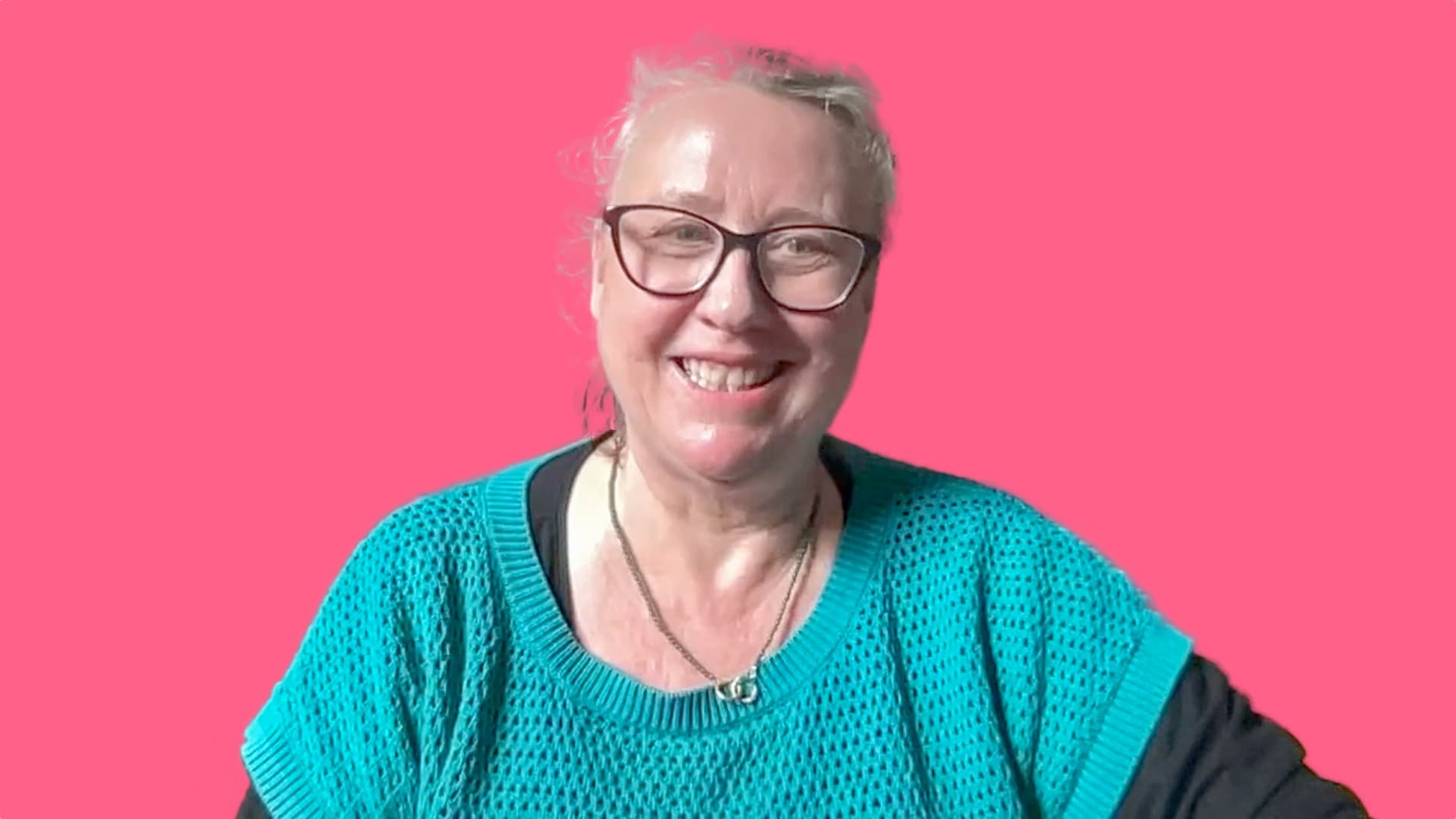
Meet Tamma, an environmental consultant who loves diverse days, curious site visits, and championing a greener planet.
My name is Tamma Carel. I work as a senior environmental consultant and I also run two small businesses based in the Northeast.
I was born and raised in South Africa and that has a lot to do with my relationship with the environment and very much forms why I do the work that I do and kind of why I keep fighting the good fight for sustainability.
So I've been working as an environmental consultant for over 15 years now. And my job specifically as an environmental consultant is working with other businesses, bigger businesses typically, usually in manufacturing.
So places that make products and various things. I work in construction. I work with waste businesses, universities, you know, accountants. But also offshore renewables. So it's really diverse. I get to go to a lot of places and see a lot of different things.
And my job within those businesses is to review how they do things and look at ways that they can do them better to achieve sustainability objectives.
So if they say they want to recycle more, you can't just magically recycle more, you have to get more recycling bins and you have to educate people and you have to put in the systems and the processes to achieve the thing that they want to achieve.
So I typically work with teams inside businesses to help them realise their sustainability ambitions.
But I will caveat that with as a small business owner, I also wear a lot of different hats running the business. So I do all sorts of other things like finance and accounting and marketing and sales and a whole bunch of stuff that I never really anticipated when I set up my business nearly 10 years ago.
You know what I love most about my job is that there isn't a typical day.
So as an environmental consultant, and I would say typically for consultancy type roles, because you're working for different businesses, every day looks very different.
I am sometimes visiting my client sites. So I might be in a manufacturing facility for the day. I might be knee deep in mud on a construction site for the day. I've also been on vessels offshore. And I really like those opportunities to go into other businesses to kind of see what they do and how they work and get kind of involved in their activities.
Usually activities with businesses will be me getting lots of information from them about how they do things or how they want to do things.
And then I would typically have to go back to my office and do some research and try and figure out what the best way to help them get from where they are is to where they want to be. That usually involves me writing some type of report, you know, with recommendations, analysing the data.
Sometimes it's quite technical, so like if we want to reduce carbon, for example, there's quite a lot of like numbers and figures in that and calculations. So it's a good balance between being out on various sites, very active, moving around, talking to lots of people, and then being at the office by myself, you know, writing up reports and recommendations to then send to my client.
Again, the kind of business ownership opens up different things. So I also attend a lot of networking events where I go and talk to other people who are running businesses or other environmental or sustainability people.
Or I go and hang out in places where I would like to work with businesses. I'll hang out at like manufacturing networks or this morning I've actually been at a waste recycling conference, which is way more interesting than you might think.
But it's just an opportunity to get out and talk to lots of different people, learn lots of different things and, you know, create partnerships and, and relationships that will help my business.
Obviously I need clients and customers to be a business, but to work with businesses who have an aspiration for sustainability, to do things better and are looking for help and support to be able to do that.
The best thing about my job is the diversity. So I am naturally someone who likes to be busy and I'm also naturally nosy. So I like going into places that other people don't get to go into specifically like manufacturing or construction sites.
You know, I get to see them being built and being made when it's all the different parts and pieces of the puzzle and the kind of processes that go behind that. Everybody else gets to see the finished product, but I like the behind the scenes stuff that you don't often get to see.
What I also really love about my job though is success with my clients. You know, it's the work that we do together and then they take that baton and implement it in their business. So I love it when they get back to me and go, Tamma, you're going to be so proud of this thing that we did, or we've set up a new program that we think you'll be really excited about.
One of my clients just received an award for an environmental project that we'd done together. So they were really excited about that.
So yes, it's kind of getting behind the scenes and then obviously celebrating the success of my clients and their ambition to be more sustainable and to do better things.
The hardest part of my job is the juggling. So it's lots of different things. No day looks the same and that suits me. I like variety. I like being busy. I like being in lots of places but for some people that's quite overwhelming.
It's very difficult to manage time management and scheduling is the one thing that I absolutely can't get wrong in my business, if I want to get through a day, you know, a nine till five, or I want to get through a week, it is really important that my time is carefully planned so that everything is helping progress, either a client or my business in some way.
And I think managing my diary is something I actually have help with because it is in itself a difficult thing.
I have always known I was going to do something environmental.
I grew up in South Africa and I come from a family of game rangers, conservationists and historically fishermen. So grew up in the ocean, was very much taught, you know, our existence depends on nature. Like without it, we are nothing. We don't have food, we don't have shelter, we don't have water. So, you know, very much raised to be a steward of the environment.
My very first career aspiration was to be a mermaid. I wanted to grow up and be a mermaid and live in the sea and look after all the fishes. And I thought that that would be great.
And then I learned that marine biology was a career path. And I was very, very convinced that that's what I wanted to do, what I wanted to be. So, you know, I chose my GCSE subjects for it. I thought I was going to go to university to study Marine Biology.
And when it got to A-Level day, I did not achieve the results in my Chemistry A-Level that was necessary to get onto a Marine Biology course. And I remember at the time thinking, well, that's it. You know, my life is over. I'm never going to be able to do the type of work that I want to do.
So, quick pivot, went to university, I studied Biology and Psychology as a joint honours, 'cos I was like, well, I don't know what I want to do, but I know if I want to do something with the environment or something in sustainability, I need people and science. So that seems like a safe bet.
And I came out of a four year degree, none the wiser, still had absolutely no idea what I wanted to do. So I went and did a Master's in Environmental Management. And I came out of that utterly convinced I wanted to work in agriculture. So I'd gone from the ocean onto land.
I'd done my research project on soil sustainability. So was like food for a growing population, know, and climate change. These are going to be real world problems that need to be solved. And I find this very interesting.
And I actually got my first job out of my master's in agricultural research in the Northeast of England in the middle of winter. And my little South African soul went into crisis and was like, this is horrendous. It's cold all of the time. They keep making me go outside in the snow.
And as much as I find the work interesting, like the environment is not, like it just doesn't suit me. You know, this is not what I like. And I resolved at that point that I needed a job that had me outside but also inside so I could get some respite.
And I was lucky enough to find a job with a small environmental consultancy. And that was where I started to learn about sustainability in businesses. And I started to learn a lot about environmental regulation and how that is set up to protect all of us and what we're all supposed to do to comply with that. And through that kind of just formed my own little niche.
So as it stands, I am a specialist in environmental legislation and I help businesses make sure that at a bare minimum, they don't break the law. And by not breaking the law, they will be protecting people and the planet. And then from that, we can talk about how do you do better towards sustainability.
Kind of the key point of all of that is none of this was planned. I never had any aspiration of setting up my own business. That happened by opportunity.
I couldn't exactly find a job I wanted to do after that small consultancy, but I knew that I was passionate enough to work with businesses and kind of bring them on a sustainability journey.
So I set up my first business quite naively thinking, you know, all I need is my laptop and a brain. And how hard can it be? It's quite hard, but it's extremely rewarding and satisfying.
But if you'd told, you know, 17, 18 year old me with a chemistry result that one day I'd be running not one, but two businesses. I have my Masters. I have an MBA now, which I never expected. I've had some incredible opportunities like delivering a TEDx talk and visiting Downing Street and the House of Lords to represent women in sustainability and women in STEM.
I wouldn't have believed that any of this is possible, but actually when I look back, I'm so glad that my career was a total zigzag because all these little jobs, you know, I worked in animal husbandry, I did do some marine work, I worked in agriculture, I've worked with businesses, like all of these little nuggets of information are actually what make me really good at my job right now, because I know how choices in this area will have effects in other areas.
So, and I think there was, you know, valuable learning about what I like and what I don't like in a job. And I think both of those are equally important.
I still so vividly remember GCSEs and A-Levels and the pressure of choosing your subjects, thinking that that choice will define the rest of your life.
And whilst I'm not, you know, skating over it, it is an important decision because the subjects that you choose at GCSE inform what you can study at A-Level and your subjects at A-Level inform what you can do your first degree in. After that, you can go any direction.
But it's that, it's that at this stage in your life, you don't have to decide what you're doing for the rest of your life. Just choose the subjects that you enjoy, that you're interested in, that play to your strengths, and just trust that in that process of studying, you will identify career choices and they could change.
You know, when I was at school or at university, nobody told me I could grow up to be an environmental consultant because that wasn't really a job. 10 years ago, nobody knew that they could grow up to be a YouTuber because that wasn't a job.
And the jobs of the future, we don't actually know what they're going to be yet. So it doesn't matter.
You guys are going to decide what it's going to be by what you study and what you're interested in and kind of the change that you want to make in the world.
So I know it's hard, but take the pressure off and just do what you enjoy. Everything else will work out.
And also, it's never too late to change your mind or change direction or go a completely different direction.
Related careers


Related subjects


You might also like
This page contains original content developed by Coffee With Ltd. You may share this page as a link but you must not copy the content or use it with AI tools. All rights reserved.