RAF officer
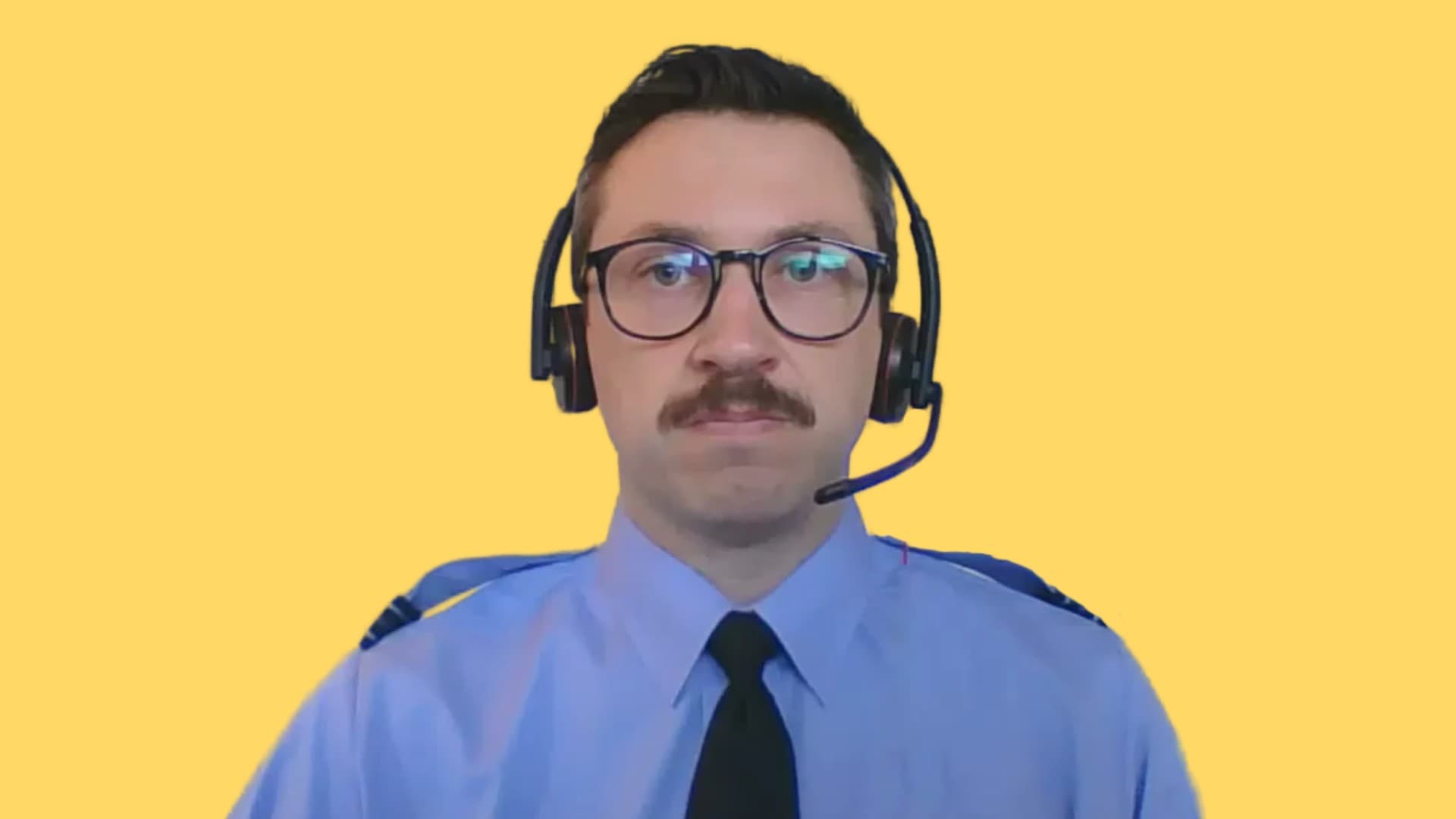
RAF officers work in a number of roles and are responsible for the welfare and discipline of personnel under their command.
In this guide
What you'll do
Day-to-day tasks
As an RAF officer, your duties will depend on your job.
You could:
- fly fixed-wing aircraft or helicopters
- manage services like catering or logistics
- make sure aircraft are armed and ready to take off
- monitor cyberspace for threats
- make sure airfields are secure
Working environment
You could work at a military base or in a warzone.
Your working environment may be outdoors in all weathers and physically and emotionally demanding.
Career path and progression
With experience, you could move up the ranks from flying officer to air commodore or higher.
You could apply to join the UK Special Forces as a Regular or a Reservist. Get information on how to join UK Special Forces Reserves.
You could go into a wide range of careers once you leave the RAF. Your career choices will depend on the skills, training and qualifications you've gained during your service.
You can find details about support and career opportunities from:
What it takes
Skills and knowledge
You'll need:
- leadership skills to manage and motivate teams
- excellent verbal communication skills
- thinking and reasoning skills for making quick decisions
- persistence and determination
- patience and the ability to remain calm in stressful situations
- concentration skills
- the ability to accept criticism and work well under pressure
- the ability to work well with others
- to be able to use a computer and the main software packages competently
Restrictions and Requirements
You'll need to:
- be over 17.5 years of age
- be a UK citizen
- have a good level of fitness
- pass a medical check
- pass enhanced background checks
- pass security checks
Related subjects
Most relevant
- Physics - RAF officers who fly aircraft need to understand aerodynamics, forces, propulsion, and navigation principles. Even in non-flying roles, physics underpins how radar systems, weapons, and communications technology work – all central to RAF operations.
- Mathematics - RAF officers use mathematics for navigation, flight planning, logistics calculations, and interpreting technical data. Roles involving engineering, intelligence, or operations all require confident handling of numbers, statistics, and problem-solving under pressure.
- Geography - RAF officers need to understand terrain, weather systems, and how environmental conditions affect operations and flight. Knowledge of global regions, geopolitics, and map reading is essential for planning missions and understanding the areas they operate in.
- Politics - RAF officers operate within a framework shaped by government policy, international relations, and defence strategy. Understanding how political decisions lead to military deployments – and the role of organisations like NATO – helps officers make sense of the missions they carry out.
Also relevant
- Computer Science - RAF officers in cyber operations monitor and defend against digital threats to military networks and systems. Understanding how software, networks, and data security work is directly relevant to these increasingly important roles within the RAF.
- Engineering - RAF officers in engineering roles oversee the maintenance and readiness of aircraft, weapons systems, and airfield infrastructure. Understanding engineering principles helps them manage technical teams and make informed decisions about complex equipment.
- Physical Education - RAF officers must maintain a high level of physical fitness throughout their career, passing regular fitness tests. Understanding training principles, endurance, and how the body responds to physical stress is valuable for both personal performance and leading others.
- Business - RAF officers manage budgets, logistics, personnel, and resources – sometimes for large teams or entire bases. Skills in planning, organisation, and resource management are used daily, particularly in roles overseeing catering, supply chains, or base operations.
- English Language - RAF officers write operational reports, briefings, and formal communications that must be precise and unambiguous. Strong verbal communication is equally important when giving orders, briefing teams, or coordinating with other branches of the armed forces.
How to become
You can get into this job by applying directly.
You can apply directly for roles as an RAF officer.
Although entry requirements vary for each role, you'll typically need a minimum of:
- 5 GCSEs at grades 9 to 4 (A* to C) or equivalent qualifications, including English and maths, and a science for some roles
- 2 A levels or equivalent qualifications, including T Levels and BTECs
If your application is accepted, you'll be invited to talk to an adviser at your local armed forces careers office about what you want to do. You'll also take an aptitude test.
If you're successful, you'll be invited to attend the Officers and Aircrew Selection Centre at RAF College, Cranwell in Lincolnshire. You'll take part in a one-day selection process which includes tests for aptitude, initiative and fitness. You'll then have an interview and a medical examination.
RAF Reserve
You can join the RAF Reserve in some roles as a part-time officer. This will give you experience of what life is like in the Royal Air Force, and you'll learn new skills at the same time.
You'll need to:
- be between 18 and 54
- commit to at least 27 days a year
- attend a 2-week residential training course each year, though this may not always be the case
Air Cadets
If you're between 13 and 17 years old, you can join the Air Cadets.
The skills you learn and experiences you gain will benefit you whatever career path you choose. Cadets have many opportunities, including UK and overseas camps, leadership courses and air experience flights.
Career tips
Most RAF officers join as direct entrants and receive specialist officer training rather than doing an apprenticeship.
Visit RAF Recruitment for information on the apprenticeships and training and development that the RAF does offer.
Further information
You'll find more details about how to become an officer through RAF Recruitment.
In this guide
Related videos
Suggested videos


External links
This page contains original content developed by Coffee With Ltd. You may share this page as a link but you must not copy the content or use it with AI tools. All rights reserved.