Kristof Nagy
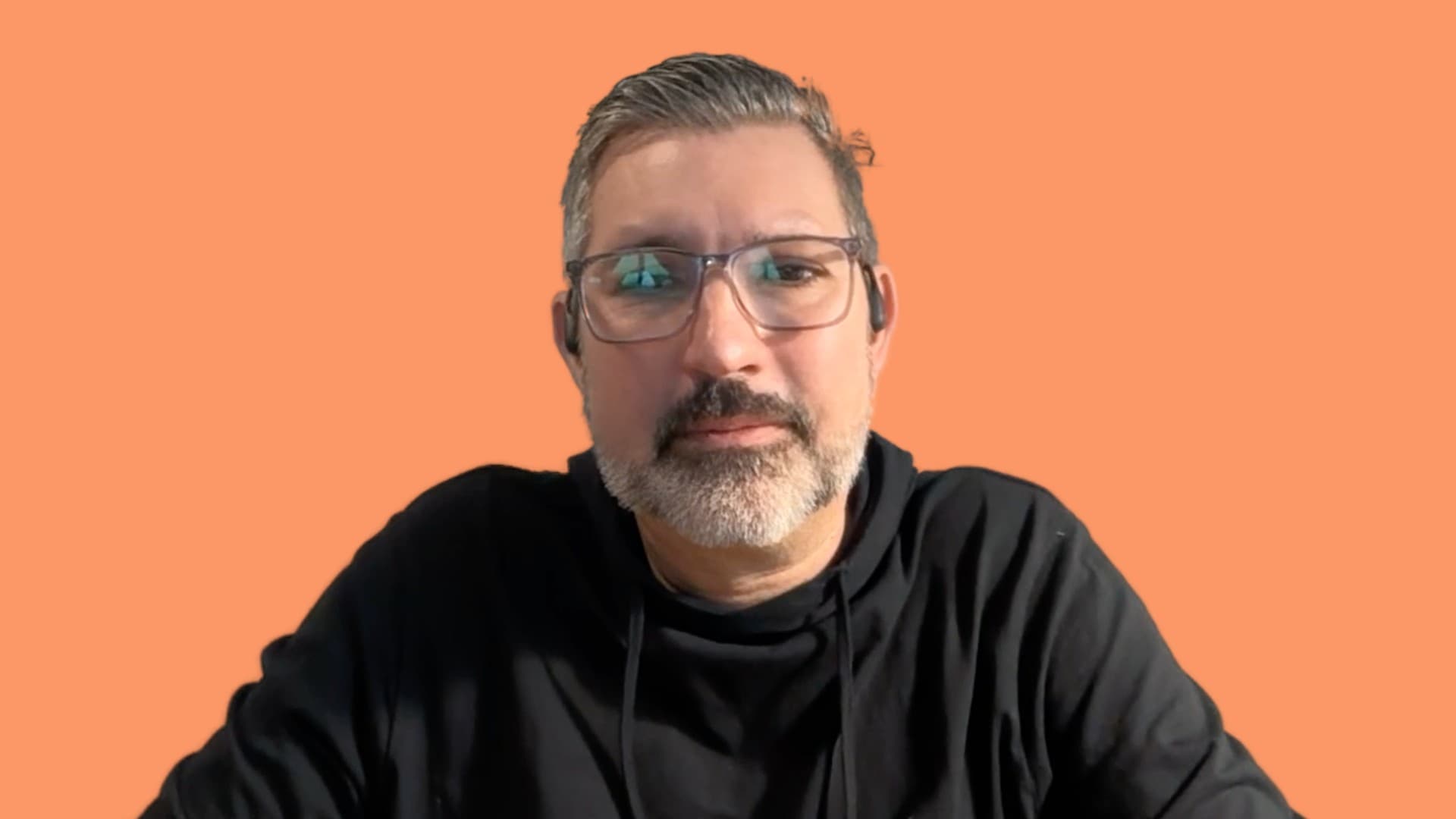
Meet Kristof, a business intelligence analyst who loves solving big questions and helping people find "aha" moments.
Hi, I'm Kris (or Kristof) and I'm a senior business intelligence analyst. And I primarily work in London as part of a global team.
I spend most of my time solving big questions and not just looking at numbers and spreadsheets.
I work with data platforms, dashboards, and different tools to understand what is going on in the business.
You know, how the performance is going, what the numbers represent and how we can use all the data and all that daunting amount of insight to answer critical business questions about, you know, where are we, what our strategy is, where we are going and how the future is going to look like.
Most days I start my day with reviewing basically the pulse of the business, right? So some critical data infrastructure that usually updates and runs overnight. I look at some of the metrics that I know that key decision makers are going to be looking at and going to be using later.
So basically I would split it into three main areas, my typical days.
The first one is very technical. I usually do it in the morning while everyone is still asleep, in a way.
And then the other part of it is strategic, meaning talking to people, making sure that everyone is happy with what they are seeing and what the metrics are showing, understanding if there's something that needs to be changed.
And the third part of my day, which I tend to do sort of like later in the day, when it's a bit quieter, is the more creative work, which is basically taking all the data and all the insights from these discussions with people and turning them into visualisations or creative ways of telling a story to answer people's questions.
So I work with a lot of different people. This involves technical people like IT and security and data engineers, also with product teams, finance people, operational teams. Basically every team in the organisation.
And why? Because data is important. Everyone needs to have an insight and understanding of what's going on in the business, what the data is showing, how that's helping them.
In a way, in this role, you are someone who is bridging the gap, right? You are a translator.
You translate data and technical terms and outputs into answers and into stories that people can go away with and work with, and they can build on, and they can build the strategies on that.
So the best thing about my job is actually quite personal, and it says more about me than the different organisations themselves, is that I really enjoy when things come together and click.
You know, when you go through all the data work with different people, understanding the business needs, and then you present your project, you finish a project, and you see that people understand it and they have this "aha" moment.
And I think that's the best part of it. When we are sitting in a meeting, I show a finished project or tool and people have this "aha" moment and it tells me that, yeah, it's done. I've solved the puzzle and it was successful and people understand it.
And I think that is the biggest reward, seeing that, you know, people basically got what they need and they can use it to then move forward to a future state and take the next steps in the business.
So the hardest part about my job is not the data part. It's not the big chunk of working with data and the technical terms and tools.
It's quite often the communication, which might sound surprising because in a data or business intelligence focused role, people think that I spend most of my time alone in a dark room writing code and crunching data.
But in reality, a large part of this role is about talking to people, explaining to them complex ideas, complex technical ideas, complex business ideas. And often the hardest part about this is to present it to them in an easily understandable way.
I think that's a really rare skill and is really important in this role.
Personally, I didn't grow up aiming for this exact role. I didn't know what I wanted to do when I was young. I didn't know I wanted to be a business intelligence analyst.
But what I knew is what I enjoyed. I knew what I was good at.
And that, I feel, like that really shaped my path towards this role. Just being myself, being curious, being ambitious, willing to push myself, gravitating towards things I enjoy, working with data, talking to people, understanding complex problems.
I really enjoy tinkering and understanding how things work, both on a technical side and both in a business environment, you know, human relationships, how hierarchies and connections formed within an organisation.
And I just kept doing what I like and moving into directions that I enjoy. And every step, every new environment, every challenge was basically a building block on where I am right now.
And I started in a data-related role but doing a very administrative task. But I wanted to push myself. I wanted to keep building on that and going in a way, going to somewhere that really feel like it enriches me and I really enjoy doing that.
And that's how I ended up in this business intelligence role because it combines sort of technical aspect, the creativity and the people skills that I most enjoy in my career.
The way education helped me along the way was by giving me the foundation, especially in logic and problem solving.
But I think it also taught me something that's even more important than that, and that is to learn to be able to teach myself in this role, which has a quite significant technical element.
You always need to try and be on top of things, to understand the new technologies, the new ways of working with data, be it, you know, just a tool or statistical analysis, because they evolve constantly.
And you don't survive by just memorising some old tools or some old ways of working. You survive by learning fast. And I think that is crucial and that is where education came in, to teach you all the background foundation but also to teach you to teach yourself.
A moment in my career that I'll never forget happened quite early on.
In one of my roles, I'd been working on a project and after I shared it with the head of the department, I remember her saying she was very happy with the results and how the whole project was built. And I remember her saying that, Chris, this is brilliant. We need more people like you in this organisation.
And that's one of my proudest moments, one of the most inspiring moments in my career, because that was an external reassurance that told me to keep going, you know?
I received feedback from someone in the organisation who knew the company, who knew the people, and they acknowledged the value and the way I work and what I deliver is significant. And I think it's inspiring.
I think we need to keep an ear out for these kind of moments in our careers, to listen to the feedback and really understand what people need and if that aligns with what we need and what we are working towards as well.
What advice would I give myself when I was younger?
I would just say that you don't need everything figured out, right? And I think this is what you always need to keep this in mind. It's important to push yourself and go for the next challenge and do the next thing and have fun along the way.
Enjoy it, but you don't need to know what you want to be exactly. If I knew what I wanted to when I was 15 years old, I would probably not be happy. Because people change, environments change, situations change, we evolve, we gain more experience and what we want and what we are aiming for changes.
I think that is the most significant advice I would give myself is to just not stress about what's going to happen in the future. Just make sure that you make the most out of the present and you're happy with what you're doing right now.
You just need to have faith that you will get to where you need to be and don't forget to enjoy the present, make the most out of it and have fun along the way.
Related careers


Related subjects


You might also like


This page contains original content developed by Coffee With Ltd. You may share this page as a link but you must not copy the content or use it with AI tools. All rights reserved.