Kristin Kovner
Meet Kristin, a marketing strategist who loves shaping brand stories, guiding creative teams, and helping products find their place in the world.
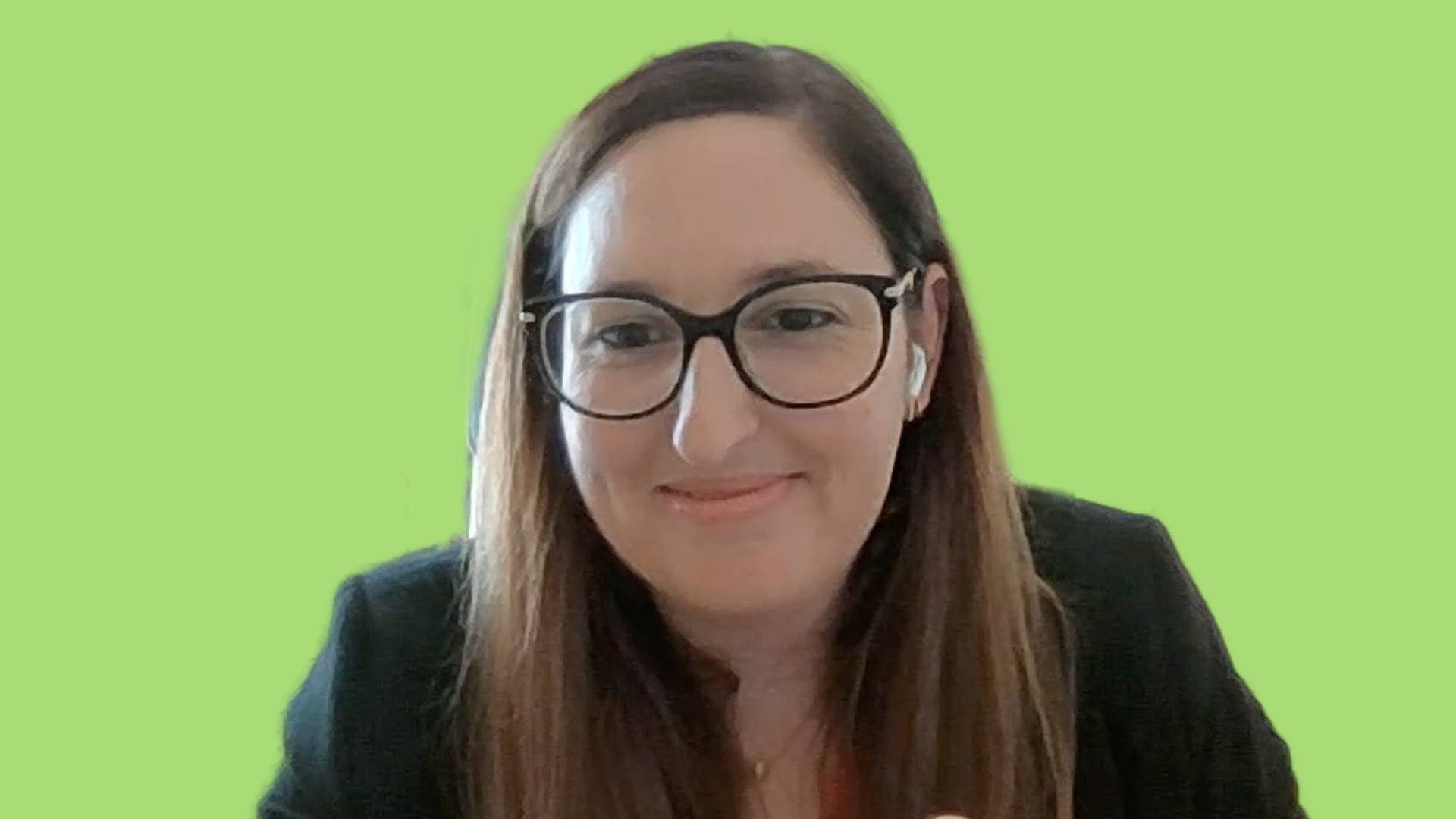
I'm Kristin Kovner, and right now I am in sunny Mallorca, and I'm usually in New York City. And what I do for my job is marketing. I help companies bring their products and services to market.
So a marketing strategist gets to do a lot of fun things, but basically we're the people who help companies tell the stories about their brands and their products.
So if you see a pair of shoes, you have a sense of what it's about, not just the colors and the styling, but who they're for and why you might want to buy them. That's what the marketing strategist will do.
So everything from what we talk about, how great the shoe's leather is to why it's the latest technology to where you end up seeing, you know, messaging about that shoe, whether it's on the computer or in a big billboard somewhere, we do all of that.
So we're basically storytellers for brands.
So what I love about being a marketing strategist is that there is no typical day. I get bored super easily. And so one of the things I love about marketing is that it's always a different challenge. So even if I'm always talking about a company's products and services, the products and services are different.
So I've gotten to learn about financial technology and I worked at Google for a long time. So I got to work on YouTube, but also Google Maps, at one point I was actually the voice of Google Maps.
So you get to do a lot of fun things when you're a marketer and it's never boring and it's never the same. So one of the things I love is that it's always varied and I'm always learning, which is a great thing because the last thing you want to do is the same thing over and over every day.
I love to work with other people. And one of the things that's great about marketing is you sit across different teams in the organisation. You're always working with different people across the company.
So if the product team creates something, you get to talk with them about what they're building, why they're building it, who it's for. And you can even help shape the product yourself with what you know about people and what they might like or not like.
You then get to work with all the creative folks on the business who are building advertisements and songs and jingles or whatever else it might be to bring that to market.
You're also working with the sales people who are actually going to be the ones selling the product and many other different groups in the company.
So really one of the cool things about marketing is it spans a lot of different functions within an organisation and isn't just in its own little area.
The best thing about my job is that I'm always learning and I'm never bored. The second best thing about my job is I get to work with really cool brands, whether it's Spotify or Samsung, I get to work on products of things I actually use and brands that I love in my own life.
That is such a good question.
The worst thing about my job is that sometimes marketing gets blamed for things that are really not our fault. And I don't know about you, but I don't like being blamed for things that are not my fault.
So sometimes a product just isn't a good product and no amount of marketing can really save a bad product. I've worked with a couple of companies like that over the years, but I won't tell you which ones they are. But we tried our best to get people to be interested in them for what was good about them.
But ultimately, if you don't have what's called a product market fit, there isn't that great fit for what you're selling and what people want to buy. No amount of marketing, even the best marketing can save that.
And sometimes people say, if you just marketed it differently, it would be successful.
And you're like, actually your product stinks and no one wants to buy it because it doesn't work. And that's really the problem.
So the truth is I actually didn't want to be a marketing strategist and this was not a dream.
In America where I'm from, most of the schools didn't even have a program that was marketing for people who were going into college. I went to Yale and I was an English major there. So I studied the great literature of the time. I studied the great American novel and actually British literature was my specialty in 1945 to the present. So I was into stories, I was into writing.
And the way I became a marketer, was actually pretty coincidental. So when I graduated from college, I went and became a very boring job for me, but it was called an economic consultant. I was doing data mining and math number crunching and trying to see patterns in data. I'd also been a reporter at Newsweek, which is a magazine here in the United States.
And I saw an ad posted on Craigslist, which I'm not sure you guys have ever seen Craigslist, but this was a very popular platform a million years ago. And there was a job posting for Google, which was a new company at the time. And it said, do you tell stories with data and are you a good writer?
And I thought, I'm a journalist. So I love to write. I'm a storyteller. That's my background. My major was English literature. And I also know how to tell stories with data because I'd had this training as an economic consultant doing all this number crunching.
And so I applied just randomly on the web to this job posting on Craigslist. And a month later, I was working at Google and I joined the week we bought YouTube. So it was a very exciting time and I kind of fell into it.
Because honestly, marketers at their heart are just smart, hardworking people who are curious, love to ask lots of questions and tell stories.
School was very important to me. And I'll be honest, I'm kind of a weirdo. I loved school. I'm the kid who did all the reading. I loved my teachers. I wrote a rock opera when I was in high school about Macbeth, because I love Shakespeare so much.
So when I went to college, I really pursued writing and literature. I wrote for the school newspaper. And what I learned in one of my classes, Professor Nigel Alderman, who is my British literature teacher, taught us really how to write a good essay and that you weren't sort of just doing five paragraphs, your intro and your three paragraphs and your closing.
He was really showing us how a story needs to evolve and the last sentence of every paragraph really has to naturally lead to the first sentence of the next paragraph and how you really craft a story and an argument.
And that was foundational for anything you'll do in the business world, but especially for marketing because ultimately we're trying to convince somebody of the value of our products and services.
Whether it's shoes or a new video game and making sure that they understand why it's so great. And that takes very sophisticated storytelling skills, which you learn and writing as well.
So one thing I will say is with ChatGPT and Claude and all these other AI helpers, it's not actually helping you if you have them do the writing for you.
Being able to put sentences together with your own two hands and a keyboard is going to be a very good skill that will help you excel whatever you end up doing for your career. But I hope it's marketing.
I have had a long career, so I have many memorable moments.
One crazy moment that I'll think about and tell you about is early on when I was working at YouTube, we were trying to convince people that kids were watching YouTube the same way adults are watching television.
And one thing we did to sort of prove that point, we interviewed a bunch of kids and we asked them to tell us about their favorite shows and they would talk about shows, which I put in quotes, that were only on YouTube.
And until that moment, no one, the people we were trying to sell advertising to, really thought about YouTube as a place that had content that people thought was valuable. It was mostly like cat videos, what people thought.
And so the idea that real shows could be on YouTube or on streaming services wasn't something that people thought. And so we had this big event where we brought all these big brand people together.
We played this video of everyone talking about this one show, Fred, which I don't even know if it still exists, but it was very popular at the time, a very silly show about a young kid who uses a crazy voice and his adventures.
And they kept talking about it's a show, a show, a show. And the idea that a show could be something that wasn't on TV was really fun.
And then Katy Perry performed and it was amazing.
One piece of advice I wish someone had told me when I was younger is that your first job will not be your last job.
I took my career very seriously back when I was 18 and 20 thinking about what I want to do. And I think I put a lot of pressure on myself to pick correctly the first time. And the reality is looking back on my career, I've done a bunch of different things.
I mentioned I was a journalist. I wrote for a magazine. I worked at Google. I worked at another company called AOL. I started my own business 13 years ago and looking back, it all makes sense. My path was winding and I couldn't have done any of the things I'm doing now without all of that experience.
But at the time it was a bit scary thinking about, I chose to be an economic consultant and I don't really love it. What am I going to do? I tried to be a journalist and it wasn't paying me enough to really live in New York city where my family and friends were. And I thought, what am I going to do?
And I wish someone would have told me that it would all work out and that your first job is not your last job. You're probably gonna have a bunch of jobs.
So what a mentor of mine, David Bell, once told me are three things to think about with your career and jobs you might take in the future.
The first one is passion. Work on a business or a product category, by which I mean, you know, if you're into sports, do something with sports. It should be something you love and that's passion.
The second is culture. So as you guys go off to school and university, you'll often hear this advice. Don't pick the course for the class, pick it for the teacher.
The same is true in business. You're gonna spend a lot of time with people you're working with. Pick a company that's got a great culture with people you like and wanna be around every day. Follow them where they go. That's what I've done. It's been a lot of fun.
And the third thing is runway. The idea of a plane with runway and taking off, right? So what will you learn in this job that might prepare you for the next job, even if that current job isn't the last job you're gonna have. It's just a stepping stone to somewhere else.
So passion, culture, and runway are three things to think about when you're picking a job, but your first job won't be your last one.
Related careers


Related subjects


You might also like


This page contains original content developed by Coffee With Ltd. You may share this page as a link but you must not copy the content or use it with AI tools. All rights reserved.