Ethan Lloyd
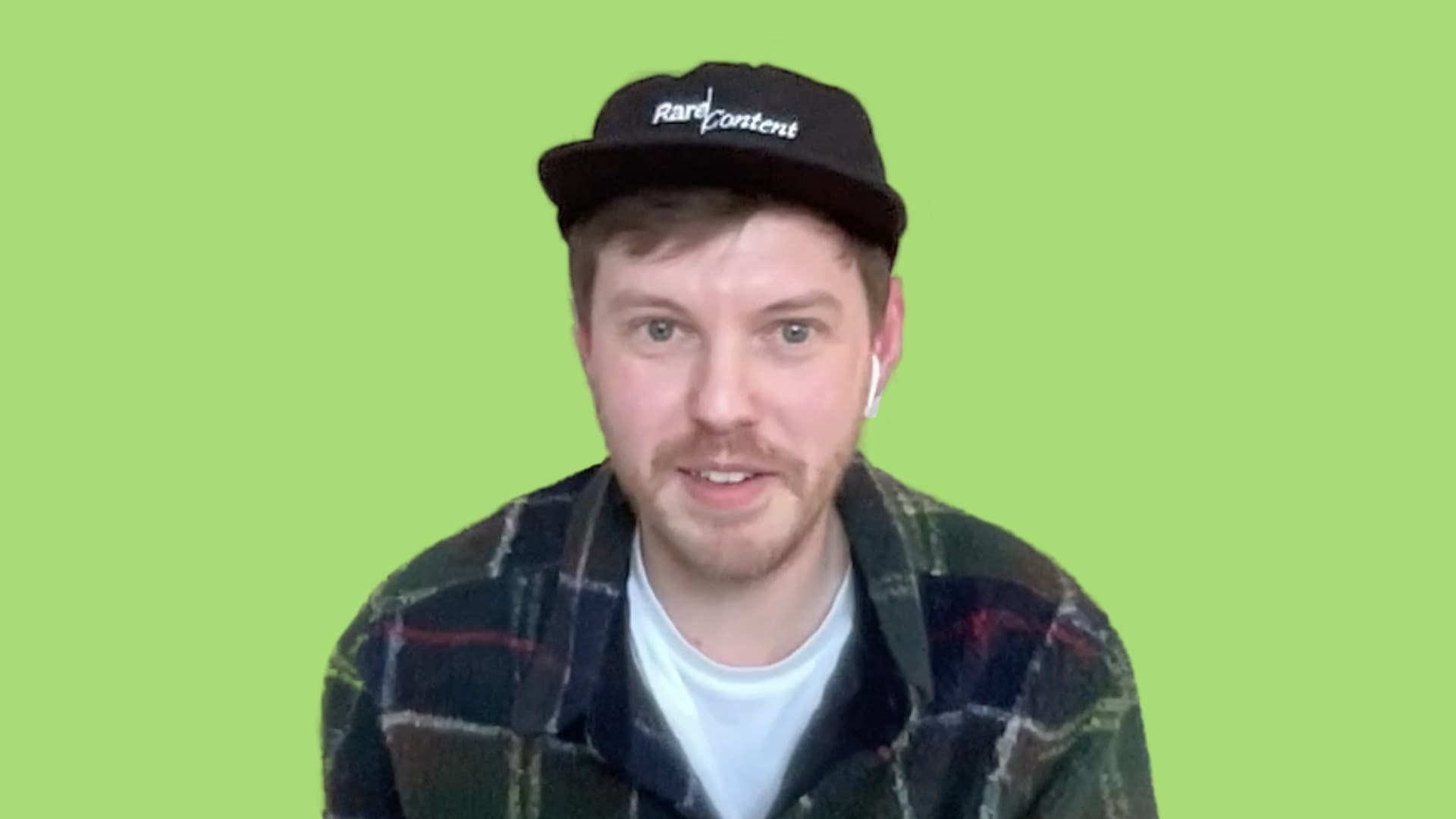
Meet Ethan, a camera operator who loves the buzz of live broadcast and chasing the perfect shot at racetracks worldwide.
Hello, my name is Ethan, I live in Manchester and I am a camera operator.
Well, when I'm at work, I spend the majority of time when we're out on location filming live broadcast motorsport.
So anything from fast-paced boat racing to motorbikes to aircraft. Anything you can imagine that you're watching on television, I've been behind the camera on the other side of it.
When we're not out on location, I'm heavily involved in the planning side of it. So we're going through camera plans, drone and flight permissions, making sure we've got all of the infrastructure and all the equipment we need to take to the racetrack to present and produce a really exciting piece of media.
Whether that be live coverage of the Isle of Man TT motorcycle racing or being out in Florida filming power boats racing each other up and down Lake Michigan.
So a typical day for me would be getting down to the racetrack if we're on location, we're setting up all the infrastructure we need, the cameras, the tripods, getting everyone in position so that when the lights go red, the cars are coming around the track and we're producing a really exciting piece of feature for anyone to watch at home.
Effectively, when I get to position, once the cameras are in place, I'm still on my scaffold and as the cars are coming around the track, I'm filming them coming through and all those pictures are being sent live in real time back to the Isle of Man where they're being mixed and cut and sent out to the BBC, to ITV, to the distributors so that you folks at home can watch it.
When I'm not on location, my day to day could be in the office, which some might sound dull in comparison, but we're looking at planning, we're looking at flight maps, we're looking at permissions.
We're thinking, how can we take the production to the next level? Are we using new cameras, are we using onboards on boats, or are we using drones and doing sort of low level, fast paced flying, or are we taking a more relaxed approach?
Are we doing stylised, pretty interviews with top drivers and racers? Are we looking at interviewing in a paddock who we can talk to? Is it going to be an up and coming rider or driver for this season?
So it's really, really varied. And I think that variation really lends itself to the role.
It means that no two days are the same. It's never a dull moment. And we're constantly chasing the next big spotlight in production.
So being part of a live motorsport broadcast company at the moment, I work with a massive team of people.
At any one time, if we're on location, we can have up to 50 people, both on location and remotely.
So we've got the likes of camera operators, drone pilots, producers, directors, journalists.
And then back in our remote team, we've got people doing live stream events. You've got mixers. We've got, again, a live director in our ear.
So I can be at the side of a racetrack with my camera in California and thousands of miles away back in the Isle of Man, I've got a director real time who can see my pictures and say, right, Ethan, coming to you, car number three, get him. And as they're coming around, they're seeing my pictures real time.
And it's all about how each individual role is so key and crucial to the production because everyone, when that on air light goes red, we all just do our jobs so smoothly and like clockwork.
So having a big team really lends itself to the size of the production because there's so much to do. And if you've got a 22 camera shoot, you've got all these people just doing it so effectively.
And yes, it might seem like a minor role, one person doing a camera operator, effectively your job is to keep that car or that bike in the frame. And it sounds quite simple, but when you've got 22 people doing it, you need someone to direct and say, right, camera three, camera four, next car to you.
The big team lends itself to that production.
The best thing about my job has to be the travel.
I'm from the northeast of England and I never saw myself leaving the northeast. I thought I'd live there, work there, and that would be me.
So to be given the opportunity to be given a plane ticket saying, right, this week you're going to America, you're going to Saudi Arabia, you're going to France, and knowing I'm going to be on the side of a race track somewhere hot, somewhere sunny, somewhere that isn't my day-to-day office, the excitement comes from the travel for me because I get to explore the world and people pay me to do it.
The hardest part the job, I must say, can also be the travel.
You've got to be really flexible. And if you've got plans on the weekend and all of a sudden you get a call in saying we've got to cover a race series in Abu Dhabi, you've sometimes got to just drop all the plans and go, right, I'll see you all in a week. And you come back again and off you go.
And again, it is exciting to go, but when you've got birthdays and family commitments you've got to sometimes think, okay, well, I understand this is the here and now, I'm just going to get on with it. And people always have the birthday but I'd say the travel can also be the hardest part as well as the most exciting, so it's swings and roundabouts.
I was working as a car salesman at 18 in the northeast of England and I'd always wanted to get into TV and film as a teenager, but there was no direct route for me in the northeast. There's not a lot of opportunity for film.
So I'd applied to the BBC for apprenticeships and had not been successful. I'd applied to private courses and not been successful.
And one day ITV turned up outside of my workplace filming a crime drama called Vera. And I thought, I'm not going to let this chance get away from me.
So on my lunch break, I went out and I spotted the first person with a clipboard and a walkie talkie and said, excuse me, what do you do? How did you get into it? And he looked at me and said, please go away. I'm okay, not a problem.
So the next day I found another person with another clipboard and exactly the same. And over the course of about a week, I kept going out and just asking, who are you, what do you do? How'd you get into it? Can I meet the camera department? Because I always wanted to get into cameras and filming.
And eventually after grinding them down and said, come on then, follow me, I was introduced to the camera department and said, oh, I work over there, I'd like to get involved in what you do, how do you go about doing it?
They asked for a CV and I was taken on as a camera trainee within a drama unit, which was effectively doing camera notes, taking people, batteries and lenses and bits of equipment.
And it was all learning on the job. It was someone who was slightly more senior than me going, look, this is how you do this. This is the director. This is the camera A operator, the camera B operator, the sound guy. This is the people you want to be talking to.
And through conversation, through asking questions, which you should never be shy to do, I was given opportunities, experiences, and then through people I met on productions, they were saying, well, I can't do this job in Manchester, but I like your work ethic. You're clearly keen. So I'll put you forward for it.
So then the ball starts rolling and the snowball grows and grows and you get opportunities in London, in Manchester, in bigger cities, on bigger productions. It's all about who you know and how you communicate.
And eventually I found I was recommended getting a job in a kit house, that was branching away from just drama and working in a more varied field where I could learn the cameras, learn the lenses, how, not just how to use them, but how they worked, how to fix them. What sort of productions would need what sort of equipment?
So I found a job on a Facebook page in Manchester. I got the job on the Friday, it was meant to start on the Monday. So I had a weekend to find somewhere to live and buy a car and thought, get on with it. Let's just see what happens. We can always touch base and come home again if it doesn't work.
And that was eight years ago. And I never looked back. And now we're here and again, it's just an opportunity through learning kit on the job, through talking to people, to just watching sometimes and then having a go.
If you get it wrong, that's okay because we all learn through mistakes and, you know, trial and error is the way forward.
If you don't ask, you don't get. So the worst someone can ever say to you is no, just go and ask them. And if they say no, fantastic, you move on.
If they say yes, they've opened that door and all of a sudden you've got an opportunity to learn a whole new skill set.
I think my education from school was crucial in giving me an understanding of what I wanted to do and certainly pushed me in the direction of giving me the confidence to reach out and ask for things.
But I wouldn't say anything I necessarily studied at school led to the career path I have now. When I was at school, I didn't think my job was a job. I never thought I would be paid to do what I do now.
Saying that, it was very, very valuable to be in an education system where you are nurtured and pushed in the direction of being creative. And it's not, you don't have to be academic. You don't have to be creative. You could be a mix of anything.
As long as you've got ambition and drive to move outside and follow your career path or follow something you're passionate about and figure out how to make passion into work. Then that's all you can take from education.
We all take our own differences, whether it be a mathematical route or an English literature route or a creative fine art route. There's no right or wrong so long as you can find a way of honing that passion into a career path.
So for me, the first time I worked on a live studio broadcast, I'd been given a role as a camera assistant on The Voice UK, which is based in a big studio down in Manchester. And it's the first time I've been on a live production that was gonna go out straight into television.
And everyone was given a role, everyone knows what their role is and does it so well. And all of a sudden, the on-air lights go red, there's a buzz in the air and the whole air just becomes thick like soup. It's like an electrical buzz.
And everyone, like a colony of ants just drops into motion and their jobs are just done so perfectly, so smoothly, like a well-oiled machine. And the presenters come out, the music kicks on, the fireworks take off, and all of a sudden you're part of it. And you look around, you think, this is my job. I've got goosebumps thinking about it.
It just excites me to be in this environment. And again, you think, I'm being paid for this. I'm behind the scenes of a set that I've watched the program of as a kid. I've sat at home on Saturday night with my parents and watched this when I was eight.
And now I'm on the other side of the camera seeing it for myself. And for me, it was that realisation of I was now part of something I'd always aspired to as a kid that really, really homes in for me.
A piece of advice I wish I'd had when I was younger was don't be afraid of what other people think.
Regardless of what career path you want to take, you want to take it for your own reasons. Whether it be something creative, whether it be something academic, there's no right or wrong.
So whatever subjects you want to go down, whatever route you want to follow, do it because you have a meaning, you have a passion for it. Do it because you enjoy it.
Yes, it's good to have a bit of logic behind how you can feel that, how it can continue in the future, but don't let anyone bat you down and say, no, you can't do that because how are you gonna make a career out of it? How are you gonna follow this? How are you gonna follow that?
If you're passionate about it, do it because passion fuels everything. And I wish I'd had that advice.
Just do what makes you happy. Be logical about it, fine. But do what makes you happy and don't be afraid of people that say no.
Always ask because you never know where it'll get you.
Related careers


Related subjects


You might also like
This page contains original content developed by Coffee With Ltd. You may share this page as a link but you must not copy the content or use it with AI tools. All rights reserved.