Enedoom Oryiman-Nezan
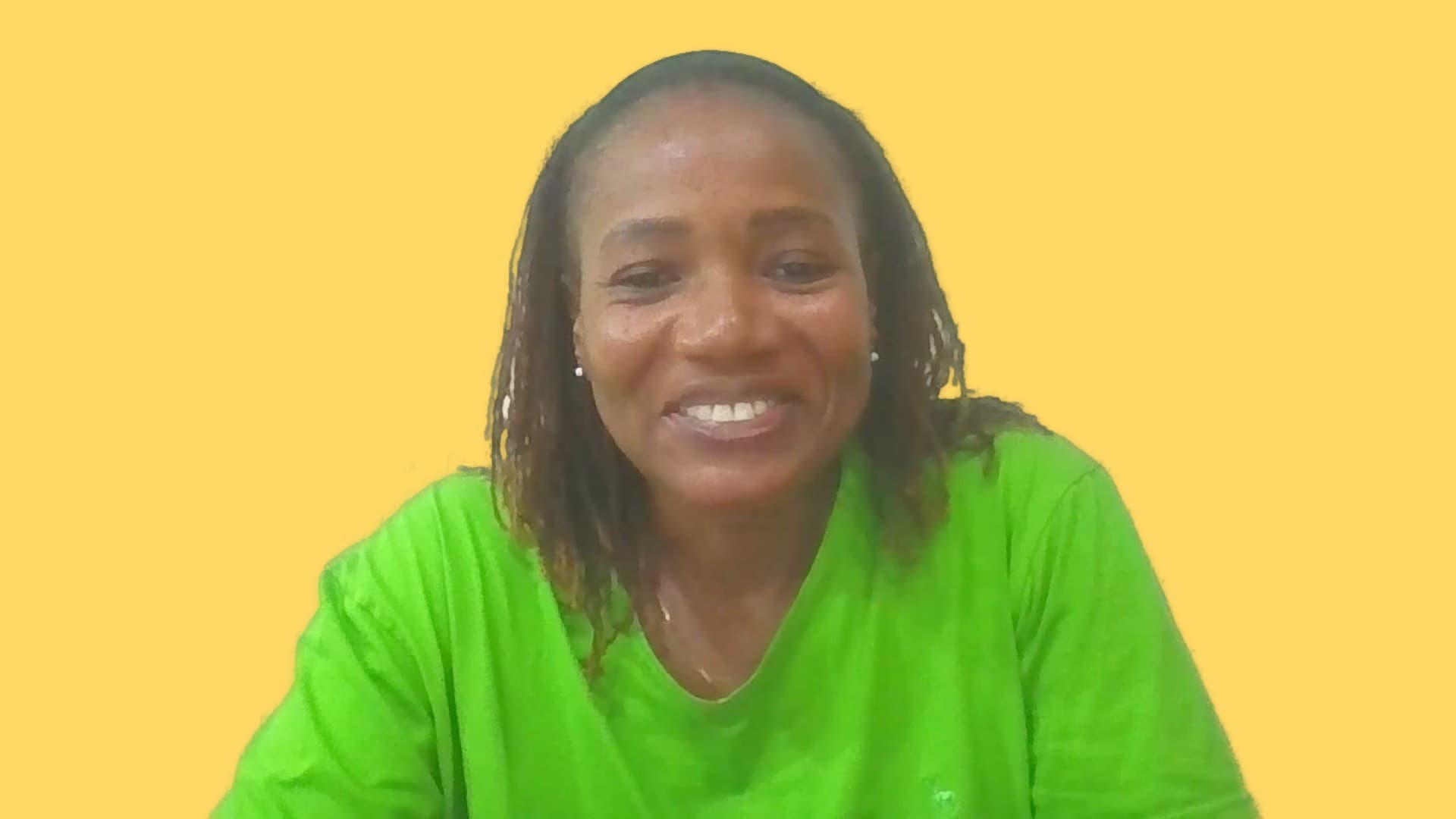
Meet Enedoom, a medical engineer who loves troubleshooting medical devices and saving lives with technology.
Okay, my name is Enedoom. I'm currently in Chichester and I'm a medical engineer.
Okay, so I do maintenance for all medical devices that run through the hospital from A&E, theaters, and all wards.
So you've got the children's unit. I go in there, service devices like the patient monitors. If you've ever come across one of those, the ECG machines, the temperature probes. I believe many kids will be familiar with the temperature like the thin one for the ears.
And all sorts of medical devices that you can find or think of in the hospital.
A typical day is fast-paced for me. I'm always trying to catch up with calls that are coming in from the wards about breakdown of medical devices and repairing them as fast as I can to ensure patient safety and that their treatment is not being compromised in anyway.
Yeah, so I work with a diverse team and they are really brilliant, teamwork works for us in trying to prioritise our tasks and how we go about making sure the work is being done.
So everyone collaborates, works together, deal with challenges that come in together. Nobody hides anything. We're very open. Communication goes on and on.
And the most important thing, which is the goal for our team, is that the work is being done and all patients are safe and we meet regulatory standards.
The best thing about my job is the fact that it contributes to patients' treatment journey.
I think that's one inspiring thing for me as a person to see that my job aids in their treatment and it could help someone to get a better life and possibly live happily with their families. So I think that's the best part of my job.
And the hardest part of my job is when... let's say the nurses, we call them clinical staff, report jobs with no description.
So we just see a note "broken", just it's broken and there is no further description telling us what happened to the device. So we have to start from the roots to troubleshoot and know what the fault is before repair starts.
I've had this passion of being an engineer. So how this started was when I was a kid, I loved repairing things, whatever my hand could find. I just I just loved playing with things and doing puzzles. If anything went like the cabinets in the kitchen, if there's any faults with the doors, I always want to fix them.
And then this thing of engineering came in when I heard people talk about it. Then you'll be a good engineer, most especially from my elder brother. And I said, well, I think I would love to. And that's how the journey began.
I started first as a mechanical engineer. I studied mechanical engineering. But it didn't really settle the curiosity and the passion for medicine.
So I also loved medicine, like that passion of seeing people getting better from whatsoever illness they found themselves in. And then the picture of medical engineering came in trying to bridge medicine. Is it bridge or merge medicine and engineering together?
So I'm not a doctor, I'm not a nurse, but I could also come in through technology to aid the treatment of people that are sick.
I think that's the first step for me, my education. It opened my mind to seeing the bigger picture of what the world in engineering looks like.
And it's helped me to think deeper. So it's called critical thinking. It helps my thinking fast. So being able to make decisions very, very fast, being able to know what to do technically and it has also helped with knowing how things should go in the technical setting.
So I think my background is the first thing helping me to the educational part comes in with critical thinking. I'm not really doing mathematics at work. I'm not really doing differential equations but that has opened my mind to be able to, or capacity as the case may be, to be able to face challenges that are coming in these fronts and see that things are really better through technology.
So in our current day, if you cut out, let's say medical engineering from hospitals, then I think many people wouldn't survive because you need technology for almost everything in one way or the other before machines even came into use.
So we really need this to make sure that treatment is not just easy, but it's fast. So you could imagine someone who's had a heart attack coming in. The first thing that we'll do with a machine is a CPR. We've got machines that do CPR now. You've got defibrillators that are used in resuscitating people.
Without that, it would be very, very difficult. So the longer the person stays in that state, the more the chances of, or the more fatal it becomes.
But technology has come in to bridge that gap and to help with those lapses where we can't be that fast to meet up with the demands of the patient.
So I think if you remove my job from the picture, then you have many casualties and the rate of mortality will be really, really high.
I think for me every day counts. Every day it's a day of learning and it just keeps building and building.
And I can't say there's one moment, one particular moment that I'll never forget, but every day is a learning journey for me and every day is so important.
And it just builds to me being a better engineer and learning better to see that things are improved and technology continues to advance and people get the best out of it. That's just it.
Paying more attention to what I have at hand doing at a particular time.
Like my academics, you have to give your whole to whatever you find doing at that time. So let's say you're currently studying in school, secondary school or the university, give it your best at that time. Make the best of every moment.
Catch every fun thing and you'll be grateful later that you did.
Related careers


Related subjects


You might also like
This page contains original content developed by Coffee With Ltd. You may share this page as a link but you must not copy the content or use it with AI tools. All rights reserved.