James Stanley
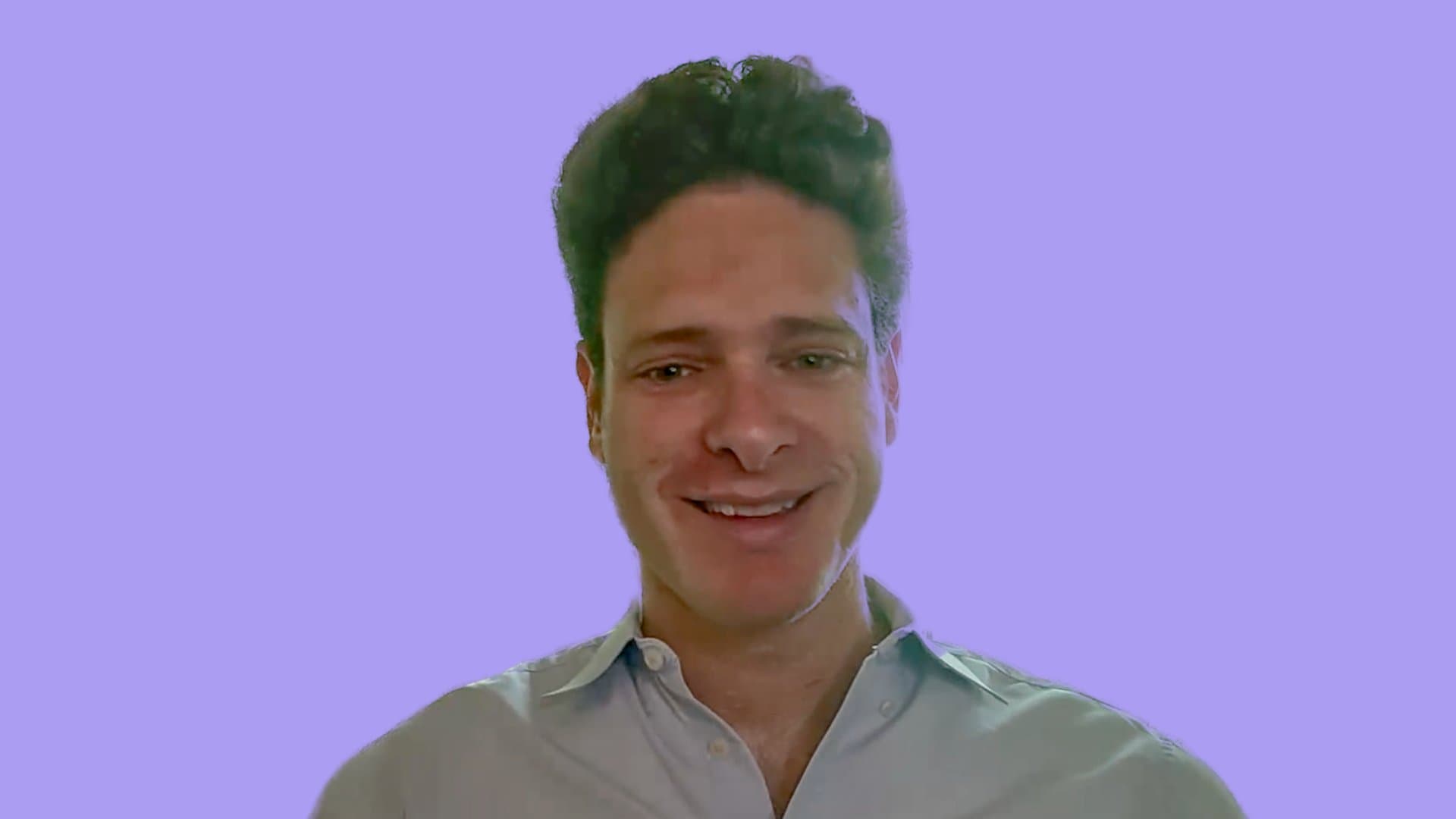
Meet James, a healthcare entrepreneur who loves building teams, empowering people, and creating businesses that help others.
Hi, I'm James Stanley and I am an entrepreneur, I'm a co-founder, and I'm the CEO of a startup business in the world of health optimisation and well-being.
That's a great question. An entrepreneur is someone, I think, who sees a business opportunity and then takes a series of actions to realise that vision and generally in my world, it's been about setting up a company to capitalise on that opportunity and to make it come to life.
A typical day in my world is a non-typical day, if that makes any sense. No day is the same. Every day I'm presented with a series of challenges, opportunities, and that provides a great deal of excitement.
But some days I wake up and I have to travel. Some days I wake up and I come into the office. But every day generally is dealing with people and trying to help them and to make, our vision as a company come to life.
I work with other people, other businesses, the best way of describing it is a collaborative way. I believe that offers something that helps the overall objective of what we're trying to do.
So I try as a leader to empower people, to give them the tools to be amazing at what they do. But also I've generally found by surrounding myself with people who are better, they've got their own expertise, that they can give me more than I can do on my own.
So I believe that the best way to work with people is to operate as a team and to trust them, and to empower them and to allow people to be the best they can possibly be.
Well, I suppose the best thing about being an entrepreneur is that you are your own boss. You don't have to answer to anyone else other than potentially your investors or the bank, but essentially you are in the driver's seat with everything that you're trying to do with your business.
You also get the opportunity to work with a myriad of different people, some amazing people, that give good value to you, but also can help you do what you want to do.
So I think that that's the best thing that I have and the variety of what it gives me on a daily basis from a business point of view, but also the opportunities that it gives me to think about different opportunities and potentially different business ideas going forward.
The worst thing about being an entrepreneur is the buck stops with you. You have all the risk, you have all the responsibility, and that's kind of a heavy, coat to wear sometimes.
But it's also the thing that keeps me driven, that I want to make sure I can look after the people we employ to have the ability to drive towards the ambition I have for the company. It's a challenging role taking on all that risk but sometimes it can be hugely rewarding.
Well, this is a very long story of how and why I wanted to be an entrepreneur.
I believe I've always been an entrepreneur. I just haven't always found the right place to be an entrepreneur. I've always had ideas. I've always had ambitions. But actually it's only more recently that I found the idea that I wanted to take forward, to be able to create a business and to create a difference in what I'm trying to do with our business.
And that was really through my other co-founder. He has a founder story of something that brought him back from a particularly difficult place from his health that inspired me to work with him to create an idea and a business that could capitalise on the opportunity. And to be able to do something that helps other people as well.
How did I become an entrepreneur? I suppose an entrepreneur... you could be an entrepreneur as soon as you leave school or an entrepreneur when you are 70. It's the journey that comes from within. And a part of that has always been, around learning and finding reason and opportunity within what you do.
I suppose the better way of describing how, or why, I wanted to become an entrepreneur and how I did it, was to find a vision, an ambition, an idea that I could get behind, work really hard for, and then to be successful with, and hopefully then to make some money with. Because at the end of the day, we all go into work for both satisfaction but also to make some money to pay the bills.
So for me, I think I got there because this idea that I had was better than all the other ideas. And my journey really to get there has been through all of the learnings I've ever had since school, every job I've had, the people I've met, the people I've worked with, and I suppose also by failing as much as I've succeeded. Corny as it sounds, I've not always made the right decision at the right time. And sometimes it's taking those learnings and utilising them in the best possible way to take and make the most of any opportunity, which I believe I've done in this company.
I believe all my studies gave me a good baseline. I don't believe that my A-Level maths gave me a foot into what I'm doing now, but I think it helps you understand how to learn and that's really important going forward, because I've never stopped learning.
Whether you call it studies or whether you call it work or whether you call it taking on experience, every single part of that's learning. So for me, I was allowed to grow up, I was allowed to take on information and I've never really stopped, so it's given me a baseline for everything else that I've been presented with through my career, I don't believe you ever stop. Every day is a school day.
So my career path before being an entrepreneur is that I started at the bottom like most people learning in a world of hospitality and consumer experiences, events and a world of trying to essentially give people a good time. Through that journey I was able to realise certain big roles where I was able to run business across Europe, and deliver amazing things to people as the managing director across sports and leisure, through business and the corporate world.
Then I spent some time as a management consultant utilising my experience to help other businesses to grow, to change and to do things, bigger or better.
I suppose that's given me a good, broad church of experience to be able to deliver all of the needed elements of running a business, from knowing what to do on the floor to being able to work with investors and banks, and working with some very clever people from lawyers and accountants as well.
I have a broad church of experience and that's given me the opportunity to be able to set up a business and to be able to operate it.
I was a leader of a business working across the sports and leisure world, and one of our clients was a very, very famous race course and through that relationship we were able to to sponsor and to work with some amazing people. I was honored that day as the managing director of that business to be able to present a prize to the winner of a horse race. It just so happened to be the Queen's horse that won. So I am probably one of the very few people who've actually been able to say they presented a cheque to the Queen.
And although she wasn't there at the time, her representative was. What it almost said to me, and made me realise, is that whilst I am one person, as a figurehead of that organisation, I was only there because the rest of the team that I had underneath me had delivered on what they did.
And you know, at that stage I had a thousand people delivering amazing things that helped me stand on the stage and give someone a cheque. So that's very memorable because it's not very often you get to meet royalty but it was an exciting moment nonetheless.
One piece of advice that someone would've told me when I was young?
Well, there's two things, if I may. I'll tell you the one piece of advice that someone did tell me that I've always taken forward and it was a friend of my father, who when I was very young, I must have been I think 10 or 11, he said to me, "James, what do you want to do when you grow up?"
And I said, I have absolutely no idea. And he told me: "The thing is, James, in life, it doesn't matter what you want to be, you are always going have to deal with people." And he told me what his technique was, which was whenever you meet someone new, remember something about them.
He would always have a business card. And as soon as he'd met someone, he would write three things about them on the back of that business card, who their children were, which football team they supported, or maybe where they went on holiday. And that helped him always be able to start a conversation or at least continue a conversation in a better way.
And I've always tried to live up to that by whenever I meet someone is to find out something about them, something that makes them feel important but also valued in the conversation in which we are talking. So that's one thing that I would say I've taken forward.
But one thing that I wish someone had told me is understand your network from the earliest possible time, from your friends at school to the people you meet at university, from the first job or the last job. That network will always give you opportunities. It will always enable you to get to the result or the place where you want to be quicker.
And I would say that I probably didn't network enough early enough. And I think that that then teaches you another thing, which is to continue to be agile in everything that you do. You know, make sure you're your own thinker and genuinely keep on that path by saying yes and looking at opportunities. But for me, continue to explore opportunities and realise how lucky you might be within your own network.
Related careers


Related subjects


You might also like
This page contains original content developed by Coffee With Ltd. You may share this page as a link but you must not copy the content or use it with AI tools. All rights reserved.