Kiran Chhatre
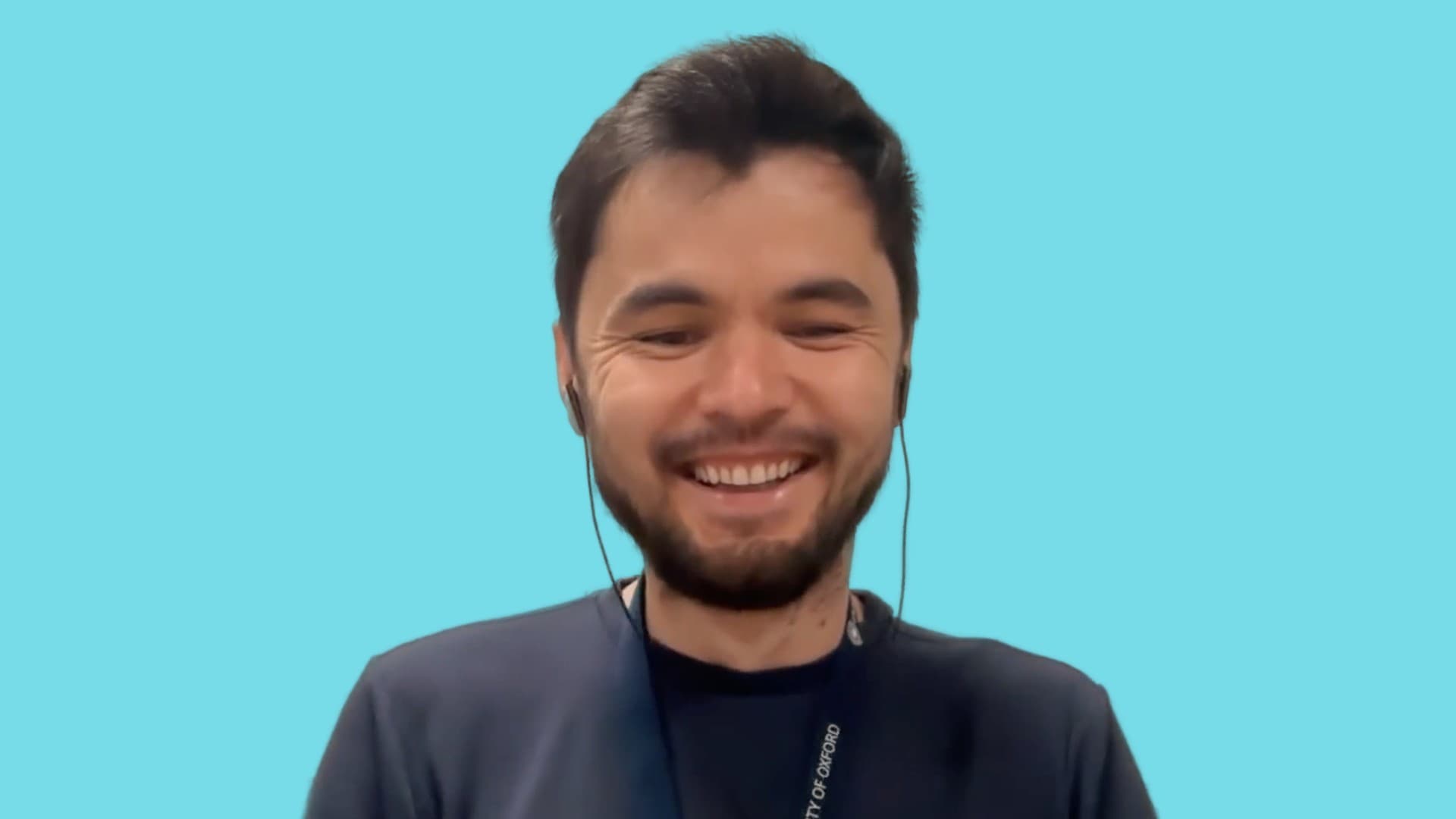
Meet Kiran, an AI researcher who loves solving hard problems, working with smart people, and turning bold ideas into working code.
So my name is Kiran Chhatre. I originally come from Pune, that's west of India. And currently I am a doctoral student at KTH, Royal Institute of Technology in Sweden.
At work, most of my time goes into debugging or working with a lot of computer software code. That includes writing new code or fixing some of the older code that may have been written by me or my colleagues or other doctoral candidates around the world.
But then there's also lot of administrative overhead that includes sending and reading emails, writing reports, looking at economical budgets, and then re-routing the finance in the right direction, especially focusing in AI.
Because I run large models for doing some fun AI things, I also look into the hardware, the GPU requirements I would need in running my AI algorithms and models.
I don't have a typical day, so to say. My everyday is different, but it always starts with some looking at very specific emails or anything that requires an urgent attention.
But once that's done, then I go back to my long-standing to-do list, and that's a very long to-do list. And I try to pick the ones that are making the most sense today and then I go on with it.
As I come closer to the end of the day, I seem to be more effective. That's when I also get most of my work done. This is just a subjective experience because I try to be a morning person, more lately as a PhD student, I tend to be more like an evening person. So it's very different day to day.
So my work colleagues are one of the greatest gift I could have ever had as a PhD student here in Sweden.
I get to work with very intelligent and smart scientists all around the world, especially through remote collaborations. Or I oftentimes visit their facility that includes large AI companies as well as other top universities.
But even where I'm located right now within Europe, I have my supervisors who are located in Sweden or in Germany or in Ireland. So these are my main contact points.
So the best thing is to witness the number of hours and months I've put into towards a specific project. It's to witness that it really comes to an end and it's successful.
Within the field of artificial intelligence, there are many fascinating insights that we are able to find out more recently in the last five years. And I think it's very fascinating to be able to come up with a new algorithm or a new idea and see that come to a realisation that it's useful and somebody can give some feedback as to how can we improve it further.
I would love to say the hardest part is to actually do the work, but I would go back a few steps and rather say the hardest part is to choose what I should do and what I should not.
Because once you choose a topic, it's more or less decided that you have to continue that journey for a specific amount of time and if you choose something that you don't want to do or which is not as fruitful as you think it will be, the outcome will be not so good no matter whether you have an expertise in that field or not.
So the focus is to actually choosing the right thing rather than doing it the best possible.
So there's a long version and a short version to this question, but I'll try to summarise with the short version.
There was no predefined path that I wanted to take to get to where I am today. Matter of fact, I wasn't even sure I would do a PhD or get to work in AI because I come from a very fundamental field of science, which is mechanical engineering.
I did an undergrad in that and I also did a Masters in applied mathematics and mechanical engineering in Germany. But as things proceeded and as I got brilliant opportunities, especially working in Germany, in the US, I figured out that the world is somehow changing.
And I was very fortunate to be surrounded by the right people who were part of the change, who gave me the right guidance and helped me choose something that would be more optimal with my own understanding and level of competition that I could bring forth.
So I'm very grateful to the mentors that I've had so far and to get to do a PhD on the right topic in the right time. That is what makes my feeling about the whole PhD journey much more fulfilling and rewarding, than the nitty gritty or the specific outcomes I've got through different research projects.
School education is very abstract thing for me.
It's interesting, but it's not tangible, so to say. So it's good to get you started. It's good to make you get up from the bed and start working on the things that you want to do. Maybe scratch your head. Maybe sleep a little late one day. Maybe go back to your friends and discuss what you did, understand what you didn't.
But the practicalities of the education is something I still don't comprehend because I might be doing AI today and five years later down the line probably I'll be doing something completely different.
This I draw exactly from the fact that five years ago I was doing very different things, and the five years before that I was also doing very different things.
So I think education is to just keep you sharpened and you know, just keep acquiring more and more skills under your belt as to what you can do in different circumstances.
But probably I will not attribute the education to be something like building blocks. I would rather say it as I felt like along this journey, I was just going forward, gathering different bounties in a game. You can think of it like that.
And then when I look back, it's easier for me to connect the dots as to what helped me the most and what didn't. And I would still not say that the things that didn't help me today probably will help me in the future. So I'm very optimal in that direction.
So school education is to keep yourself updated and sharpened with logical skills or aptitude or other acumen, but not really that you would learn today and go and apply tomorrow because you never really know what's going to happen.
I would like to have two advices here. One is to look after your health because especially when you get too excited about or too passionate about something that you want to do, whether or not it is concrete, as long as you have the passion, I think you're on the right track.
Of course, you need to get in your moral principles in there. So you could be passionate about bad things and you don't want to do that. But as long as you're passionate, I think one of the most important thing one should do is look after their own health or health of their loved ones. Which is something I learned through a hard way.
And secondly, second advice I would like to get explicitly is to be way more curious than I am today. Because like I think the origin to all the things that I have done so far, is that still everything stems from curiosity and this questioning attitude.
Not in the form of being rebellious but just to know more about what's going on. I think these two things are very vital in the long run.
So I would rather like to have more explicit advices for these two types of categories in my early life.
Related careers


Related subjects


You might also like
This page contains original content developed by Coffee With Ltd. You may share this page as a link but you must not copy the content or use it with AI tools. All rights reserved.