Chelsea Williams
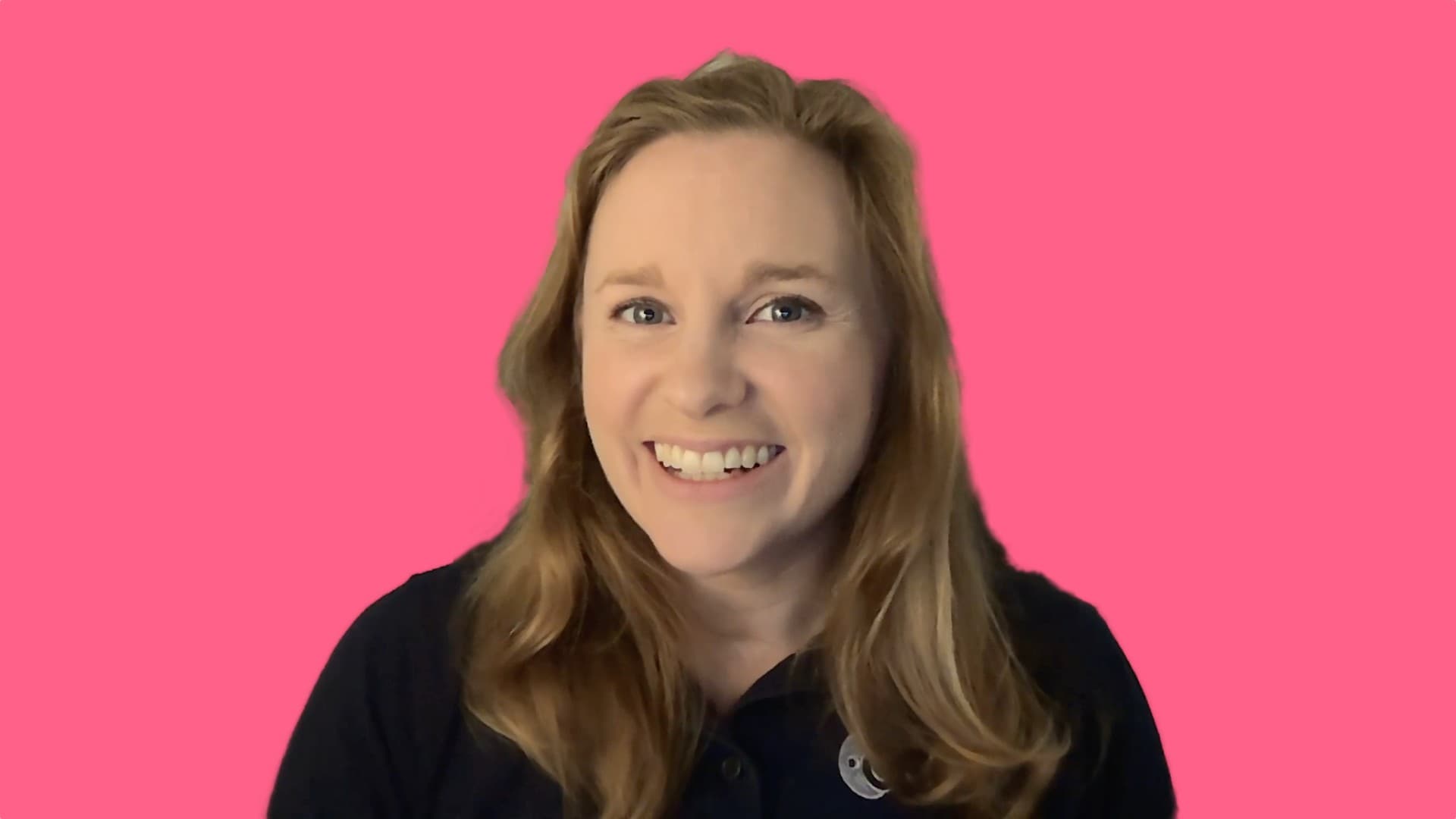
Meet Chelsea, a quantum physicist who loves intellectually stimulating work that spans science, technology, engineering, and maths.
So my name is Chelsea and I'm based in Bristol, and I work as a physicist specialising in quantum computing.
So most of my time I spend working on various projects. So a project involves a number of things.
So firstly, we start off with working with our collaborators to understand a particular problem that they want to solve. Then we spend some time talking to various people with various expertise to understand how we might be able to solve those problems.
And then most of my time from that point is then actually working on the solution and developing a novel way of solving said problem.
So that could involve reading various papers and reports online to understand work that's already been done, then understanding ways in which we can improve existing solutions or coming up with new ways of solving those problems, and then spending my time coding and problem solving and building various algorithms and models to actually solve those problems.
And then finally putting together a set of results and conclusions into a report or a paper that we can then share with the community.
So in a typical day, I start off with anything that is time sensitive. So for example, I might have to prepare for an upcoming meeting or put together a presentation that I'm due to give in kind of some capacity.
And then after I've done those kind of things, I then spend most of my time working on the projects. So reading various documents online or learning about a new concept or actually coding and working through the development of novel solutions.
So I work with people in academia and industry. So what that means is working with people who are experts in quantum computing from the universities, as well as working with people who have specific problems in companies that they wish to solve.
What we do is we work together as a group to figure out exactly what problems we want to solve. And then use the expertise from the quantum computing side to figure out how we can construct a solution to these different problems.
And the way in which we kind of collaborate is by setting various meetings. So this could be a weekly meeting or a monthly meeting where we talk about the progress, where we talk about the research and the problems that we've come across, and how we can actually build up a novel algorithm or model that actually solves some of these really tricky problems.
I think the best thing about my job is the fact that it's so intellectually stimulating.
Every day my brain is working really hard and there's never a moment where it's boring or dull. I think my role is quite interesting because it covers the entirety of science, technology, engineering and maths.
So I feel like I have to be constantly learning and developing the skills and knowledge across all of these four different domains. And that keeps the projects really interesting and exciting.
I also think an interesting part of my job is being part of the quantum computing ecosystem. So we are kind of a quite a small niche group of researchers across the world working on this really exciting and emerging technology of quantum computing. And I think being a part of that ecosystem is really exciting.
I think the hardest part is trying to bridge the theoretical physics with the actual commercial adoption of quantum computing.
So what that means is trying to translate some of the actual physics and the raw maths of what quantum physics can offer, and being able to translate that into an algorithm or model that actually solves a real world business problem.
And being able to translate between the science and the business is something which is quite challenging, but it's also where a lot of the exciting problem solving comes from. I think it's also important to kind of manage expectations.
So a lot of people who are unfamiliar with quantum computing have a lot of expectations for what quantum computing can achieve.
And it's hard for us on the research side to be able to manage those expectations and be able to communicate quantum computing in a way that allows people to understand what it can achieve in the short term and what it might be able to achieve in the long term.
So I started off pursuing my undergraduate degree in physics. I chose physics because in school I always enjoyed maths and science, and so you kind of put those together and you get physics.
And then after that, I did a master's in theoretical physics. I didn't really enjoy experimental physics, so I did theoretical physics to concentrate more on the theory, more on the mathematical and computing side of things.
I then spent two years working in the investment banking space as a quantitative analyst. And in that role, I was working on kind of coming up with novel models to improve the automation and efficiency of various tasks within the financial services space.
And during my time in that role, I came across the innovation team who were working for the bank. And they were experimenting with emerging technologies and quantum computing was one of those.
At the time, they were working on how to use quantum computing to optimise their portfolios, and it seemed like a really interesting space that not only kind of solves novel financial problems, but also uses kind of the physics to do that.
And that kind of overlap between finance and physics is something that really interested me.
And so at that point, I figured that quantum computing is going to be a really interesting technology that's going to transform not just the finance industry, but many other industries. And it was at that point where it was a really new technology that hadn't really been explored too much.
And so I decided to go and do a PhD in quantum computing to become an expert in this really niche field with the intention of being able to utilise those quantum computing skills in the future to really solve some of these interesting business problems that can help and be solved with this new technology.
I think from the very start of kind of my A-levels really, the maths and the science has been very key to helping me progress to where I am today.
Having that fundamental knowledge is super important because whenever you come across a really difficult problem, you always kind of go back to the basics in the beginning to build up that knowledge again.
Especially when you're working with novel problems that are really tricky to understand. So I feel like having that foundational knowledge is super important.
I also think that working in the kind of science and maths space gives you a certain way of solving problems and a certain mindset that is really important for the type of work that I do in research, where there isn't necessarily a solution to the problem and you're working on problems that have never really been solved before.
So I think having a problem-solving mindset is really foundational to be able to progress forward.
I guess one moment I remember quite vividly is one of the first projects that I worked on when I started working in this field.
It was a project that I spent quite a lot of time working on and it was something that was at the time very new to me.
And it was a project that had a lot of commercial potential. So it was coming up with an algorithm to solve really complicated equations that are used to model engineering problems.
And so I kind of utilised my entire science, technology, engineering, and maths skill sets to work on various parts of this project. And I think the proud moment for me was when I actually completed that project and reflected on what I had achieved.
I think it was really good to see the effort that I put in and the outcomes that we were able to achieve with my colleagues because it was such an interesting project that was really quite challenging and had quite a lot of ways in which it could be used for other problems in the future.
I think the advice that I wish I'd had is to say yes to every opportunity.
I think whenever you're presented with an opportunity, it is an opportunity to not just learn about a new domain, but learn various skills. So every opportunity is a way of learning and enhancing your skill set.
And as well, I think every opportunity can lead to other opportunities that you perhaps never thought about or considered.
So I think my advice is to say yes to everything because you never know where that might lead you.
Related careers


Related subjects


You might also like


This page contains original content developed by Coffee With Ltd. You may share this page as a link but you must not copy the content or use it with AI tools. All rights reserved.