Ikboljon Sobirov
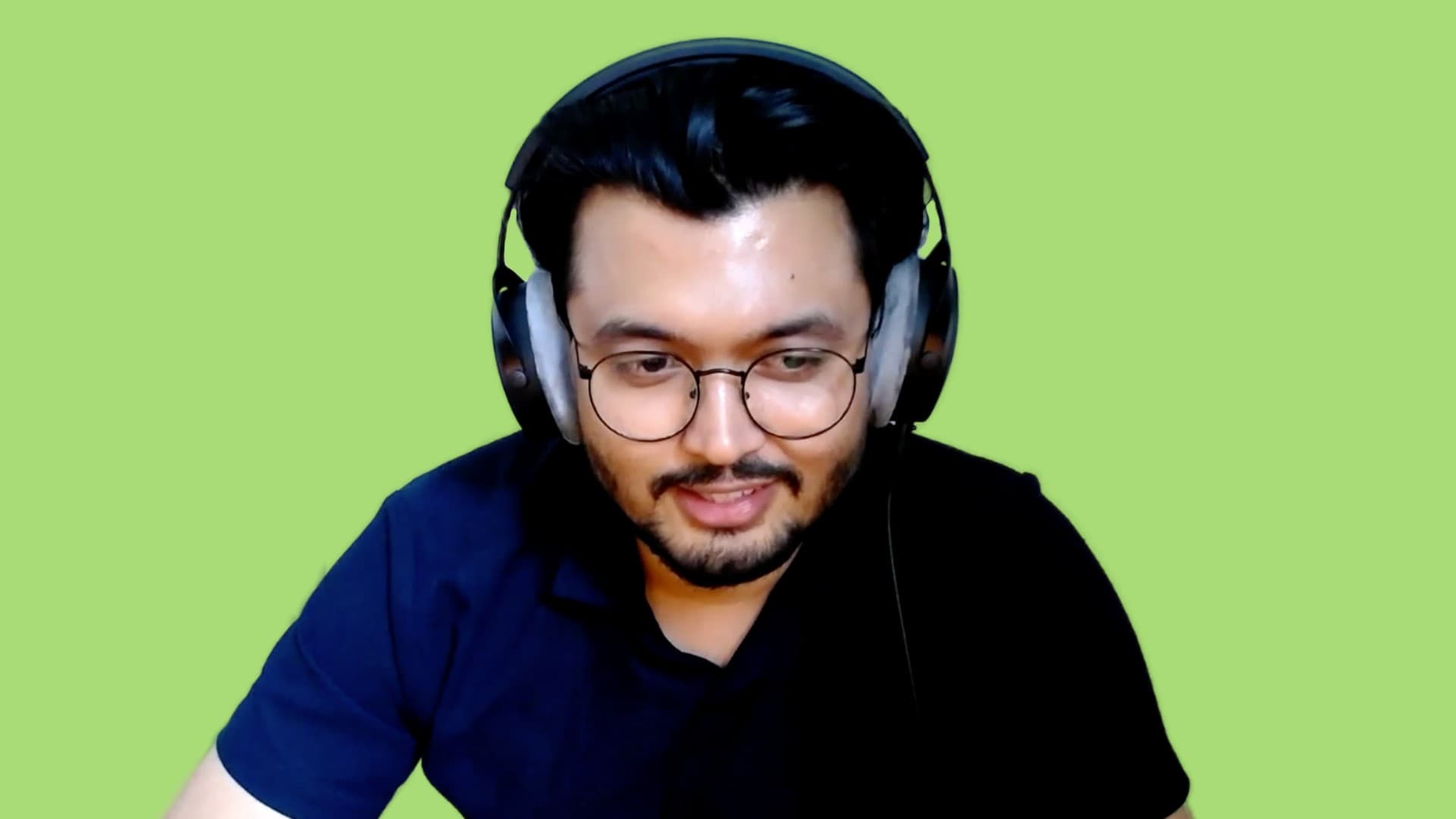
Meet Ikboljon, an AI researcher from Uzbekistan who loves solving clinical problems with code, curiosity, and teamwork.
Hello, my name is Ikboljon Sobirov, a rather quite unique name. I am an AI scientist and DPhil student, PhD student as we say, at the University of Oxford. And I provide AI support to our team.
Most of the time we work on so many things, essentially because it's a PhD life.
So you've got the academic aspect of the work, but also you've got the non-academic, some administrative and some, of course, personal life that we live.
From the academic point of view, so most of my work, most of my time is spent on developing different AI models, training all these models, experimenting with different architectures and trying to solve clinical problems using AI.
And to do so we have to come up with different hypotheses and experiment with them. Sometimes, and more than often, your hypotheses fail so you have to come up with another one and experiment and over and over again. You're in that cycle until you discover something novel.
Typically I start early in the morning. I come to the lab and usually work from the lab. But oftentimes if I'm feeling lazy, I stay at home and work from home.
But most of the time I'm in the lab. I connect to the machines. Because we are using AI, we need to have strong, powerful machines. So I connect to them, what we call servers, and I try to solve as many problems on my note list that I have as possible.
So usually I have small, small tasks that take some of the time of the day. But it covers a lot of coding and experimenting. And once you get those results, the other bit would be more on presenting those results.
So I cannot say that every day is the same and it's quite flexible, so it involves a lot of coding, a lot of experimenting, and a lot of getting, you know, beautiful output results and present it in a presentable way. And writing manuscripts on them and writing research papers on them, presenting all of our all of our results.
I am in the medical sciences department. So we work with a lot of what we call doctors in general but our team is multidisciplinary, so they come from different disciplines, different subject areas. So we've got cardiologists, we've got radiologists, we've got biologists and data scientists, statisticians, myself as the AI researcher.
And all of them, all of us come together and try to solve a clinical problem using multiple, you know, disciplines across the science. So the meetings are also, you know, covering all aspects of cardiology, let's say cardiovascular medicine, so any science that contributes to that comes together.
I think the best thing is the clinical impact that we are trying to provide.
So we're discovering different biologies that are invisible to the human eye, that only AI can detect, because they're really good at detecting different patterns.
And when you allow, when you train AI models to detect this kind of invisible patterns, what we call biologies, then we can discover completely new biologies that can have very high impact in people's lives.
The hardest part I think would be you have to be ready to fail and failure is quite, quite common.
So it is from the day to day activities that we do, like experimenting the hypothesis you come up with and you experiment and it fails and over and over again.
So you have to repeat that cycle over and over again and sometimes you get stuck, you don't have any ideas on what to do next. So that's where, you know, your supervisors come in to help and all.
But if you're not really good with embracing failure, it's gonna be very tough to do a PhD. So yeah, I think that's the hardest part, I think. It was difficult for me to get to get adjusted to it when I started, yes.
I come from Uzbekistan, that's located in Central Asia. I did my undergrad in Uzbekistan and I moved to the UAE, to Abu Dhabi, to do my master's.
And that's where I did my master's in machine learning and AI. So that's where we did a lot of theoretical understanding and how to develop models, how to train them and all of that.
And my initial exposure to Oxford was in the summer of 2022 when I came here as a visiting researcher. I worked with this team and I was able to network with them. I was able to prove that I'm a valuable asset to the group.
And then after that I applied to the PhD program and was accepted to the program with, you know, full funding and everything. And yeah, I'm lucky to be here, I guess.
I think schools are very, very crucial in that they provide fundamentals across a wide range of disciplines.
So yes, I'm from the specialty perspective, I'm an AI researcher, but then not only did I take mathematics and for example programming, I also took a lot of, you know, different languages, different sciences, different arts.
And they're extremely crucial because first it gives you general fundamentals across all these disciplines that will be useful in the future that you don't yet know how in what ways they will be useful.
But also from the second point of view, it gives you the capacity to give a taste to different aspects of life, to science, to arts and to sports and many aspects of life. And to discover yourself essentially.
So in my point of view, my school was really essential to give me that opportunity. Yeah.
Okay, I think it is not necessarily highly academic related, but I still remember and I have the video of it.
That was when I first came to Oxford. And I have, you know, the wow effect, I have my impression of how beautiful the city is. So the very first impression of the city of Oxford. I came here, I saw how beautiful the architecture, the infrastructure, the lifestyle is, and how the olden days are, you know, interlinked with the modern technology.
So as I'm walking around the city, I was video-recording myself and the city, of course, and then audio-taping myself along the way, video-taping myself along the way.
So I remember when I looked at the Sheldonian Theatre and the Rad Cam, which are the, you know, iconic buildings in Oxford. I was like, wow this is so beautiful and I think that's the moment I'll not forget like from memory.
I think the only advice that I have is not to be afraid to take advantage of the opportunities, and creating them if they're not there, and not to be afraid to take them.
Because for myself, from my point of view, I think I let a lot of opportunities pass by and which is still fine, but I let them pass by because I was afraid to fail.
And I think it is when you embrace that life comes with this different levels of failure and then if you learn to embrace that failure then you'll explore and you will reap the benefit of all these opportunities.
So if you do try out things that you think are not even necessary, like for example, I'm a scientist, I don't have to do much of arts, it's not really a good approach. So even if it's in arts and the opportunity presents itself, we should give it a try even if you fail.
So don't be afraid to take the extra step, an extra mile to, you know, take the opportunity.
Related careers


Related subjects


You might also like
This page contains original content developed by Coffee With Ltd. You may share this page as a link but you must not copy the content or use it with AI tools. All rights reserved.