Simon Moxon
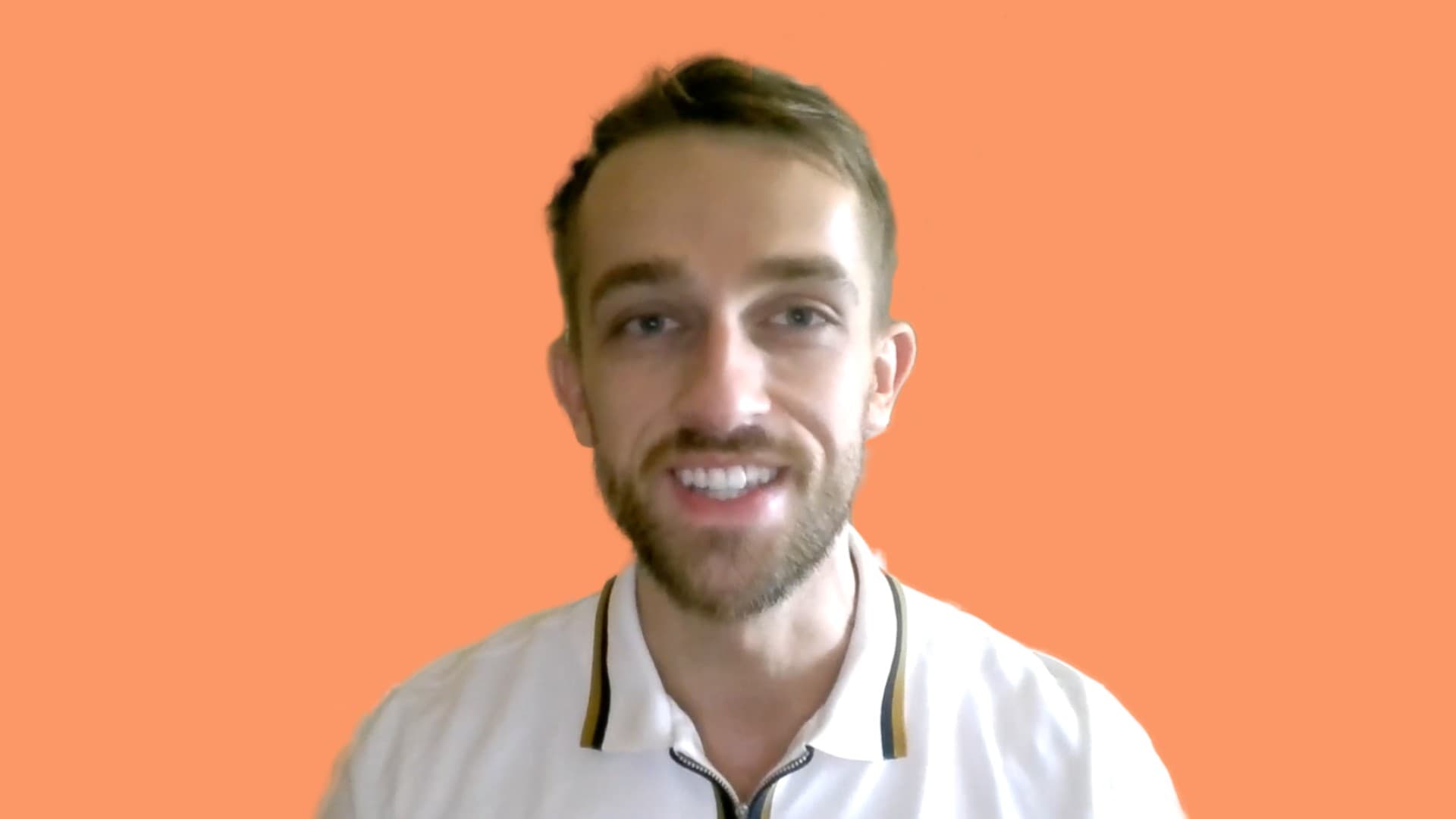
Meet Simon, a data scientist who loves exploring new ideas, solving hard problems, and finding meaningful patterns in complex data.
So I'm Simon Moxon. I live in Norfolk and my job is kind of broadly described as a data scientist.
So I'm kind of lucky. I get paid to think. And I have kind of freedom to explore ideas.
But basically, I work with numbers. And I try to kind of interpret complex data, noisy data, and find kind of significant results, either in one of my jobs, which is a university professor, where I'm a researcher in biology.
And I also am a contractor and I work in quantitative finance. So I try to understand financial data and then predict if the price is going to go up or down. And yeah, so it's quite challenging.
So I work completely remotely. So I get out of bed, come down, make a coffee, and then sit in front of the computer.
And basically, I try to gather data, so let's say financial data. And I will look at trying to identify patterns over time, so in a time series. And then write code, so computer code to be able to automatically bring in that data, look at signals and then design strategies of when to place trades on the financial market and hopefully automatically make money. But it doesn't always work that way.
Yeah, it's a hard problem. I guess if it was an easy problem, then everyone would be millionaires.
So I have several kind of several jobs, several contracts. So I'm associate professor at the University of East Anglia. There I work on scientific research. So I work with other scientists. Again, mostly remotely.
I have a PhD student that I supervise. And that's looking at biological data, so DNA sequencing data, and trying to understand how your DNA influences different aspects of your biology.
And I also work in that same scientific field with European Food Safety Authority, where I look at data from genetically modified plants and give my scientific opinion on that.
And then my main job, I work with people all over the world. So people in the US, people in Malaysia, in Europe. And we all have very different time zones, so it can be challenging.
And actually, most of our communication is done over Discord, so by text. And then we have a daily meeting where we talk about what we're working on, any challenges that we face. And it's all quite informal. Yeah, I quite enjoy that.
Although I do miss speaking to people in person and actually physically having a conversation, grabbing lunch, whatever. So there are challenges to remote working as well.
I think what I enjoy most is having the freedom to explore new ideas. So basically, yeah, I am not told, OK, do this task. I have the luxury of being able to go away and think, come up with ideas, test them out in practice.
And it's very exploratory. It's research rather than, you know, kind of, okay, here's the task, go and do it. And I quite enjoy that having, you know, the intellectual freedom to, you know, work on cool projects that I think are interesting.
I guess the hardest part is that I work on quite difficult problems and there's no simple solution. So, a lot of the time you'll spend working on something. You think you have a great idea. You put it into practice and you know, it doesn't work and you have to be able to kind of cope with that, you know, disappointment when something you've been working on isn't fruitful.
So I think maybe that's the hardest thing, but you get used to it.
It was quite a long journey, I guess. So I started as a biologist, did my undergraduate degree in genetics. And I realised I was no good in the lab. So I love biology, but I wasn't cut out for a life in the lab. I was too clumsy. I didn't find it interesting.
And I kind of had a second passion for computer science. So I went back to university. I studied for a master's degree.
And this was about the time of the Human Genome Project and this kind of marriage between biology and computer science. So I took my first job at the Sanger Institute where they were involved in actually sequencing the human genome. And I found that kind of synergy between my two very different fields. So I loved working there.
I realised that in science, basically you need to go and do a PhD before you can progress further in your career. So I went to do my PhD. Then I took research jobs after that. Then I got my university faculty position.
And from there I took, yeah, a very bold move, I guess, three years ago now. I went self-employed. So I still have my position at the university but I spend 10% of my time working in academia and then 90% of the time I'm self-employed.
So that was a big change. And yeah, I think I realised I probably wanted to do something different. And I did this in my 40s. This is, yeah, it was a big move for me.
So weirdly, I wasn't that good at school. You know, I didn't get straight A's. I wasn't a model student and at university as well. But I really found my passion in research.
So I didn't like learning what other people had done, but I always liked hard problems, puzzles, solving things. So having that freedom, doing a PhD allowed me to, you know, work on new things that people hadn't done before and that really interested me.
So yeah, it was quite a long road in education, you know, two degrees, a PhD, then research jobs after that. But I think that, you know, I learned so many transferable skills from that, you know, it was worthwhile. It was hard not earning money for a long time, but I think it was the right path for me.
So I think getting my PhD was like a huge moment for me because I think at school nobody expected me to, you know, succeed in the academic world.
And also getting my first university faculty position, that was a big thing for me because it's kind of, academia is a bit like a pyramid where, you know, opportunities get smaller as you move up. And I think that was a real achievement.
I think there's always part of me that regrets not kind of trying harder at school and university and thinking, well, what if I did?
And, I mean, actually 30 years later, I actually got ADHD diagnosis and it kind of, yeah, maybe that was part of the reason that I didn't pay attention at school and things.
So I think if I could go back and have a word with myself, when I was a teenager, it would be, yeah, put in more effort, try harder. And yeah, I think maybe I would have gone down the same path.
Yeah, I think there was always that kind of thing in the back of my mind, what if...
Related careers


Related subjects


You might also like
This page contains original content developed by Coffee With Ltd. You may share this page as a link but you must not copy the content or use it with AI tools. All rights reserved.