Mark Jarvis
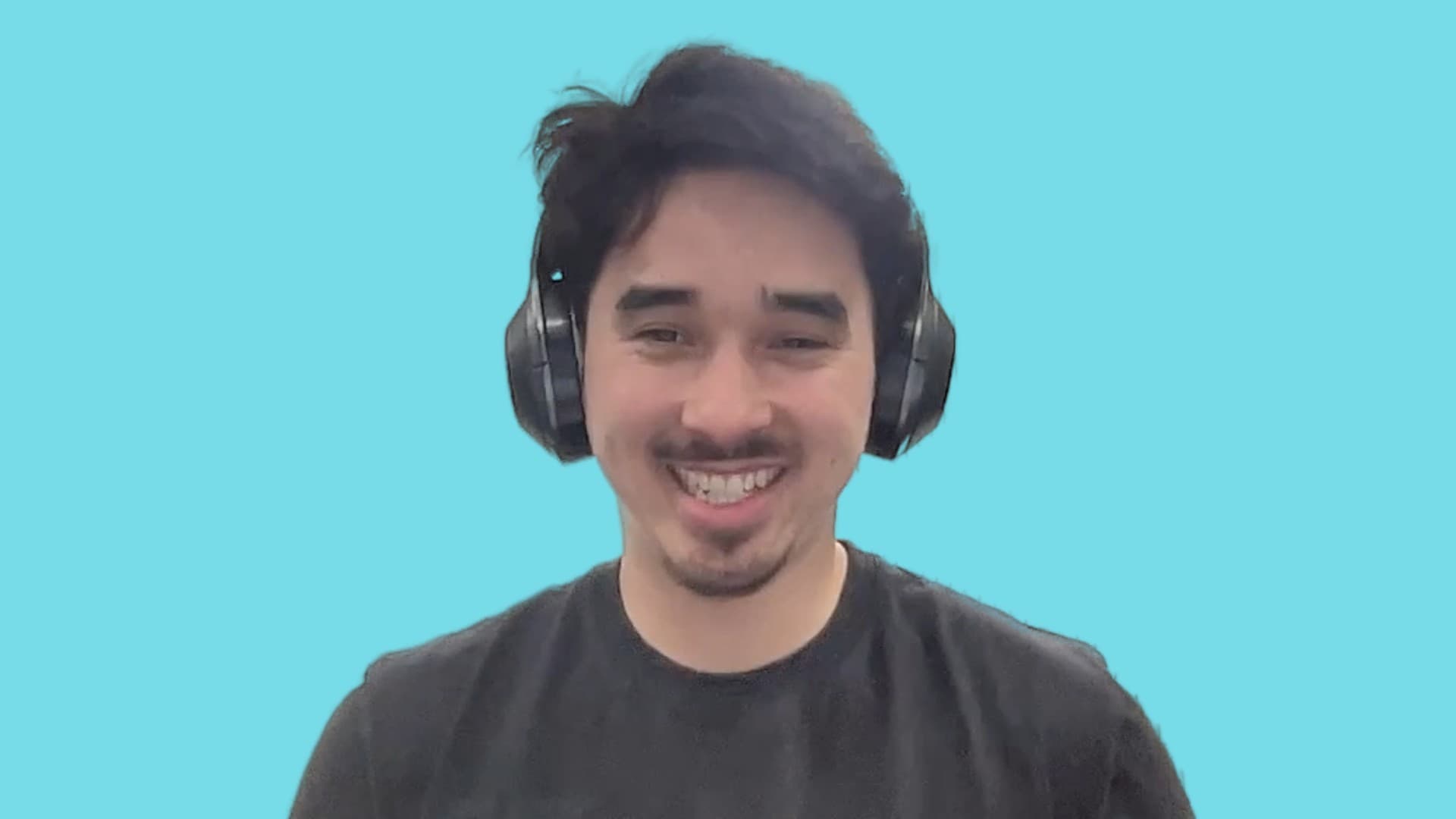
Meet Mark, a presenter who loves the variety of radio interviews, video production, and live events.
I'm Mark Jarvis, I'm currently in London and I'm an entertainment presenter.
Ironically, editing. That is more of the job as a presenter than the actual presenting part of it.
A lot of it behind the scenes is writing scripts, learning scripts, sourcing content, and editing content for whether it's a radio show and you want to put clips out or audio clips, or if it's videos for socials.
A lot of the behind the scenes is where the graft goes in. The fun part of the presenting is only a very small part of the job.
And a lot of prep goes into that as well, learning lines or learning about multi-camera setups and things like that.
Yeah, a lot of it is kind of more presenting admin, I suppose you'd call it.
This is a really interesting one because it varies from day to day.
So freelance life is always completely different but a general day to day, I get up in the morning, record my radio show first thing, then usually come to the office where I work in a production studio.
So I'll be doing things like bulletins and headlines or entertainment shows, podcasts, my own show, Backstage Brew.
And then in the evenings, it varies. So sometimes from the office, I'll go to do a pub quiz at a local pub, that's hosting it as in it's work, or a lot of the nights we have shoots or theatre events.
So yeah, a lot of the time the freelance world can look like kind of 7am till 10pm, but it's across four different freelance jobs, which is quite busy, but also a lot of fun.
I work with quite a few people.
On the radio, I've got a producer called Danny, who's brilliant. He's really experienced and he really knows what he's talking about. He's going to love me saying that as well.
And then when I come to the office where I work at video blog, my boss is called Lovig. He's brilliant. He's kind of an all rounder actor, presenter, cameraman, editor. So we create a lot of work.
And then in-house we've got a lot of presenters and a couple of editors as well who make a lot of the shows that go out on socials or the website or wherever it goes.
And then in the evening, depending on what the job is, whether it's a quiz or shows or socials, it's a wide range of content creators, presenters, editors. Sometimes you get to bring your mates up, plus ones. That's always fun.
But a lot of it's networking with new people as well. So it's a real hybrid of... you need to be able to get on with people a lot as well.
All of it. It's such a fun job.
I would say that the best bit is also it's varied, that you never know what you're going to get that day. It's just so much fun.
You get to be your true authentic self. You get to be silly a lot of the time. You get to play kind of like being like an adult kid, which is good fun. And for someone like me, that's perfect. It's like the class clown.
But I think the best, the best bit is the variety of what you can do.
It's always nice when you have big moments when you interview a celebrity like you've always admired or someone you like their work or you do a video on social media that goes well.
You still hit the same success margins that you would in a corporate job just in a different realm. So they're always nice moments as well to know that you're successful in doing what you do.
But it's kind of always been my dream. So I think the best bit about it is that I'm getting to do what I love full time.
What's the hardest part of the job? The days in the week, I would say.
The hardest part is because you finish the week and you've always got a to-do list of like 15 things that you've not completed that week that get carried into the next week.
And then all of those like weekly tasks come back again and you get other freelance things added on top. So your to-do list is never really done. There's always more you can do.
And I think the hardest part of the job is that even when you've done your job in the office well, and you've done your job on the radio well, you still have that second, third, fifth job of having to post on socials, having to keep active, having to show that you're busy, show that you're working, show that you're growing your profile for other employers, you know, for opportunities, for invites, for whatever it is.
You always have to be active on socials and it's what everyone is looking at now, agents, employers. Some people choose to post on socials all the time, but with this job, as much as I enjoy it, you have to post on socials all the time.
And it's finding the time to then make that content as well as doing your actual job.
A lot of presenters will thank me for this, I was an actor. Still am, still work as an actor, got an agent. But a lot of the skills are transferable.
And it was a director that said to me when I was about 18, maybe, I was an intern at Capital at the time and they were like, you've got a really good voice for radio, you should give it a go.
And I was like, oh no, I just want to be an actor, blah blah, blah, typical 18 year old. And then eventually I gave it a go because about seven different people said it. And I was like, okay, this is weird now.
So I then gave it a go and it just blew up. And I was like, I didn't know I was cool enough to be a presenter, but actually, here we are. And then it just became a career.
I went to drama school and that's how I met my boss now who I work for, a video blog, because he went to the same drama school maybe years before. And then I kind of fell into the full-time career of it through acting basically. So I'm one of those.
Although there's quite a lot of us presenters now, a lot of the presenters that are really successful and are doing good work are people who have been performers or creators before, because a lot of the skills were already there, a lot of the communication barriers that people face when they're on camera or whatever, we've already learned.
So that's how I got into it, kind of through growing up as an actor and then realising that actually I just wanted to be the silly version of myself every day.
That's a really good question.
School education. I think in terms of school education, I was very lucky. I went to a very good school. A lot of really good people. So I had that kind of real grounding in communication, making friends, all that kind of stuff.
But I also learned a lot about a lot of different subjects. You know, with this job having like a plethora of knowledge is really useful because no matter what situation you're in, you might be on a podcast and someone randomly throws in like a capital city that you need to talk about. And if you've got that knowledge, you can just bring it up and improvise. It makes your life a lot easier.
And it also, it makes you employable to a lot of people because you've got a wider range of skills that people can just pull on. Cause a lot of the time nowadays people will hire you as a presenter because you're a presenter, editor, producer, French speaking person. Do you know what I mean?
Like you will be hired to do one job, but with four job abilities in there. So they'll kind of hire you to do all of those four jobs.
So the more you've got in your skillset is really useful and school helped quite a lot for that. Like a really good education.
There's a few. Interning at Capital is such an amazing grounding into radio. Like I'll never forget that.
There was a lot of moments growing up as an actor as well where I was very lucky to be in situations, like I was an extra in the Batman film.
And I just happened to be the person that was stood waiting for like conversation or like directions from like our extras director. And Christopher Nolan walked over, the director of the film. And was just like, yes, I'm gonna get you guys to do this. And I ended up having a full blown conversation with him.
And it's like those moments, like to get to chat to people that are your idols.
They're really the moments where you go, yeah, I can do this. This is what I wanna do.
I wish I'd learnt to dance when I was young because when you get older... I used to ice skate and play ice hockey and stuff... but a lot of these skills are things that are a lot harder to learn as an adult because you're not as fearless.
It's so important to work on the craft constantly and be the best version of you because there's so many people out there nowadays.
There's so much competition, there's so much saturation, but sometimes I think I've been guilty of working too hard on the craft and just focusing on that.
And don't get me wrong, I don't regret it, you know, I've had an amazing time with other people I've worked with, but I've worked really hard for all those companies.
But there's definitely moments where I look back and go, actually, I should have just sent things out earlier, like radio demos and submissions to different people and just just been a bit braver. You have to be ready to do that because you only get one shot.
But I think there's been a few moments recently where I've been like, I've been ready for like two or three years and just need to bite the bullet and be fearless.
My younger self used to think be fearless, but I think I would say to them now, don't lose that. Remember to keep doing that and always action it.
That's probably the advice that I would give to my younger self and to my now self as well.
Related careers


Related subjects


You might also like
This page contains original content developed by Coffee With Ltd. You may share this page as a link but you must not copy the content or use it with AI tools. All rights reserved.