Ellie O'Brien
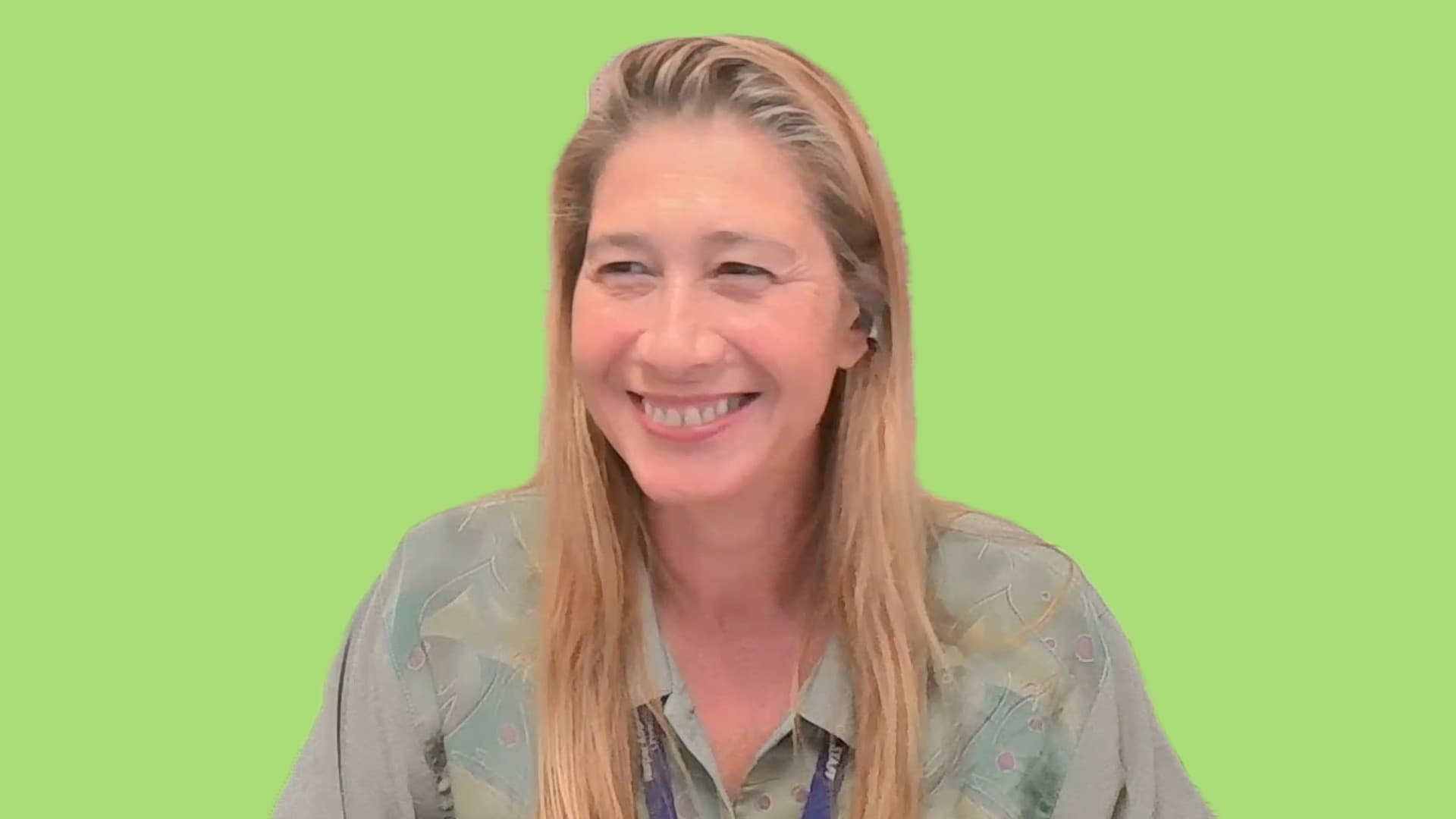
Meet Ellie, a wildlife biologist turned content creator who loves green spaces, chatting with ecologists, and sharing science.
Hi, I'm Ellie O'Brien. I live in London now. I live in East London.
My job title currently is Digital Content Officer, but I'm a wildlife biologist turned science communicator. And as a part of that, you become a content creator.
So I work for a charity that is held by a local authority. So it's a little bit of a complicated setup, but I essentially work for the Parks Department across London. So all of London's biggest green spaces like Epping Forest and Hampstead Heath, that you might have heard of.
I work in those with the ecologists and the conservationists making sure that the land is managed and it's good for wildlife and it's good for people.
My current job, I spend most of my time creating content.
So I go and speak to the ecologists. I go and speak to the people who manage the parks and I get that information and I go away with it and I make social media content and website content.
And I also work with press officers. So they're people who speak to newspapers and we create press stories and we create articles to tell the public how the park's managed and how best to enjoy the park.
So for example, it's been a very hot summer this year so we would ask people not to do barbecues in the park. So that would be something that would come back to me. I would speak to the ecologist, hear how the birds are doing, go back and say okay we need to manage it in this way, how do we tell the public to help us manage it in that way.
A typical day is really lovely. I go to one of the parks and I tend to go into a green space. So that's the word that we use for lots of different types of parks. So whether it's a forest or a wood or more like the park that might be on your street, they're all green spaces.
And I'll go to one of those and I'll walk around it. I'll meet with rangers and keepers and gardeners and I'll talk to them about what's happening in the park.
And then I'll go and sit in an office with the rest of my team and we'll talk about how to make that content really engaging and how to make sure that we're speaking about the science in the right way.
So when you're a communicator, you often work with people in marketing and when you work in charities, which you often do when you work in biology, you also work with fundraisers.
So I work with fundraisers. I work with communicators, marketers. So there's a big, big mix of how do we create a story to encourage people to donate money? How do we do it for public engagement? And how do we also sometimes create narratives and put together narratives to help internal teams?
So that might be the gardening team might not understand why the committee and management have decided to manage land in a certain way. So I would then put together a little document, say, this is the science, but I boil it down. So it's really understandable for anyone who reads it.
It could be a member of the public who never even sat a science GCSE and it could also be someone who's really, really at the top of their academic game, but they don't know how to talk to the public about science.
So you have to marry those two things together and make it really clear for everyone.
And there's lots of people that filter in and talk to that. So on one day I might be speaking to an ecologist all day and we might be out and we might be measuring the number of insects we can see. I might go for a walk around with them and I might see the bats and the birds and the foxes.
And then the next day I'm completely office based and I'm talking with the corporate team about okay I went and saw the ecologist yesterday, here's the information, now I'm bringing it to you, let's make it really accessible and engaging so people care about that information and don't come and litter in the parks.
Going to the green spaces is amazing because sometimes I have a meeting and it is a meeting and we are doing work, but the meeting is at a pond and I walk for 20 minutes and I go and I stand by a pond and I'm talking about the stuff that I really love.
And I also get to live in a city that I really love as well, which was really important for me. I loved doing zoology and marine biology at uni and I really enjoy being a wildlife biologist, but I wasn't attracted to long-term living somewhere really really remote, which you often have to do if you're doing field ecology. I really wanted to live in a city.
I'm not super attracted to data, which is a big part of ecology as well. Really great if you are, there's, you know, a lot of really interesting jobs in data. But I went down the comms route and it's just found this perfect sweet spot for me where I get to talk about the science and see the science, but I then can go and then create content from it.
I'm really engaged with a lot of different people on a day to day basis. And I'm a very extroverted person. I really enjoy that chatting and trying to get everyone else as enthusiastic about it as I am.
I've done a lot of public facing jobs and when you work in a public facing job, it can be so rewarding and it's amazing that you're providing this service, but it can also be really testing because people can really have a go at you and they can just come and just take their frustration about how something is happening out on you.
And that's a massive learning point of what whatever job you do, there's going to be some people who use you as an outlet.
And you've got to just stay really steady about it and say okay, that's really interesting, thank you for your thoughts, you write it down, you go and take it to a management meeting and you talk about can we do something about this or was that person just feeling a bit frustrated that day.
And that is a difficult part of the job sometimes. It comes with working in local authorities quite a lot, charities quite a lot, less so the more business and corporate that you get but often it's that people management that can sometimes be a bit tricky and you've just got to shrug it off.
During university to support my studies, I waitressed and I knew that I really liked people-facing.
And I did a lot of field ecology then and I did some field ecology after uni as well.
And it's actually those two things together, which made me realise I wanted to go into science communications and take what I loved about field ecology, but be in a more fast-paced, lots of people around environment.
So I started looking at sustainability. And that was when I did a bit of sustainability data and that wasn't quite right either. It didn't actually feel very like I was doing science in the way that I knew it or field science.
So there was a couple of years of testing things out and I think you've got to do that. The job market is difficult. You've got to take what you can. You've got to just figure it out as you go along and not worry about it too much.
Because as I was doing that, I then found a communication job but it was in health biology which is really interesting but it's just not my thing. I really, really love wildlife biology and the environment but what that did was that taught me the corporate skills of communication that a science degree hadn't quite filled.
So taking that opportunity, even though it didn't really scratch the itch, helped me get the job that I have now.
And it also helped me understand what job titles were out there. So you would never think I've just done a zoology degree, I'm now going to be a Digital Content Officer. It's hard to marry those up and understand how they're actually incredibly related.
But going through that journey of, okay, I like field ecology, but I want to be more people-facing. I tried data. Okay, that's not quite for me.
Then I went to communications. Right. This is the right field but not the right topic and then the job opening came up for a very similar job creating content, it's biology but it's also wildlife and the environment and green spaces and I just went for it and I love it, it's brilliant.
Well, massively, I did triple science at GCSE, which helped me go on.
I knew that I wanted to do science at A-level. I did biology, chemistry and English literature for A-levels, which people at the time said, that's a funny mix, quite a lot.
But actually, it's led to me being able to talk about science, which is incredibly helpful. I think it's really good to do a mix and not leave any particular subject or cohort behind. So I did that throughout.
I really enjoyed school and there were definitely times where I got grades that I wasn't super-uber happy with and other times I got grades that I was. And it feels massive in the moment but actually everything leads on to something else for the right reason.
I applied for neuroscience for university and only decided about a week before my A-levels, I don't want to do human biology, I don't want to do health biology, it's interesting but I want to do zoology and marine biology.
And it was a very wise tutor that I had who said don't bother going through the application process again, try clearing. And I did and I found my absolute dream course in Glasgow and they let me defer a year so I went travelling, I did some field work so I was prepped for it.
And yeah, it was amazing. It was just all these things that kind of happened and you've just got to take the opportunity and then I went up and I studied in Scotland for four years which is incredible for wildlife, so that was really really brilliant.
A couple of months ago, you may not watch it, you might do. There's a famous BBC naturalist show called Springwatch and I worked with them on an episode.
They came to one of our green spaces. I coordinated a lot of that relationship. I did a lot of the communications around it. I advertised that they were coming and I just really took hold.
It wasn't, it didn't naturally fall on me to do it, but I basically put it out there and said, I love this show. It's such a big dream of mine to work on, you know, a BBC nature show. And my team said, yeah, absolutely, you run for it. They really supported me.
And it was just incredible. I felt such a high after that day where the show wrapped and it was successful and it looked amazing. And it was just such an incredible feeling. I really felt like, I've made it, I've done a really huge thing that I wanted to do in my career.
And it kind of fell out the sky and I just grabbed it and was immediately like, please can I have this? Please can you guys let me do this?
And yeah, and I think it's really important to have a supportive team who just really celebrate that you want to do that. And yeah, it's just another example of taking whatever opportunity comes along, I guess.
I wish more people knew what it was like mentally to come out of school and university.
It is really tough and people just say just keep going but actually one thing I would say is have a break.
Sometimes you're going to be so overwhelmed and you're going to have a lot of tests to do and you're going to be thinking I need to apply to this and I need to go for that.
And I think if you get to that point where you're like there are so many routes that I can go down now, which is really exciting and it's such a privileged and lucky and incredible position to be in, sometimes you just need to take a step back and say I've just got to try one thing.
It's not that that one thing is gonna be better or worse than the other thing. You've just got to try one thing and then that will lead to something else because either you'll like it or you won't.
So take the job opportunities that come up even if they're not perfect. Don't beat yourself up if you're not sure what you want to do next.
Just have a go and if things don't feel like they're going your way just take a few days. Just take a little break and just be like I don't need to apply to a million things today, write a million things for school or uni right now, and just take a step back.
Related careers


Related subjects


You might also like
This page contains original content developed by Coffee With Ltd. You may share this page as a link but you must not copy the content or use it with AI tools. All rights reserved.