Katherine Kennedy
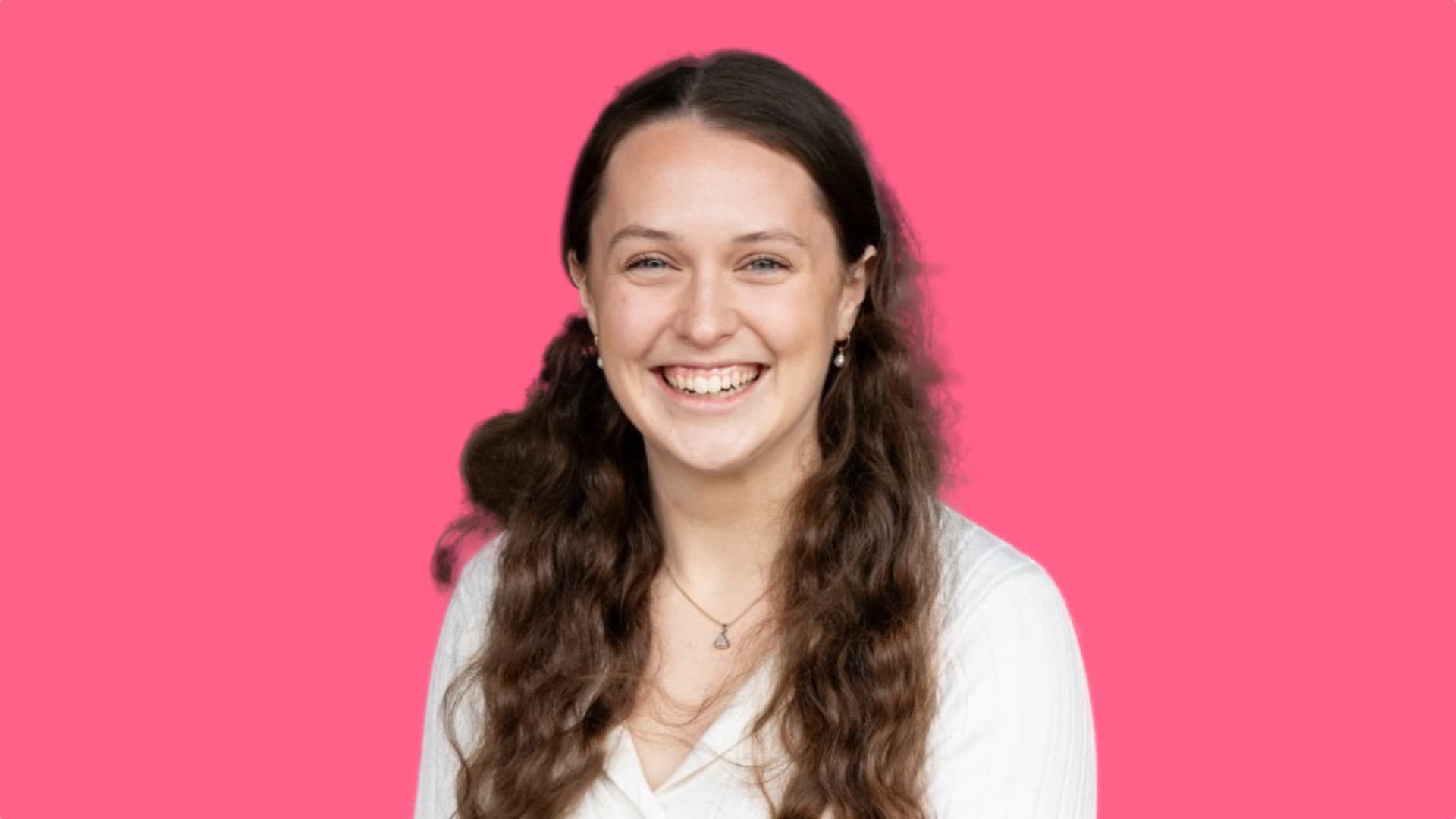
Meet Katherine, an international environmental consultant who loves rivers, seas, and tackling climate change one project at a time.
I'm Katherine Kennedy and I work as an environmental consultant.
I work internationally, so quite often I'm working funny hours. So I might have a meeting in the evening or early in the morning in order to fit time zones. So I've lots of meetings and then I might spend time researching. Researching scientific technical data associated with the challenge I've been hired to look at.
I specialise in coasts and seas and climate adaptation. So a lot of my work is on coastal erosion, flooding, and the consequences of flooding, in particular to human security. I also work a lot on something called the Blue Economy, which is all about how we use the sea to our advantage under scenarios of climate change. So that's what I do a lot of at the moment.
In the past, I used to, because when you start off as an environmental scientist, you start off, I'm afraid to say, on quite low pay, but you get to do loads and loads of work outdoors. So my early jobs were associated with doing field work. I worked on a rainforest conservation project. I lived in a rainforest for six months.
I also, less excitingly, worked in Wales and did lots and lots of field work in the rain. So lots and lots of time spent studying the outdoors, recording it, doing ecological surveys and environmental surveys, sampling mud, all of these things.
And then later, as I progressed in my career, I oversaw other people measuring mud and moved into a more senior position, and now I do a lot of negotiating.
The best thing about my career, and I am incredibly lucky, is that I have had the privilege of working in 53 countries.
So I have worked on very, very remote atolls in the Pacific. I worked in Tuvalu, which is an amazing place, but it is also sadly the first place that we're going to lose to climate change. I've worked in Fiji, I've worked in Vanuatu, I've worked in Papua New Guinea and many, many countries in Africa.
So by far the best thing about my career is that I've had the opportunity to travel with my job and visit the most amazing places, some of which have been very, very difficult.
The hardest part of my job is sitting in hotel rooms in strange countries, not being able to go out and being in a different time zone from my family. So nowadays, now that I'm working internationally, that's the hardest bit is getting lonely.
I've worked a great deal in countries in West Africa, working on coastal transition and river flooding, particularly in the Gambia. And one of the challenges there is that it's sometimes, although they're beautiful countries, they're amazing places to go, they're not countries you can necessarily go out to the, you can't go to the pub, you can't go out with friends very easily. So you have to be very resilient, very able to work on your own.
Quite often I've been managing very big budgets. I used to lead aid projects, big aid projects, 9-10 million euro projects. So lots of challenges about working in places that are not quite the same as where you work and understanding and respecting the systems, noting that some of these systems are different from ours.
I grew up in the northeast of England in Grimsby. And from a very young age, this is so funny because I've been very lucky to have come from Grimsby and had the career I have, because Grimsby's not a place that lots of people go to university from. And I grew up in Grimsby and I was obsessed with the River Humber. I loved the river, I loved the way it moved. I loved the fact that it was brown and not blue, which is a sign of sediment loads.
So I got really, really into rivers. Very geeky. And then as a result of that, I started off volunteering in nature conservation from about the age of 16. I worked as a volunteer with the British Trust for Conservation Volunteers. And then I was able to get the grades to go and study environmental science at university. So that's how I got into it.
Now I think the thing to say also is that when I graduated in 1989, climate change was quite a new thing. People thought I was a bit of a weirdo studying the environment. And so I managed to get a series of entry-level jobs working with an organisation that is now called Natural England, which is the government wildlife advisor, and I spent six years with them working on a number of projects ending up culminating with them on a project on the Thames estuary, working on the management of the Thames estuary.
And from that, I was then able to move. I worked for an organisation called the Centre for Environment, Fisheries and Aquaculture Science, which is DEFRA, UK DEFRA, so UK government's marine science agency. And I was there for six years, and I became director of its strategic planning program, program director for strategy, and I led UK DEFRA's relationship with the state of Kuwait.
So I started working in the Middle East. Worked on the post-war cleanup of the Arabian Gulf after the Iraq war. Kuwait had an awful lot of pollution problems, and Kuwait and the UK had a very special relationship, always have had since that war. And that kind of gave me the platform from which to then move independent and work internationally as an advisor.
I set up a small company and that's when I started working all over the world. I had the privilege in 2017 of being appointed as head of climate change at the Commonwealth Secretariat in service to what was then 53 countries.
Nowadays I work for the United Nations Development Program, I work for the Commonwealth occasionally, I work a bit for the United Kingdom Foreign and Commonwealth Office and the British Council. I think they're my main clients.
So I now do independent work as an advisor internationally on the environment and climate on rivers. It's very niche.
I suppose the difficult thing about working on climate change is it's, you know, it's so complicated, it's a many, many headed monster.
The impacts of it are so wide and they move around so much it can affect, you know, mountains and forests and the food that we eat, and it also is increasingly encouraging wars. There's problems with wars and droughts and things.
So the way I try to work on it is by not becoming overwhelmed, because it's very easy to become overwhelmed, by staying true to my scientific roots.
I did a master's also with the United Nations in peace, conflict and security. So I did formal negotiation training with the UN. So staying really, really true to my roots. Being a scientist ultimately and not an environmentalist, there's quite a big difference.
You know, I work from a scientific perspective, understanding what the impacts are on our planet. But not becoming overwhelmed and always working in teams.
I work a lot in multidisciplinary teams. I work a lot with economists, I work a lot with engineers. Engineering's a fantastic subject. I think if I probably had my time again, I might have done a civil engineering degree, but that's another subject.
So working with flooding experts and working with mathematicians who can model the world and write code that helps us to model what climate impacts are going to be. So the work's very, very multidisciplinary.
I think the advice that I wish I'd had is that you do need some luck, I suppose. That would be the advice I have.
You know, my father was a doctor. So I grew up in the northeast, and so he had a very linear career, an amazing career, but he worked in a very hierarchical organisation where you moved up as you became more experienced.
Whereas environmental science isn't like that. It's very multidisciplinary. You might have periods of real difficulty when you can't get a job. It's a very, very competitive sector these days to work in. It wasn't when I started. So you have to be very resilient and you have to always look for opportunity.
And the other thing is just to remember that everybody needs a bit of luck. And sometimes you get it, you know, and then sometimes you don't and I think that pragmatism I've really learned is nothing's linear, nothing's expected. You know, I've lost projects, projects have gone hopelessly wrong, I've lost jobs, you know, you have to be very resilient and that's the thing is to expect resilience, but also hopefully some luck.
Related careers


Related subjects


You might also like
This page contains original content developed by Coffee With Ltd. You may share this page as a link but you must not copy the content or use it with AI tools. All rights reserved.