Eddy Altmann
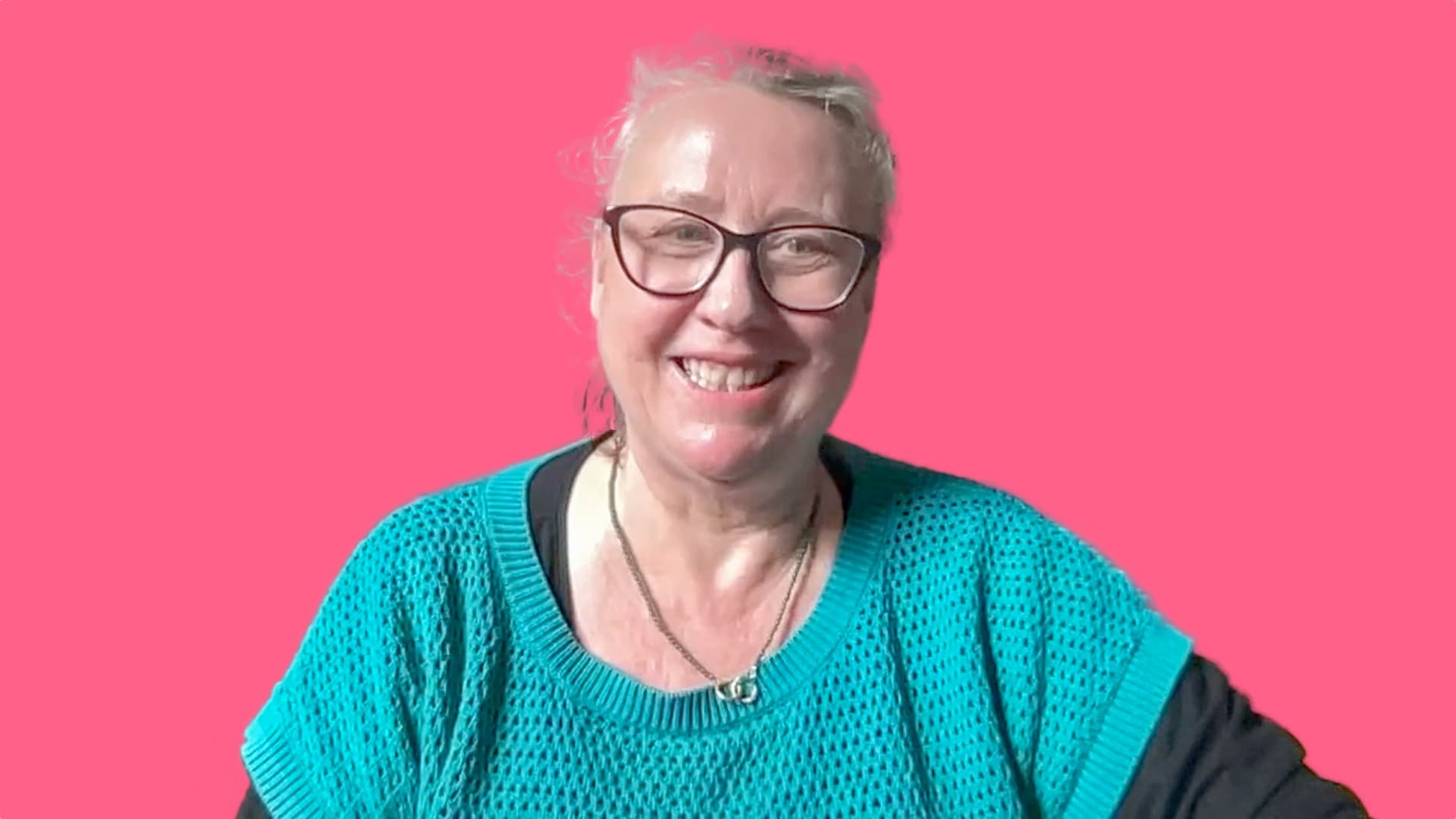
Meet Eddy, a changemaker who loves bridging science and creativity to inspire action on climate and social issues.
Hi, so I am Eddy Altman. I am based in London, in England, and I run a creative arts charity.
Well, the beauty of my work is actually most days are different. But the reason I really, I guess the stuff that's most interesting is I do a lot of going around into industry and schools and getting to talk and lecture people and try and make behaviour change essentially.
So it's a lot of putting myself out there, connecting with people, trying to engage communities with the stuff that we do at Creative Conscience.
With a typical day I will get up and have a look at all my emails, just check if anything's come through, especially if there's people not from the UK, because then their emails come at different times of the day when I'm trying to switch off.
And then once that's all done, I will probably kind of create a presentation that I have to do that day. So finish building whatever presentation I'm going into a university, make sure I'm happy with the timings and everything that will be ready.
And then I'll make my way to the university and meet the professor, chat to them for a little bit, and then start and just talk to the students for about an hour, show lots of videos, try and keep them engaged.
And then we'll normally do a nice little thing at the end where I'll have a Q&A or I'll stand at the side and people can come one by one and talk to me. And then come home, debrief with the team, and think about kind of what's next from there. And then that kind of cycle continues.
So, Creative Conscience is really interesting in this front because we're a charity and we're grassroots.
We were born out of a community of people who believed in the same ideas and actually still do believe in those key concepts. But the actual team itself, the day-to-day team is pretty small. There's maybe four or five of us that run it day-to-day.
But we do a lot of outreach and community work, getting people in our community to help us or volunteer or reach out and make connections with other people that they know.
I think with charities and with something that is, you know, doesn't have a huge amount of money behind it, you have to find people who really care about what you're doing and believe in it and then utilise that to kind of make as much impact as possible.
But being small means that you don't have huge overheads, so we won't burn out really quickly from like a lack of funding and things like that.
The best thing is just being... is helping people, I think, you know.
My background is like physics and I could have gone into banking quite easily and finance and things like that and made quite a lot of money. But it never really motivated me. I never really found that appealing. It just wouldn't get me out of bed in the morning.
Whereas the stuff we do now, I know why I do it. I know that I'm trying to help people and hopefully that there'll be some sort of positive impact out of it.
And that's the only thing that really keeps me motivated in kind of this capitalist society, is more this idea of how do I leave this place better than I found it, I guess.
That's the best thing and then just and meeting all these other people and realising that you're not alone, right. There's so many amazing people out there and I guess the news and stuff tells us that it tries to pit us against each other right or different organisations do.
But when you actually get on the floor and you meet people and you connect, you realise that we're all really trying to get the same thing done at the end of the day, on a human level.
The hardest part, I think, because of a lot of the work we do is around trying to change behaviour to do with climate science and like environmental impacts and stuff.
It's such a daunting challenge sometimes, right? It's, I guess, especially when you're younger and you learn about this stuff, it can feel so overwhelming and like we're doomed and things like that.
And actually, honestly, sometimes it does feel a bit like I'm rearranging the furniture on the Titanic, you know, like how much of what I'm doing day to day is actually making a big impact, but I guess it's that butterfly wing effect, right?
You never really know what the overall consequences of what you do for good or bad are, really. But that's probably the worst thing.
And then also, just to guess, working for a charity, there's always a level of instability with it. You never know how long this is gonna last and where it will take.
But yeah, compared to the positives I think it's definitely justified that I do this. Well I wouldn't be here if I didn't, right?
My background is physics, I then started doing climate science, and now I co-run a creative arts charity.
It's a very weird path, and everyone always asks me that question. Whenever I give a talk, it's normally the first question from a student, is how did you end up here? And it was completely by chance, all of it.
I was really open to stuff when I was younger and I said yes to lots of things. I volunteered all the time for different charities and other organisations. So I did that and I started doing more and more of it and then I was like I'm really still interested in science and physics and I went off to university.
And I was really excited for university because one of my professors is a quite famous sort of TV scientist. And his power was that he could take these incredibly complicated ideas and he could break them down in a way that anyone could understand.
Like you didn't need any understanding of quantum physics to be able to understand the sort of messages he was saying. But that's what I realised was that's the thing missing in science. It's not the ability to do science and to get measurements and to see what impact is being had.
It's actually taking that information and that understanding and making it digestible in a way that everyone can understand and take meaningful actions from that information.
And so I was like, actually, am I better suited in a lab or am I better suited being a kind of trying to be a conduit between the creatives and the scientists and trying to help in that thing?
And so I started doing more work for creative arts charities. And then because I was the only nerd in the room, they asked me to do more stuff. And then I became essentially unreplaceable. They needed me at a certain point and so my role just grew bigger and bigger. And eventually I ended up here. But none of it was by design. It was just what felt right and kind of following my instincts, I guess, and just being open.
Like not being afraid to be like, yeah, I'll give that a go. We'll see what happens, right? What's the worst that could happen? So yeah, that's kind of how I ended up here.
One of the best things was after I graduated university, I began working with the Welsh government and some people in Wales and they were developing a new education scheme about real world problem solving for students.
So we'd have people coming in, like the head of the Welsh Health Department would set the problems that they're facing in their department and we'd coach students in sixth form into how they would try and solve them. And then the students would pitch that back. And that was amazing.
But what it led to was then me being invited to the Eden Project to speak in front of 200 business leaders. And this was my first time doing any big public speaking in a kind of professional level.
But it really shifted where my focus was. I was like, actually, this is something that I'm quite naturally good at and I want to push it further. And it's led to all of these other amazing talks and stuff.
So yeah, I think that was kind of a catalyst or a critical point in my journey. So I have a lot of fondness for that time.
I mean, it's kind of true for everyone. Like don't be afraid to be vulnerable.
I think that was something I really struggled with as a kid and still now, asking for help, terrible at asking for help when I was younger and probably still true now.
And yeah, having uncomfortable conversations and not avoiding them, I think, because they just fester if you don't.
Those would be my key takeaways. And yeah, and do what you love, really, and everything else will come from that, hopefully.
Related careers


Related subjects


You might also like
This page contains original content developed by Coffee With Ltd. You may share this page as a link but you must not copy the content or use it with AI tools. All rights reserved.