Latifah Armstrong-Carew
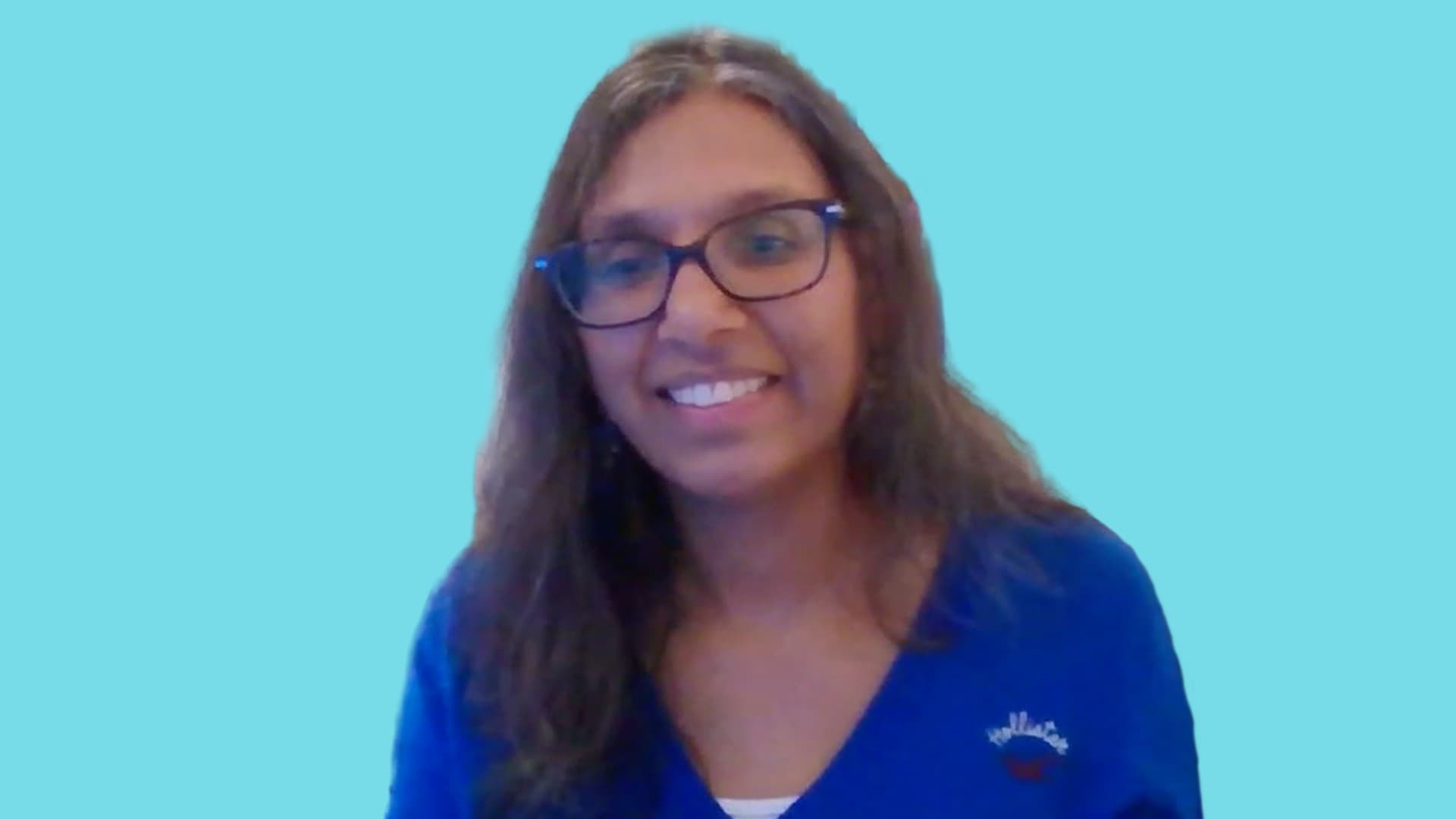
Meet Latifah, a school behaviour mentor who loves working with young people, advocating for them, and watching them grow.
Hello, my name is Latifah Armstrong-Carew and I am a behaviour mentor based in London.
At the moment I spend most of my time supporting the children day to day.
So I work in an SEMH school and I engage with the children through checking their uniform, making sure that they're feeling good throughout the day, making sure that they are looked after, having a good time.
Also supporting them with any safeguarding concerns and matters, and assisting the safeguarding team in that case.
Typical day at the moment, 8.30 is my usual start time with greeting the children, wishing them a great day, checking uniform and things like that.
Then by around nine-ish, helping the kids get to lessons, patrolling, making sure that the kids are in lessons and no one's truanting as they do sometimes. Just ensuring that everyone's okay.
We then fast forward to break and we have like a little tuck shop available so that kids can get snacks and drinks and things like that. So making sure that kids are behaving in the tuck shop line and things like that. We fast forward again to lunch, same thing.
Then usually after lunch is when things can get a little bit high paced. So you've got to be patrolling a little bit more, nobody wants to go back to class.
So it's the case of how can we make lessons fun in the afternoon just before the end of the day. Sometimes that involves doing a little bit of adaptive learning and bringing the classroom, helping to bring the classroom outside and helping with those studies. So doing things like forest school and assisting in that.
And then sometimes it's also just about supporting the child, you know, they might be feeling emotionally dysregulated for a number of reasons. And it's simply about just being there as a listening ear. So I could be sitting and listening, or I could be talking or dancing to cheer a young person up.
And then by 2.30 the kids go home. They always come and rush my office door because we keep their phones and certain personal belongings in the behaviour office. They come to the office at the end of the day and they're always like, bye miss, bye miss. Can I get my phone, miss?
And it's always a big rush at the end of the day. Then they don't want to go home all the time. Everyone wants to hang out outside. Then it's a case of getting the kids to their taxis and making sure that they get home safe.
Once the kids have gone I'm doing my admin, so making sure that I'm prepared for the next day with mentoring sessions, speaking to our head teacher about any safeguarding concerns, also speaking to the safeguarding team and ensuring any behavioural concerns that came up throughout the day, especially serious ones, are dealt with on that day so that we don't take them into the next day.
So sometimes that involves looking at CCTV to investigate an incident that might have happened. Sometimes that means speaking to family about something that might have happened as well, discussing the consequences, reviewing situations as and when they happen really.
The best thing, you probably hear this a lot from teachers but honestly the best thing is the kids.
The kids are great. You will meet so many different kids from so many different walks of life and they will bring you joy. Even if they want to, I'm going to be honest and say even if they want to get on your nerves at times, you're still going to find the joy in them.
You've got... I think knowing that you're helping a young person at the end of the day and helping them achieve their goals is what will bring you joy. So that's my joy.
Ooh, that's a tricky one. But I will say the hardest part of my job is being the middle person. Because often in my role, I act as the bridge between, let's say, the head teacher and the student or the teachers and the students.
And I usually have to mediate or advocate for a student and it's a case of getting the student to understand where the teacher's coming from, as well as getting the teacher to understand the student's position, and being able to find a middle ground in that.
It's not always easy because sometimes some people think that their way is the best way whether that's a teacher or a student but at the end of the day it's about finding middle ground and coming to a compromise because we can't all be wanting the different things at the same time. It doesn't work. But we can meet each other in the middle.
My background mainly is in supporting vulnerable people and I previously worked with young people that were affected by county lines and other circumstances.
So with my work in that industry, as well as then going on to support women that were leaving prison who also had other circumstances, I decided that I wanted to specifically help young people that slip through the net of support and don't always get seen by people in a traditional way.
I took my career on a pivot slightly out of the criminal justice system, just kind of for a bit of a change and to break things up a little bit because that was all I had known since leaving uni.
And, yeah, I wanted to do something different but still use my skills and I thought this was the best way of doing that.
So I grew up and went to a school in South London, and I was able to engage with so many different people because London as you may or may not know is a very multicultural place. And it gave me the opportunity to meet and build relationships with people in many different ways.
So for me in school I was quite keen on helping people. So I was always kind of the one that would be helping out at like parents' evenings and stuff like that, and that taught me the art of speaking to people in a different way.
When I was a student counsellor and stuff in school, that taught me the importance of listening to other people and understanding them and also trying to get people that didn't believe in the system to engage in it, and try and change their minds.
It taught me the importance of trying to make your word be your word. And if you can't do that, then explaining why. And also the fact that people are just human and they will react differently depending on the circumstances.
There's many. There's many moments I won't forget. I think there's two in particular. I will start off with one that will stay with me for a lifetime, which is part of my why for being in this sector.
I supported a woman who was leaving custody but unfortunately had no accommodation when being released from custody. Although there was a lot of work and preparation into it, she unfortunately didn't have that support because of her circumstances.
And it taught me that although you might be a priority in the government's eyes in terms of leaving prison or custody, if that support isn't there, then you're likely to fall back into the same position that you were in.
So that's always going to stay with me in terms of trying to understand the person's needs and also trying to understand the government's position and things like that.
Then a good thing that stayed with me would be when I helped a young person. She had a history of living with mental health and things got, unfortunately things did get quite bad for a period of time but then she realised that she wasn't alone and saw that I was there to support her.
And there was a point in time where unfortunately she ended up as an inpatient for a period of time and I used to go to the hospital to see her so that she knew she wasn't alone, and I would bring her like her favourite snacks and things that were allowed there. And it helped motivate her and things like that.
And not only did she leave the facility, but she did her GCSEs and she managed to actually do an apprenticeship, because she wanted to work on like aeroplanes and become an engineer in that field. So she managed to apply for that and considering the position that I met her in, I know what it took for her to actually apply.
So I was very happy and proud of her for doing that.
Good question. I would say the advice I wish I had when I was younger is don't give up and don't be so focused on a plan.
Think of a plan as a working document or even a live document as they say nowadays. It's always going to change. There's nothing that's going to... You can make a plan today and that plan can change by Friday. Nothing will stay the same.
But that's also okay because it means that you're growing and evolving just because the plan is changing. It's not always a bad thing. And sometimes things work out better than you expect.
So don't always try and be in front of something. Sometimes just let things happen. Don't always try and take control of things that you can't control.
Related careers


Related subjects


You might also like


This page contains original content developed by Coffee With Ltd. You may share this page as a link but you must not copy the content or use it with AI tools. All rights reserved.