Tom Finch
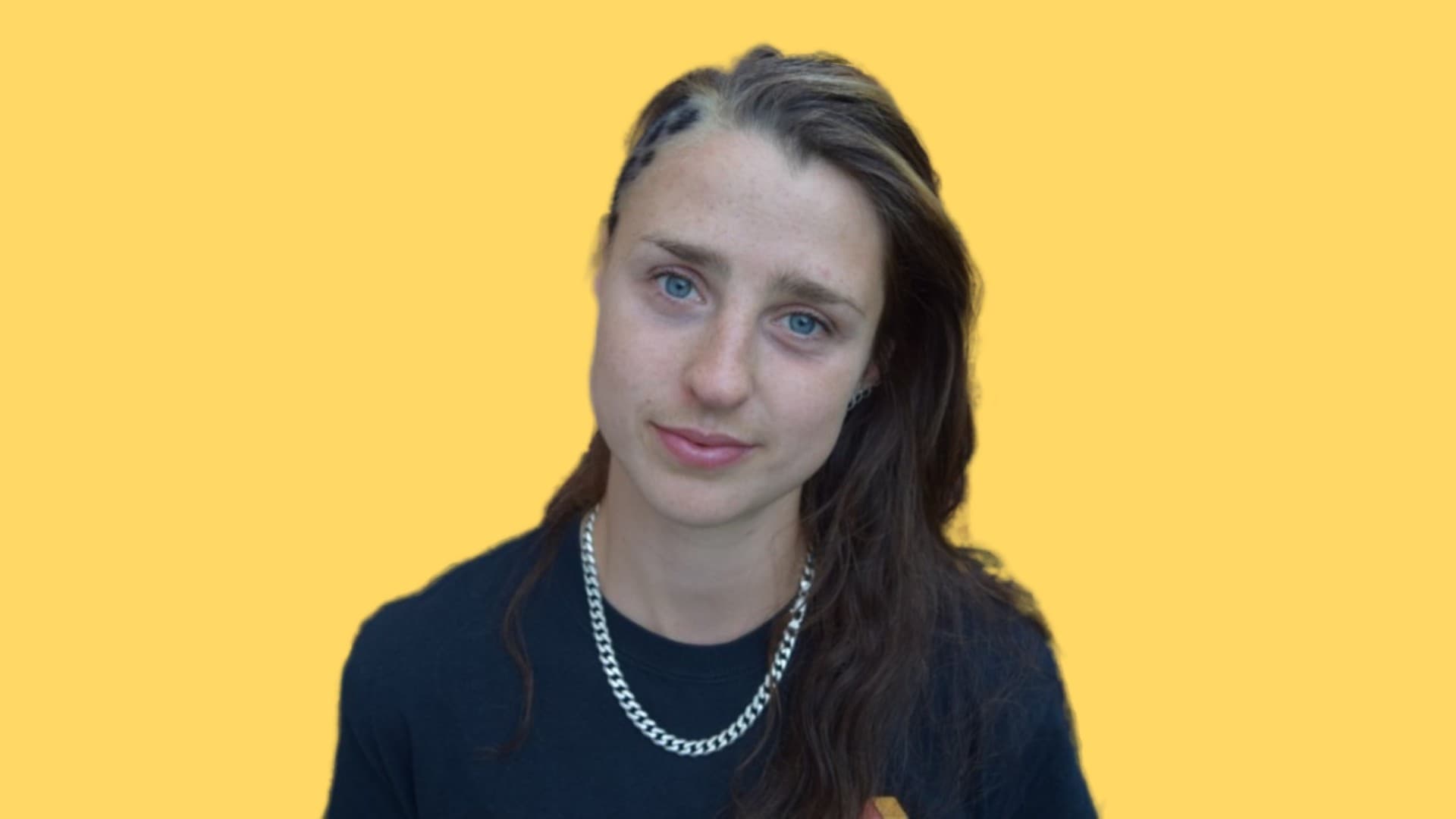
Meet Tom, an oceanographer who loves making sense of waves and tides, and turning ocean data into safer, greener offshore wind projects.
So yeah, my name is Tom Finch. I live on the south coast of the UK, just east of Bournemouth. And my job role is an oceanographer, working for an offshore wind developer.
So an oceanographer is someone that studies or knows about the ocean and I think particularly the physics.
So in terms of the waves, wave generation, wave characteristics, the tides, the winds and how it all interacts with each other to kind of be understanding how it's one big system.
In the job role, I guess we kind of help characterise what the wave conditions are going to be like, what the tides are going to be like, in terms of water level up and down and current speeds and how the winds are going to be, how strong they are there and what relationships they have with each other and just being able to understand that and apply that is crucial for building anything offshore.
But you can get other sides of it as well, like a physical oceanographer will be typically putting wave buoys in the water and they'll be kind of go out to sea, put them in the water, maintenance visits, service them, collect the data, bring them back to land.
And then the other side is the modeling side of things where you kind of take the data, create a model and use the data to validate your model. So the model's working. You know you can trust what it's doing and it's representative of the real world. And then you can kind of use those models to create statistics or design conditions.
So at work, there's obviously there's meetings which kind of need to be kind of sat through and we kind of as either internal or external with people that we kind of contract to do work. There'll be a whole host of either planning, metocean deployment. So it'd be kind of like looking where and how we're going to put wave buoys in the water, for an example.
And then we get the reports in from the contractors. So we kind of have to review and sense check it because the numbers that we obtain and give to the various projects, they feed into the engineering design. So we give the engineers the numbers they need to make sure that the wind farm's strong enough and big enough to withstand all the harsh conditions that are out in the sea.
So for our team, so the company I work for, RWE, they have a global portfolio of offshore wind farms. So over, I think there's over at least 10 in the UK that are in development at the minute and we have projects all over the world.
So we kind of all have our own portions of the projects. And there's only four of us in our sub team. So there's plenty of work for us to be kind of doing. But yeah, there's four of us within the metocean team is where we sit.
And we kind of collaborate and chat on a daily basis and yeah, problem solving as well as kind of, if we have an issue, we'll kind of put our heads together and lean on each other's experience to say, you've got a background in this or you've done this before. What did you do or what would you do in this situation?
Knowing what you've learned or what you've done before and just kind of, yeah, bounce off each other really and just, yeah, everyone's very open.
The best thing is that I love the sea. I've always lived by the sea and by the coast. So, and yeah, it's kind of led to being involved with the sea and involved with the ocean as well.
So although it's a lots of data and lots of reporting and reading and all those things, but it's still kind of revolves around the sea.
And obviously like, offshore wind, it's big for the UK energy at the minute and hopefully part of the bigger plan going forward. So being able to kind of put in a little bit of my knowledge and skill set into something that's for the greater good, so to speak, that is kind of helping to get green electricity in.
Good question. Hardest part is probably, yeah, like I said before, I've kind of got a handful of projects on the go at the same time.
So it's just making sure all the plates that you're spinning keep on spinning and there are various different stages as well, so you're having to just kind of have in the back of your mind, this project's come in, like, where is this stage at? What's the to-do list for this project?
And just trying to make sure that everything's kind of keeps ticking over.
So yeah, went to uni, I did four years at Plymouth University. I did ocean science for my undergraduate, which was learning all things of marine physics, ocean physics, which is typically oceanography or marine chemistry and marine biology.
And then I did a Master's in coastal engineering, also at Plymouth as well. And then I had my first job out of university was as a coastal modeler or in the coastal processes.
(There's a lot of confusion, it's not being a photographic model or anything like that. It's more of a numerical modeling side of things. So just to clarify that.)
So that was kind of numerical modeling coastal processes from a consultancy perspective. So we'd kind of get these infrastructure projects that would come in and they'd need to get environmental approval.
And so I did about that for about six years and then through a colleague at one of my first jobs, we stayed in touch. So it was really nice to kind of stay in touch with an old colleague and he'd recommended me to this job and I applied for it.
And so it's all about just kind of being in touch and just having your name out there and just keeping good relationships, I think, is kind of how I got to where I am.
It's one of those things that you don't think... it's hard to kind of imagine how it can kind of play out when you're at school. So you kind of, oh, there's so many jobs out there that you don't even know existed.
Like my first job, I didn't know existed, but I think geography was the main subject that kind of got me interested in the physical side of geography and just being able to, being interested in a subject.
Not necessarily planning, I want to take geography and I want to get this job. Just kind of saying, oh, I like geography. I like learning about that and just kind of having an open mind with it that I'm interested in it.
So I want to study it and if I didn't have that interest or didn't chase it or apply it, then yeah, I wouldn't have gotten to university with it.
Good question. I mean, I think getting the job that I'm at the minute that was kind of like my dream job in the sense that it was just like, when I was finishing uni, I really wanted to get into offshore wind, and just kind of be involved in helping get green energy and then I think, yeah, just being able to actually like say, I've reached that goal and being able to do it.
The projects are so big and there's so many moving parts, but yeah, I'm happy to kind of come to work and say, I'm one of those small moving parts that lead to these bigger projects. So I think, yeah, getting this job is definitely up there.
I kind of touched on it earlier in the sense that it was like, you don't, there's so many jobs out there. And although there's, yeah, my first job was a coastal modeler, I didn't know that that was a job.
So it's just like, even if you don't know, it's hard, you can't guarantee what job you're going to get, but if there's a passion or something that you like, just go for it, chase it and it will sort itself out and it will fall into place.
Related careers


Related subjects


You might also like
This page contains original content developed by Coffee With Ltd. You may share this page as a link but you must not copy the content or use it with AI tools. All rights reserved.