Graham Hendra
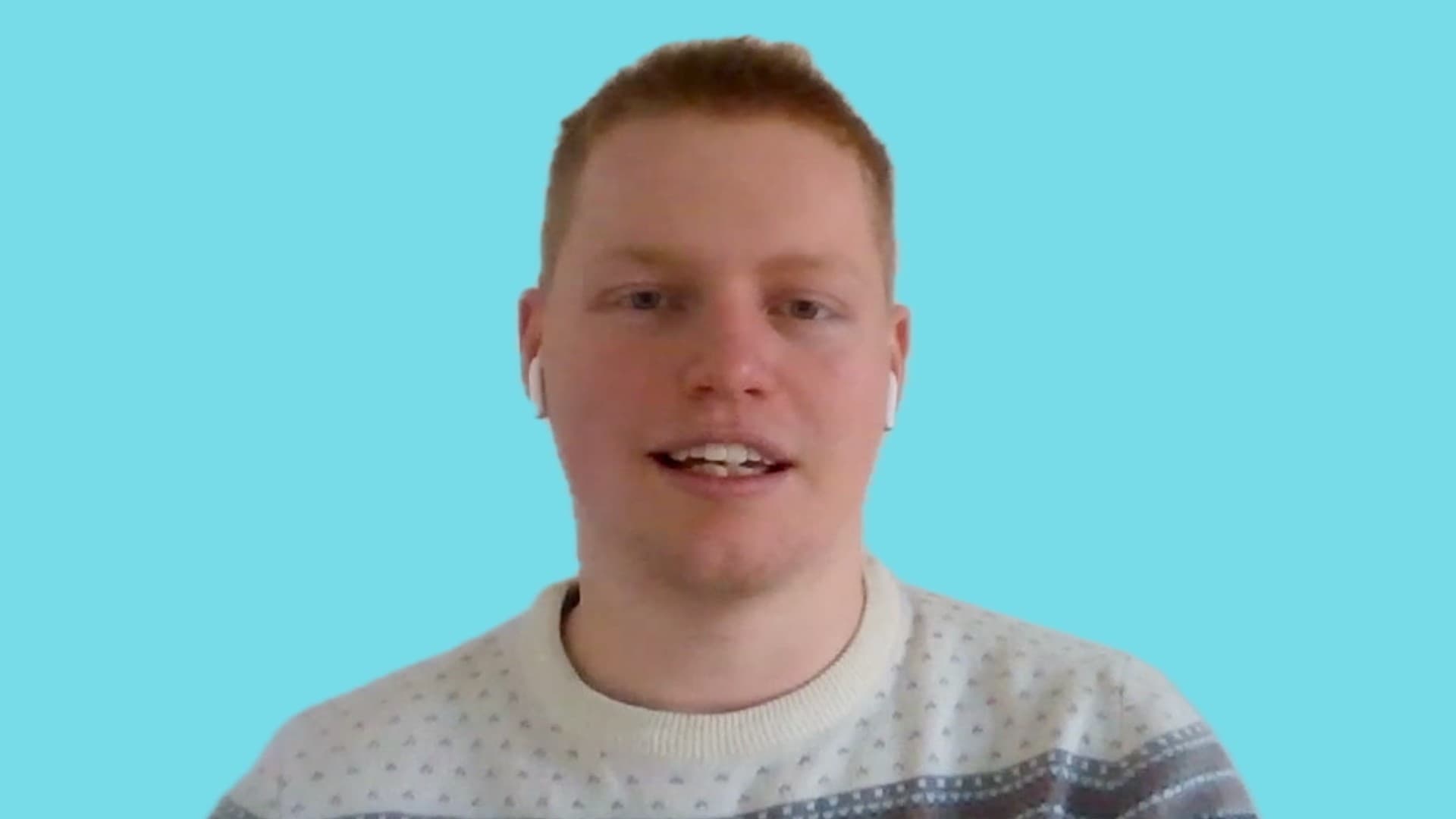
Meet Graham, an R&D engineer who loves solving technical challenges, learning from customers, and building better solutions.
My name's Graham Hendra. I am currently at home in my home office in the South of England and I am a heat pump R&D engineer. So somebody who develops new products.
So most of the time that I spend at work is either here in my office doing kind of emails, admin, bits and pieces. This is probably one or two days a week.
And three days a week, I am flying all over Europe and Asia, going to meet customers and visiting them and basically asking them what they want.
Just to give you an idea what that looks like, in the last year, I have visited 17 different countries.
A typical day for me is kind of divided into two. So the first one when I'm at home, it is, you know, get up, just do emails, admin, Teams calls, very like this, phone calls and so on. So catching up with customers but virtually.
On my other days where I'm away from the office, so the majority of my time, it's either sitting in an airport waiting for a plane or actually bumping into my customers.
So I go and see my customers in their offices, talk to them face to face. Maybe we go to sites, so we go and look at the equipment that they're buying and they show me what they're buying and what they do with it. And then they're very kind, they take me out for dinner afterwards, which is lovely.
So I work with a big team. So my company in total has thousands of people, but I don't work with all of them.
So I work day to day with a very small team, just two or three of us who are doing a similar job. But I am in contact with literally hundreds of people. So customers, I might speak to them once or twice, or maybe I speak to them once a month.
It's very varied who you're dealing with. But in our organisation, I look after one product and there are about 15 people like me. So I deal also with those guys on a day to day just to see how we have to do our job and how we can do it more efficiently.
So I guess the best thing about my job is, and this is gonna sound terrible, the best thing is that I love it. So I am incredibly lucky that I do a job which I kind of feel a bit is like a hobby. So I love travelling and I travel an enormous amount. So I go to all the places that my wife doesn't want to go on holiday, I go there for work.
And also it sounds weird but I really, really love the technology that I work with, so it kind of gets me going. I love doing it. So to me it's kind of a bit like doing your hobby but for a job. But don't tell my boss that.
I think the hardest part of my job is kind of the administration and bureaucracy.
The bigger the company you work in, the more kind of hurdles there are. So if you're someone like me who wants to get things done and let's come on, let's get going, one of the frustrations is when someone says, we can't do that. Or let's explore this for one month or so on. And sometimes you feel like people are putting things in the way of you.
If you're like me, it just feels like they're being difficult, but for them, of course, they're just trying to do their job in the right way. So our industry is covered in legislation. Everything you do has legislation. And for me, this is frustrating. I just want to go, come on, let's go. Let's get things done.
So my journey into this job is quite a long one but I'll try and keep it brief. But basically I am an engineer. I like doing things with my hands. I'm not amazingly academic. So I am a fixer and a doer in that sense.
So I did traditional route, did my O-levels or GCSEs as they're called now. I did okay in them, but I chose the wrong A-levels. So I basically went along, I didn't enjoy them. And so I didn't put any effort in whatsoever and failed spectacularly.
And my dad basically said, you've got to go and get a job. So I went and looked for a job which was something engineering. I actually wanted to be a car mechanic and I ended up being a refrigeration engineer, which is kind of similar but less glamorous.
And basically I've gone along in many, many jobs to get to this one but basically working my way along from being an engineer. When you get older like me, you don't want to be out on site anymore. It's too cold. So you come into the office and I found that I don't kind of do the engineering part in the office instead of being out there with the spanners.
In a weird way, it kind of steered me. Your GCSEs are a very broad church. They sort of tell you everything and so that you can get an idea what you want to do.
What I found was I did A-level physics, which I found very easy, and A-level maths, which I found impossible. And physics is very much what I do. So my job is very physics-y.
But what I found was sort of fairly early on, if I am studying something that I don't enjoy, I just don't study it and I fail. I now know that. But once I finished my A-levels and failed them spectacularly, I went to a further education college and I did refrigeration theory, which was weird.
I walked in and on day one, I absolutely adored it and found it easy, went from being bottom of the class in maths, to top in the class in refrigeration. And it was enormously helpful.
And then when you work in the world of work, your boss will offer you chances to go on training. And I took these and they gave me more and more and more. So I've learned much more after school. So I've probably done the equivalent of a degree's worth of training over 20 years because I love the subject.
I've always tried to know, but I've done courses, for instance, I tried one in finance, I hated it. And after about two weeks, I gave up. And so my message is always make sure it's something you're enjoying because then you will pass it. If you hate it from day one, it's really hard.
So a moment in my career that I'll never forget. There are basically two, I thought about this a lot, there's two.
So the first one was I started as a junior engineer, learned my job and so on. And back then, in the mid 1990s, there was a company called Daikin who were the kind of the gods of my industry. And they advertised for an engineer. And I never believed I'd get this job.
And I remember driving up there and putting my envelope under the door, pre-email those days, and I couldn't believe when they rang me and said can you come for an interview and I'm like wow I can't believe these people want to see me.
I then got the job which I couldn't believe and I couldn't believe the salary I was really really happy. Five years later I found out that I was the only applicant but at the time I thought it was amazing.
But the second one and this is going to sound terrible but the second one I've been very very lucky in my career and three years ago I sold my company and somebody gave me lots of money for my company so I never need to work again but that kind of sounds a bit bleh so the main one, the Daikin one, that was the bit where my career went from normal to turbocharged.
So I think the advice that I would most have wanted to receive when I was younger was very much this, do something that you want to do.
So I mentioned a couple of times about my A-levels, I took some appalling advice on my A-levels, I did what I was told to do, and I was told to do them by somebody who didn't know what they were talking about. So if you want to be an astronaut, don't go and speak to an accountant about being an astronaut, try and get in touch with an astronaut and ask them what you need to do.
So I was given the wrong advice. I did the wrong A-levels and I hated them. When I finally got the right advice of what I needed to do in my industry, it's gone really well.
So I think although people like your teachers and your mum and your dad want to give you good advice, of course they do, I think nowadays it's so easy. Get on the internet, find out if you want to be a rocket scientist, get in touch with a rocket scientist and ask them. They are the people who know best.
Related careers


Related subjects


You might also like


This page contains original content developed by Coffee With Ltd. You may share this page as a link but you must not copy the content or use it with AI tools. All rights reserved.