Joanna Bagniewska
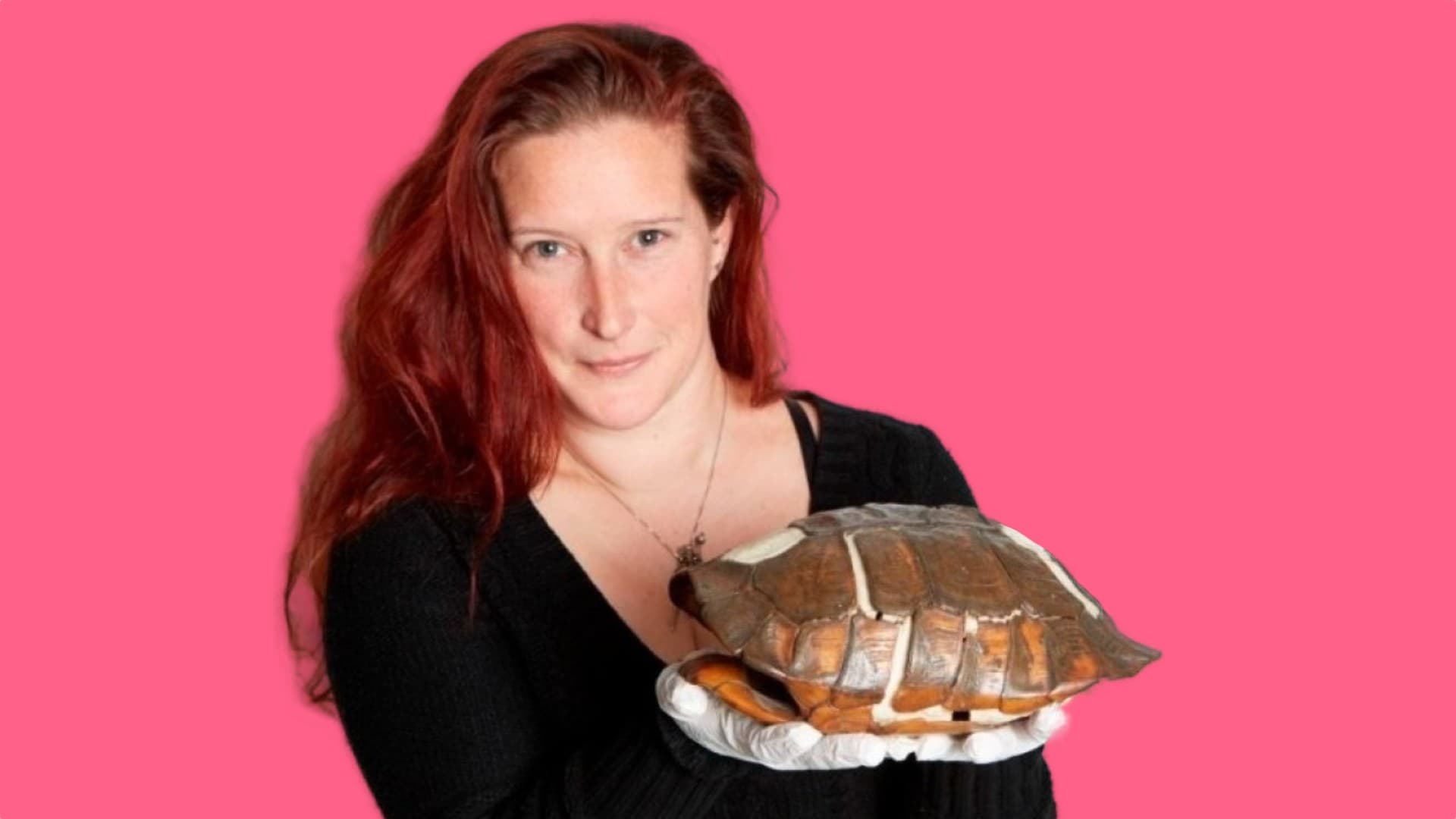
Meet Joanna, a zoologist at Oxford University who loves discovering wildlife in unexpected places and inspiring the next generation.
Hi, I'm Dr. Joanna Bagniewska. I am a zoologist based at Oxford University.
As a zoologist, I study animals. That's where the name zoologist comes from.
But there is no such a thing as a typical day for me because I think a lot depends on the season because a lot of the animals that I study are seasonal.
If I study invertebrates, insects, then there's not much point studying them in winter because they won't be out and about. And similarly, if I study hedgehogs, they should probably be dormant around winter. And so summer is a bit of a peak for me.
On the other hand, if I want to do bird watching, it's a good idea to do so in winter because the leaves don't get in the way when you you look up trees. So it depends.
But having said that, my year will vary a bit. I do fieldwork around September time. So August, September, this is when I prepare to go into the field with my students.
I do a lot of teaching. This is what my job is focused on. So I will go into the field but I will also do the teaching side of it. This is done in classrooms or online. And so that I can do for the rest of the year.
I will also do my own research, so I am interested in urban green spaces, so how wildlife can thrive in cities.
And one angle that you might find interesting is how school grounds can support urban green spaces. So what sort of biodiversity can you find around schools?
Because if you have a city that's quite grey, it's very nice if you have a green space that animals can fly to or get to, so looking at birds or insects, it's a very nice little island for them to live in. So this is something I'm interested in as well.
I work with a whole range of colleagues. On the one hand, there are colleagues who are also zoologists and who will usually be from a slightly different discipline.
So I specialise in mammals, but I work with people who are ornithologists or bird specialists. I work with arachnologists, so spider specialists.
I love working with plant people because I don't know that much about plants. So they always provide a really good take on how a particular site looks, they will say, this is interesting because you've got these species here and those species are not here.
So that's one chunk of the people that I work with. But I also work with administrators.
And so they are the people who make sure that our teaching runs smoothly, that all the marking is done in time, that students are informed about when to submit an assessment or what grades they're getting.
They're the ones that tell us you need to do your marking sooner because otherwise the students will be antsy about that. Or you need to see who is getting into uni because you will not have students next year if you don't. So they're the ones, they're the important ones, they're the ones who run the show.
And then of course there are the students. So they are the people that we teach and I love working with them because they always come with a very different set of ideas and they're so enthusiastic and they're passionate about wildlife, which is something that we have in common obviously, and we can grow together and do really cool projects together.
There are two best things about my job. One is meeting new people because, I don't know, it must be something about zoology and ecology that people in this field tend to be really nice and really passionate and really enthusiastic.
And the other thing is the animal side of things. So I love going into the field and especially seeing species that I haven't seen before. This is the best thing.
So it just gives me such a high, or seeing behaviors that I haven't seen before, finding out information that I haven't realised before. So this is the whole package for my job.
The most difficult part of my job, I must say, is the marking of student work.
And it's not because the work is bad. Most of the time it's really good and really interesting, but it's just having to sit down and decide, is this really good or kind of good or not very good and where exactly this fits. I don't like doing that.
If I could just read these bits of work without having to mark them, my life would be so much better.
I became a zoologist mainly because I was always interested in animals.
Having said that, all the way up until the end of high school, I wasn't sure what I was going to do later in life because I was interested in many things.
I wanted to study architecture for a while and then I wanted to study Chinese because I lived in China for a while and I could speak the language fairly decently.
But then I always had this love of animals. So I decided to study biology because zoology was on offer at the university where I wanted to attend.
And then I went and started studying biology and it turned out that most of it is to do with labs. And I found it a bit disappointing because it's difficult for me to relate to something that I can't see.
So I do have a huge respect for biochemists and it's almost like they believe in magic because it's so small and you can't see if you got it right or not or if you messed up. So I'm always very impressed by biochemists and molecular biologists. But that also meant that I wasn't massively happy studying that angle to biology.
I decided to do things my own way. I found a course on animal behavior and I got my university to not only give me some time off to go and do it, but they actually paid for it. So that was a bonus. If you don't ask, you don't get.
And from that point on, based on the contacts I found there, I was able to go and do a placement in Australia in the Snowy Mountains National Park where I was chasing wombats and wallabies.
We were looking at road ecology. So how roads affect animals and spoiler alert, it's not great. Roads and animals don't really mix very well.
But then I spent a semester at a different university, at Rice University in Texas, where they had a stronger ecology and evolutionary biology focus. And I thought, this is, this is what I'm really interested in. I love this.
And afterwards I came to Oxford to study for my masters. I did a project in South Africa looking at jackals and foxes and how to measure their densities, so how many animals there are per unit area.
And then I stayed on to do a doctorate also at Oxford. I was working on American mink. And then just stayed in this career until now.
So it's been quite a few years I've worked at different universities throughout the UK.
I also did a bit of traveling for field work but yes that's how long it took me to get here.
For my high school, I did the International Baccalaureate.
So I don't know if the subjects that I have chosen really have helped me because what I have studied was on the higher level, I studied English, Polish, and biology. And then on the standard level, I had maths, history and visual arts. So... a bit of a mix.
And what I'm going to say is really maybe counterintuitive, but the subject that really, really helped me the most throughout, not just biology, but in my academic career in general was history.
And that's because I had a fantastic history teacher who had this very analytical approach to everything. And so he really made us look at where our information comes from.
So whenever we had a source that we analysed, he would say, why did that person write it? What was the motivation? Are they telling the truth? Why might they not be telling the truth? Is there a different perspective that you can look at?
And it really got you thinking about what information is reliable, what are the hidden depths of information rather than just taking something at face value.
Whereas in biology, especially on a school level, there's just a lot of memorisation. And I didn't find it very inspiring. We didn't have that much stuff to do with animals, which I thought was very disappointing. It was mainly the, you know, the Krebs cycles of it all.
So, yeah, you never know what is going to come in very handy. So for me, it was history.
Moments in my career that I'll never forget...
It was quite early on when I was doing my masters I was in South Africa and I really, really, really wanted to see an aardvark. Really, like really more than anything in the country and I've seen quite a few really cool species at that stage but I hadn't seen an aardvark.
They're quite shy, they're not very rare but they're shy. And it was my last chance, it was the last night and I went out with my supervisor who was tracking Cape foxes and he said, you know, I don't get to see them very often but you might as well just come out and see what happens.
And it was him and another person in the cabin of the van that we were driving. So it was like an open top that we were in. I was standing at the back with a radio tracking devices with antenna.
And we're driving, driving, driving along and it's the middle of nowhere. We're just driving through the bush. And then all of a sudden the car just yanks to one side and the driver is banging on the roof going, there, it's there!
And yes, there was an aardvark. It looked like, I don't know, my first association was an obese fox because it had this like pig like bottom but a long tail. Yeah, so I got to see it running away.
And then when we were driving on, we saw another one. It was fantastic. I didn't expect to see it at all. There it was on my last day. It was perfect.
A bit of advice for my younger self would be keep an open mind, I think.
First of all, because you never know what's going to come in useful in your learning. And sometimes people can be a bit dismissive going, I will never need this again in my life. Why am I learning this?
And I had that actually during my university where there was this guy that came and taught us biophysics. And I thought, this is, I'm just never going to use it, never, there's no way that I can use biophysics. And it turned out that most of my methods used in my doctorate were the same principles that that person taught us on the very day.
But also keeping in mind when it comes to the type of subjects that you might be interested in.
There are some people who think I'm only interested in mammals, or I'm only interested in like this country or this historical period or whatever.
But maybe there are other things that might not seem that interesting to start off with but when you really start reading about them they can be quite cool.
So don't dig a trench around yourself and say no no no no no I don't want to know about any of these other things because this is my specialism and this is who I am.
I mean it's good to have a passion but it's not good to use that passion to shut out other potentially useful and interesting bits of information.
Related careers


Related subjects


You might also like
This page contains original content developed by Coffee With Ltd. You may share this page as a link but you must not copy the content or use it with AI tools. All rights reserved.