Luke Armstrong
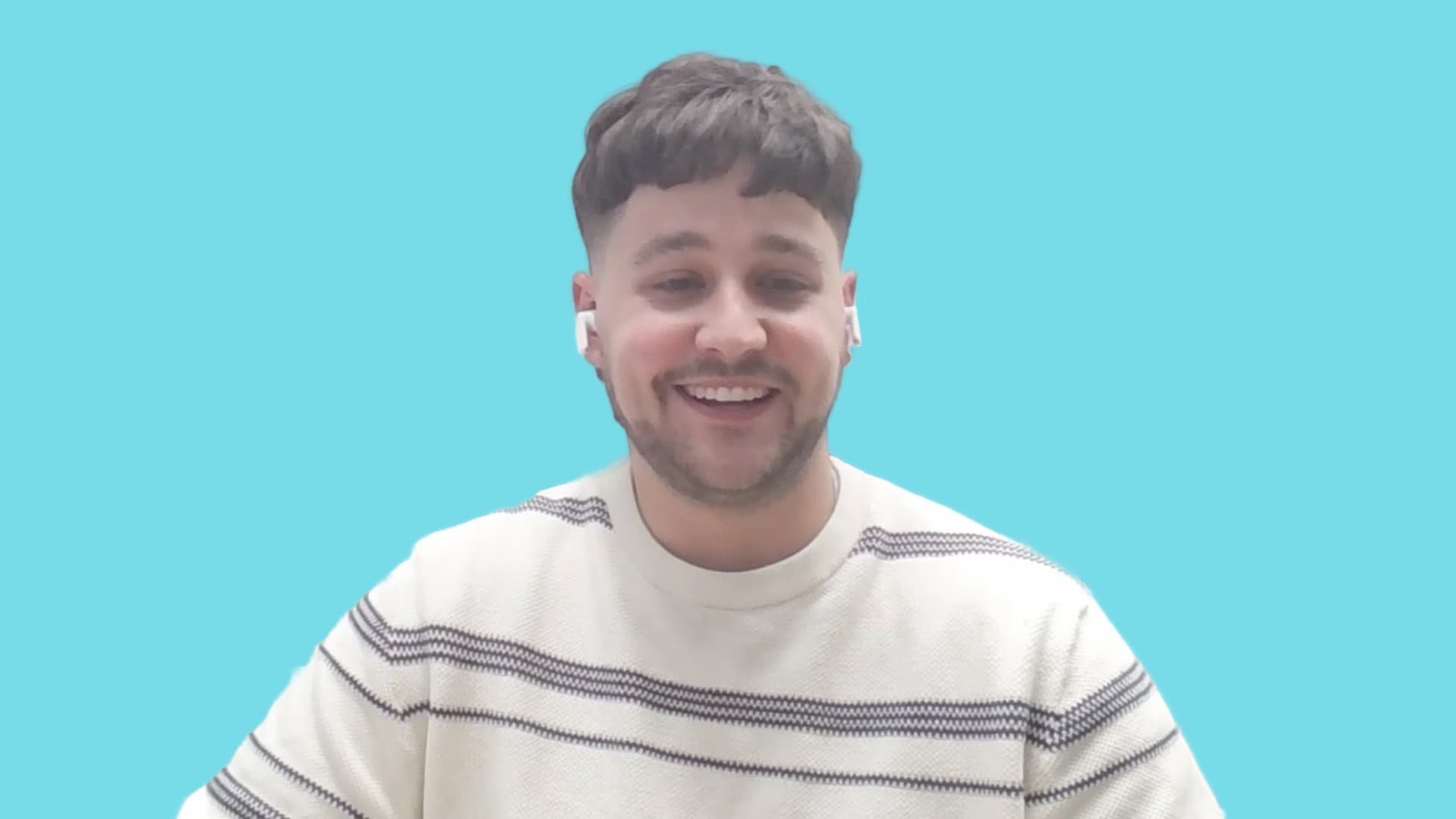
Meet Luke, a product designer who loves making physical products, working with entrepreneurs, and bringing ideas to life through design.
Well, good morning. My name's Luke and I am based in London. I'm a product designer for the last four years.
So as a product designer, I solve problems by creating physical objects, physical products.
So if you look around you right now, you can see so many physical objects and someone has designed that and that's what I do.
I create those objects, I design those objects. I make it easier for people to use. I make it a better, like safer to use, make it more efficient.
Anything you see around you has been designed by someone and that's what I do.
It really depends on what's happening that day but it mainly consists of sketching and thinking about how to resolve problems.
It could be using software like a thing called CAD, computer aided design, which is how we create objects in a software.
It could be meeting clients, talking about their ideas, also meeting with people that make the products themselves.
So it really, really ranges day to day.
So we work with so many people. I think that's one aspect of the job I really love.
e get to speak to experts in the field. So it could be like electronic experts. It could be any expert in the field.
I get to work with entrepreneurs, business people that have ideas that want physical products.
I also get to work with fellow designers that sort of share and sometimes disagree with my point of view.
And I think that's a really, really cool part of the job. Get to see different perspectives and help me create the best product I can.
I love my job. I think the best part of the job is just every day going to work creating something.
I think as humans we have this innate desire to create something and I get to do that every day.
With that sort of sketching, again creating models, printing, 3D printing.
Yeah it's brilliant, it's absolutely brilliant. Get to make things and test it and make it better.
The hardest part is it can be quite an intense job. I think it's one of those jobs that you pour your heart into.
So when something goes well, it's really well, but when something doesn't go so well, you sort of take a knock yourself.
But I think that's part of job. That's why I love it so much that I'm so invested in it.
If I'm honest, it's by accident. I didn't know a designer job existed.
So at school, I wanted to be an architect. I thought about becoming an engineer, but I didn't really like the idea of getting my hands dirty or anything like that. So I sort of pursued the architecture route.
And it was only until I went around uni, sort of exploring unis and things that I discovered product design or industrial design is sometimes called.
I thought that is so much cooler. I get to work, get to make things like things everywhere around you.
And looking back on my sort of journey, I was sort of going that direction anyway. I did sort of maths, physics, but also did that sort of art and design route as well, which is quite, I think it's quite a rare thing, but yeah, it was sort of leading me towards this creative architecture design industry.
I think for me that was a big big milestone to get my first job. So my first job at uni was a consultancy which is where people come to you, you're in a business and people come to you with an idea and you make the idea which is a really really exciting place as a designer.
It was definitely hard and competitive. Design is a competitive industry, but I wouldn't let that put you off.
If you can do it, if you believe in it, you want it, you can, you can achieve it.
Many schools at the minute, unfortunately, don't have design courses but my school did.
I think taking that as from an early age from GCSE, I got to really get hands on and find out why I really enjoyed making things.
Another part for me, I'm actually really quite dyslexic and I think you'd be hard pushed not finding another dyslexic designer.
So I've always struggled with English, written-based things. I've sort of just naturally tended towards more physical, like get my hands on. So yeah, that's, I think that's how it just sort of came about, I guess.
I'm biased but I think it has a huge effect.
You could go to any industry, you could go into medical, you could design the next best medical device. You could go into defense if you want to, you could go into consumer product, consumer companies like Dyson.
You have a huge impact on the world, I think, even from a sustainability point of view, which is a huge topic right now, rightly so. When you create a product, the most pollution is actually comes from the designer. So it's my responsibility to reduce that as much as possible.
So you have a huge, huge impact on the world, I believe.
I think the first time I created something and seen it in sort of physically in my hand, I think that was an incredible journey to come from, like I said, from GCSE all the way to university and then graduate and then to actually design something and hold it in your hands. I think that was an incredible time.
I think just following what you enjoy.
I think there's so much pressure, especially when I was young, to find a job, want to get money, you know, focus on money, which I personally disagree with.
But just focus on what you enjoy, lean into what you enjoy slash are good at. I think for a long time I tried to get better at that sort of written side and it wasn't really working out for me.
So I think just pursue the thing you really enjoy you're better at. I think you'll be okay.
Related careers


Related subjects


You might also like
This page contains original content developed by Coffee With Ltd. You may share this page as a link but you must not copy the content or use it with AI tools. All rights reserved.