George Langton
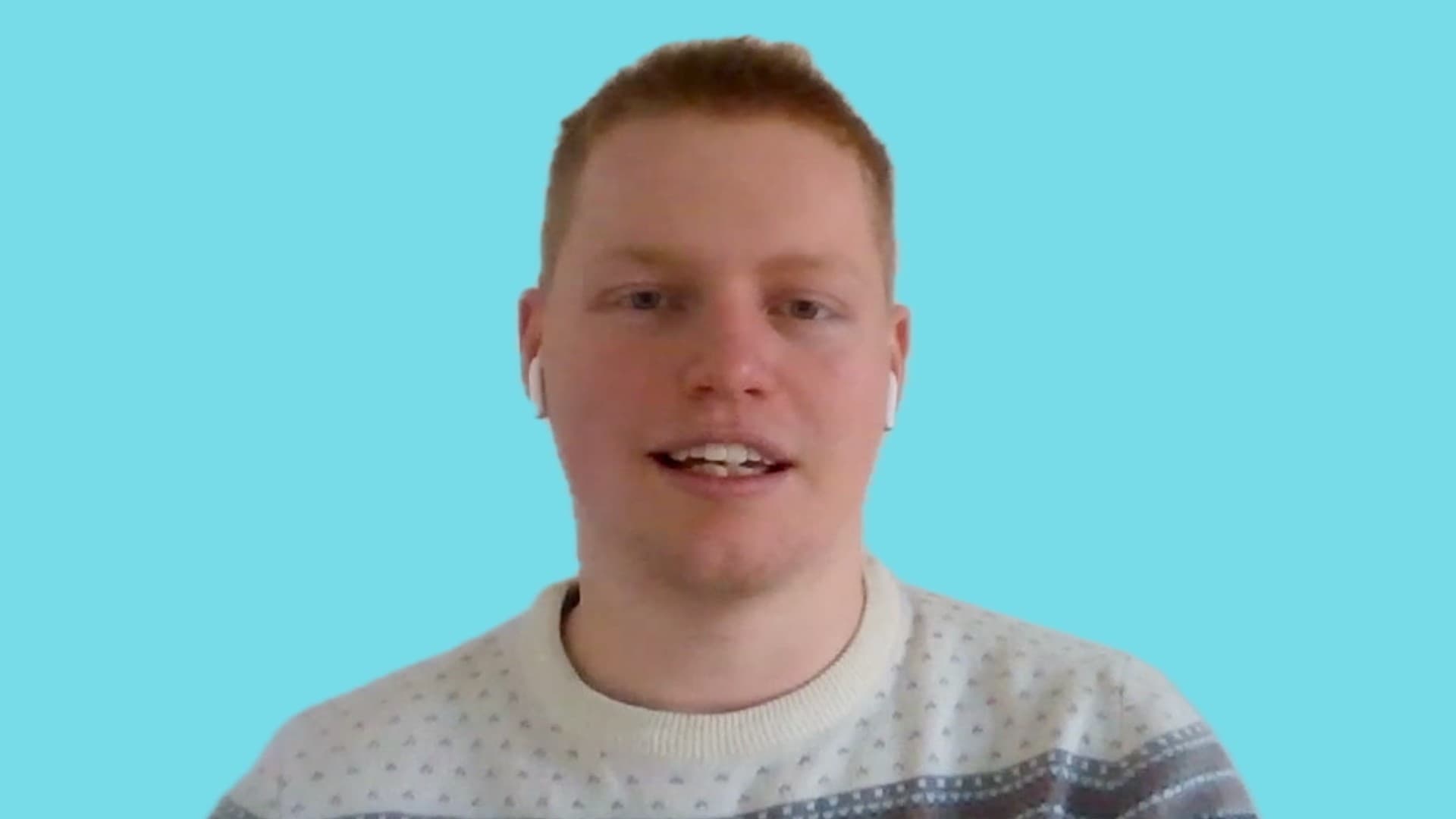
Meet George, a material scientist who loves digging into how materials behave, solving tough problems, and working with teams worldwide.
My name is George. I'm a material scientist and engineer, and I work in Manchester.
We're in charge of understanding solids, essentially. So there could be any type of solid. There could be a plastic, there could be a metal, there could be a rubber.
But when you think about it, solids are integral to everything that we physically do in the world. So we can be quite versatile. We're deployed across all different types of industries.
But the main thing we do is essentially to measure these materials, make judgments and find out if there's problems. These problems could be structure breaking, it could be your phone not working because the screen's gone, it could be anything. To predict these failures, to design new parts around them and new materials and look after how to make these materials.
Typically, at my level of material science, I tend to be doing a lot of lab work. So I tend to come in in the morning, speak to my boss about the plans for the day.
Maybe we have some meetings about our testing strategy, and then I go into the lab and I test and then I come to my desk and I analyse my results and I make some predictions and supply them to the teams around me. And kind of just do whatever needs to be done.
I'm currently working in a production facility, so sometimes I get called to the production department as well. So it really could be anything, but mainly lab work and analysis is what I do.
So I'm in quite a small team right now. I only have 4 members in this R&D site, but I work with the research and development of the whole company. No one is an expert in anything in science, so we try and find the expert for whatever the matter is at hand within the research department.
But also I'm collaborating with the production here and I'm testing to tell them what to produce and then to see how it's being produced and if it's working basically. And then also working with our logistics team quite a lot to coordinate all of these experiments and coordinate the suppliers, et cetera.
The best thing is that I'm really interested in it, so I don't get bored at work. But the other thing that's really good is the fact that I'm not chained to a desk. I'm walking around all day, I'm seeing these great things being built, I'm going to sites. Sometimes sitting at my desk but it's kind of like only sat down for two hours or so a day, mainly on my feet. I think I'd say that's the best thing.
Maybe studying to get the job. But a better answer would probably be the pressure sometimes.
I think when things go wrong that you can be on your feet a lot and juggling a lot of different things and maybe that kind of stress when there's a production situation would probably be the toughest thing.
The other hardest thing for scientists, I think, is working with other people because people are actually a lot more complicated than science. So sometimes people not cooperating can be another challenge.
So I was always very interested in science at school, but I found it quite hard to pick which science was my favourite.
I really liked Maths and Chemistry and Physics and I wanted to do all of them. So when I was considering my uni choices, I was looking at something where I could use all of these subjects and material science really demands you to be an all-rounder.
And I was also very interested in working on current issues in the world. I really wanted to work in nuclear and on nuclear fusion at the time. And I found out that materials was really the threshold to why we couldn't unlock these things and it's so relevant to semiconductors, et cetera. I thought it was the perfect degree to do.
And after doing it, I took a placement year to go work on the nuclear side. And I absolutely loved that year. I loved my boss. I loved the style of working, the fact that there was some creativity combined with analytical skills. And I decided to pursue that path.
So I finished my degree. I did a Master's degree in Material Science. And then I came to work at my current employer.
I would say that I was shocked at how useful my school education was when I got into university and I was shocked at how useful my university was when I got into work.
I think everything I learned in A-Levels I was called on at all points through the degree. So I'd say like the fundamentals of everything that you learn when you were younger prepares you for an engineering or a STEM field.
But also on the other side, I had some really good teachers that founded quite a spark in me to learn more science and to study at a deeper level. Maybe that was the thing that prepared me the best because I think when you're passionate about something, it's much easier to find some drive.
I think I can't be driven for something that I'm not passionate about. So I probably would chalk it up to my teachers being really good.
I think there was a point in my undergraduate placement where I began to work internationally with strategic partners. This was always like a massive goal for me because I'm quite globally minded.
And once I met the sort of correspondents from the other country that we were working with and the other team. And I was able to bring them something of value that I'd worked on through this year and they received it well and thought it was great.
I was able to present during a meeting to all of these strategic partners. And that was a massive, maybe validating, moment when I realised that I was actually a scientist, I think, because everyone has that moment, I think, where they stop being a student and they start being the actual role.
I think the good advice that I got when I was younger was to pick something that you love because then you'll never work a day in your life.
It's a phrase that everyone gets told but I think it's really true. It's hard to really try at something that you don't care about.
And then I think the piece of advice that I wish that I would have got was that... I think people told it to me many times, but that you don't need to have it all figured out.
I think the UK school system places a lot of pressure on kids to decide a career when they're very young. And I think it's a good idea to have a general aim, a field or an idea.
I'm 25 and I don't necessarily know what I'm going to do in the future. And I've met people who are 60 who don't know what their next job is going to be.
I think as long as you follow your passion and you equip yourself well to chase it, this could be a law degree, could be a business qualification, an ACA, anything that you think you might be interested in that would add to your CV, just do it.
And then you can think later about the job that you want to do if you just start heading down a path and trying things, because that's the only way to find out if you like stuff.
Related careers


Related subjects


You might also like

This page contains original content developed by Coffee With Ltd. You may share this page as a link but you must not copy the content or use it with AI tools. All rights reserved.