Olivia James
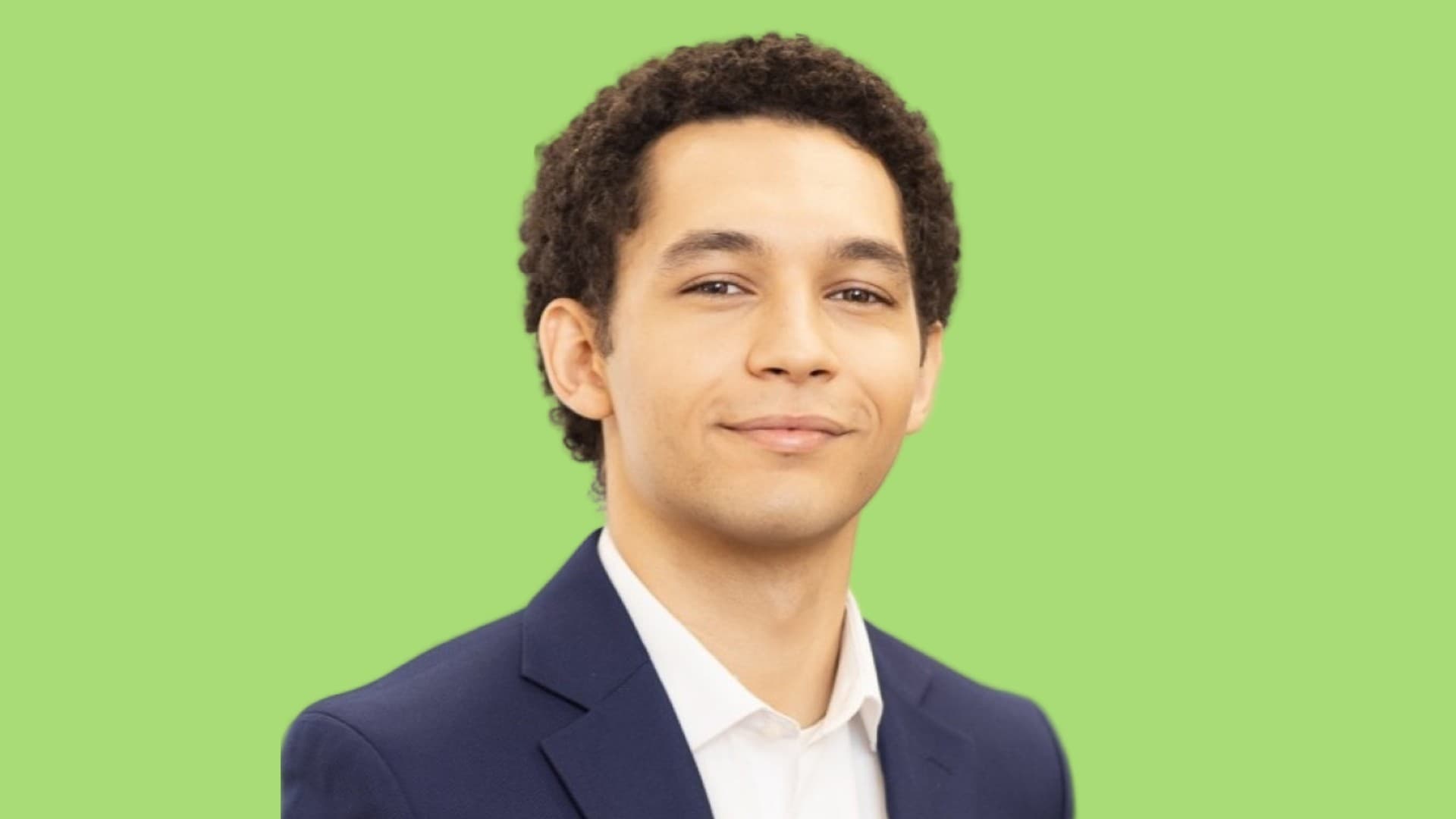
Meet Olivia, a computational biologist who loves spotting patterns in data, sharing discoveries, and helping shape new medicines.
I am Olivia. I live in London and I'm a computational biologist. So I'm essentially a scientist who works at a pharmaceutical company to analyse biological data.
I would say most of my time at work is spent coding and analysing patient and biological data. We use different kind of computational tools to try and spot patterns in the data and discover new insights.
But a big part of my job is sharing the insights so that I can kind of share with the team what we found from the data. So I spend a lot of time making presentations and speaking to people in the organisation about what we found and what we should do next.
One thing about my job is that I have lots of flexibility in how I work. So I really do get the trust to structure my day how I see best. And that's kind of to a degree. So there are meeting slots that I can't move, but around those meetings I can structure my day how I want.
So a typical day would look like I'd log on to my laptop. I'd see what the meeting structures look like. And around that, I tend to look at what projects I'm working on and where my deadlines are. And then I'll structure some focus time in between those meetings so that I can get the work done.
But really important to me is that I always have time to exercise during the day. So I'll always take time to go for a walk or go to the gym. And my job is one that allows me to do that.
I work with a core team where we're focused on the same type of analysis and the same disease area, but we're part of a much larger organisation. So it's kind of like a Russian doll, if you like, we're this small team within a bigger team within a bigger team, and it just keeps going.
And we're all focused on the same goal of developing new medicines, but just in slightly different ways with different expertise.
I think the best thing about my job is that I get to work on new discoveries. So this is data that's never been generated before. It's new stuff. We can find new insights from it and then go on to do newer things after that. It's just the novelty of it all.
It's really exciting to work in an industry that's focused on new discoveries.
I think the hardest part of my job, and this is a bit technical, but it's trying to balance doing really creative and fun analysis and getting really deep into that and kind of rabbit holing and spending ages trying to find something new, but also balancing it with you work for an organisation that ultimately wants to make profit so you can't spend all day just doing what you like because it's interesting.
There's organisational structure and focus that you have to align to and a lot of the time the industry will change priority very quickly and you have to drop whatever it was you were doing and switch to what we're now focused on so that's probably the hardest part is drawing yourself away from something you're really excited about.
So my journey is slightly unconventional in a way, but it's also conventional.
I had my son when I was 17. So I was 17 years old when I had my son and I applied to go to university and I got in. So I started university at 18 with a one-year-old and I did biomedical sciences.
And at the time, I kind of just thought, I'm going to work in a lab. That's what I'm going to do. Because I didn't know what was possible within the realms of science. You think science, you think white lab coat, you think you're going to be doing experiments.
But as the trajectory went on, I ended up doing a master's where I discovered that I could actually do data analysis. And this was a really rapidly developing field of coding and bringing large data sets into findings that we could share.
And from there, I went on to do a PhD. And that was where I really had four years to kind of go crazy on data analysis.
And I ended up deciding at that point that I wanted to not work in a university, but work for a company that's developing medicine so I could be closer to kind of turning those discoveries into something that would affect patients' lives.
I think it's helped massively, but I think it helped that I was very curious and I really wanted to learn.
Like I said, I had my son really young, so that would have been a perfect time to say, I can't go to university, I can't do this. But actually, I think the want to learn and to do something overrode that.
So while it was difficult and I did my degree and I also had part-time jobs and things like that at the time, I think my willingness to want to learn and to contribute to something was bigger than that.
So the education was paramount, but I think what was bigger was me wanting to learn.
I think our job is ultimately about trying to uncover what's going on with disease. So it affects the world around us because there's so many ailments that are affecting human health and we're just trying to unpick parts of that to try and improve human health every day.
I think the moment I'll never forget is right now. I think we're on a precipice of a really exciting time with AI. And the things we can do now in science and in research are so incredible compared to what we could do years ago.
You know, I would spend ages writing code and peer reviewing and copying code from other people so that I could adapt and build on it. And that would take months. And we can do that now in minutes.
And I mean, if we get this right, obviously there's a lot to balance with AI and doing it properly. But if we get this right, I think the changes we're going to see in human health in the next few years could never have been seen before.
So I think this is the time that I'll never forget.
I think the advice I wish I'd had is to honour your personal skill set and your strengths. To not always try to do the harder thing because it's more impressive or, you know, it seems more difficult. So therefore it must be more successful. It must be more lucrative. That's not necessarily true.
And I think the genius that we all hold in us is really in our natural skill set that we bring to something. And we often overlook it because we think, well, it comes easily to me. So it can't be that useful.
But actually, I think that's where you should really try to override this desire to do the most difficult thing and do the thing that you're good at.
Related careers


Related subjects


You might also like
This page contains original content developed by Coffee With Ltd. You may share this page as a link but you must not copy the content or use it with AI tools. All rights reserved.