Stephanie Holt
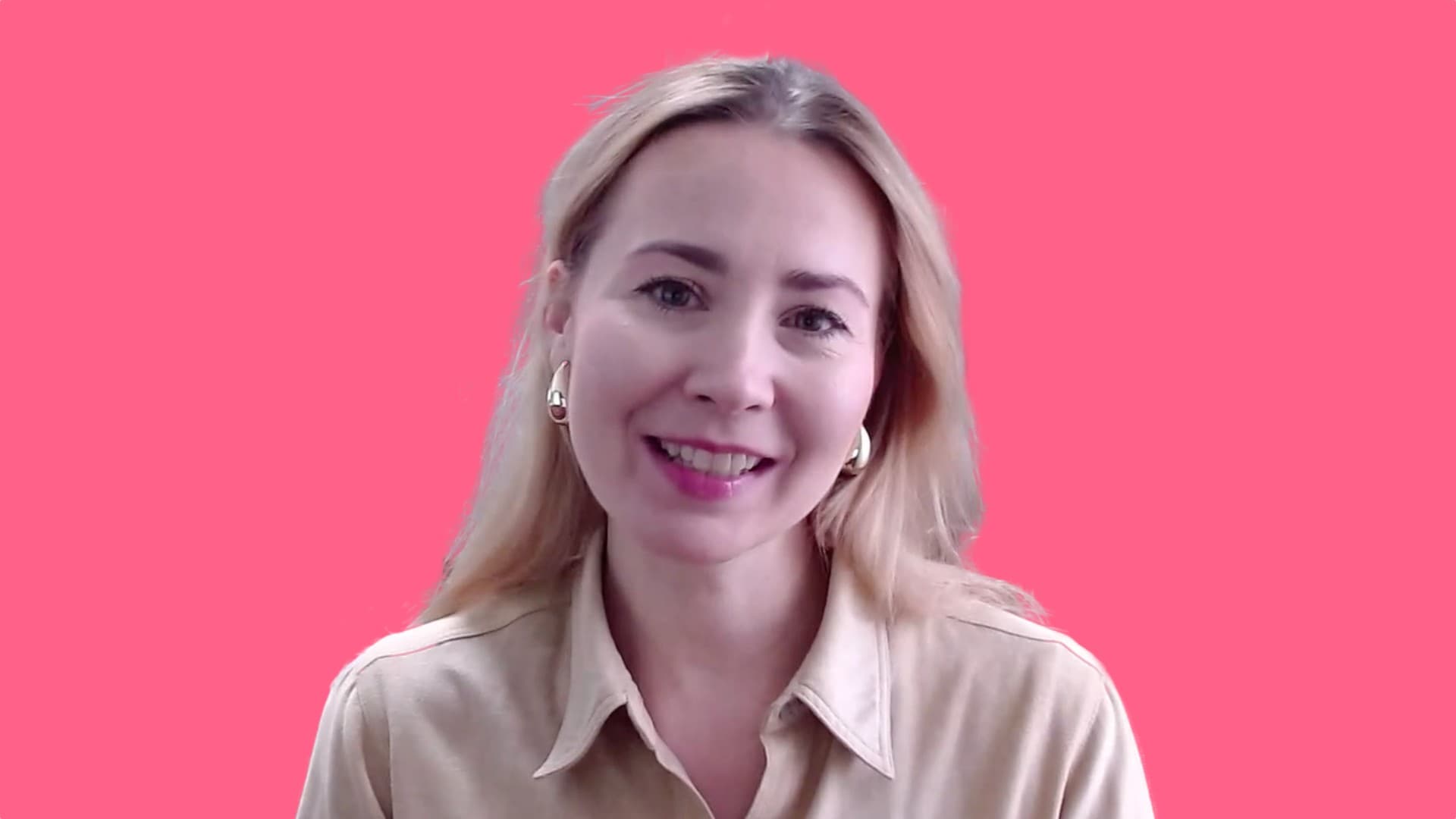
Meet Stephanie, an ecologist and historian who loves uncovering nature's secrets, inspiring others to explore wildlife, and delving into the history of science.
Hi, my name's Stephanie Holt. I have a bit of a split career because I'm both an ecologist at the Natural History Museum in London and also a historian as well.
That's a really hard question because my days are so variable.
To be honest, I spend a lot of my time reading and writing at the moment because I'm writing a lot of research papers on some of both my scientific work and also on my history work as well. So a lot of writing right now.
So my jobs are really varied, which is something I absolutely love.
Like I said, at the moment I'm doing a lot of writing, but also as a historian, I might be in archives in say the British Library or in Oxford University, somewhere like that, delving into some of the letters and correspondence of the historical figures in science that I work with.
But in my day job over at the Natural History Museum, I might be working with colleagues to develop new training courses to look at new ways of identifying species and tell people about them.
But also I might be working on some of our research on using new techniques in genomics to help us to identify species and how that affects conservation.
So I've got a great team that I work with at the Natural History Museum and actually I work with colleagues right across the museum.
The brilliant thing about my job is that I get to draw on colleagues from everywhere from paleontology to entomology, so people working with insects, people working with fossils and our colleagues in botany as well, people working with plants, trying to develop interesting and exciting new ways of getting people interested in ecology and studying the natural world.
So I get to work with a whole range of people there, which is brilliant, which means I also get to explore all their collections and what they're excited about too.
And then over in Oxford, where I'm doing my doctorate, I get to work with some of the most eminent historians in the world and they get to inspire me and encourage me. And I get to just develop new ways of thinking about the history of science as well.
It's so varied. No day, literally no day looks the same. I'm always delving into exciting things.
Most recently, I've been dealing with some of my colleagues over in palaeontology about some incredible finds in the palaeontology collection, tiny little fossil corals, which are about that big, which were first discovered in the 18th century but actually have really important conservation stories to tell about our oceans right now as well, so that's super exciting.
Right the way through to, I am sat at my desk right now with a giant Antarctic sea spider just off view here, right on the corner of my screen, because next week is British Science Week and I'm doing lots of events with schools looking at that and getting to use collections and talk about some of the weird and wonderful and amazing things from around our planet. So we've gone for some of the most incredible invertebrate species from some of the deepest, strangest, most extreme environments in the world.
Juggling everything. I do a lot.
I'm working with, I'm working across a whole suite of different fields and this is entirely my fault because I decided that I'm interested in too many things.
So making sure that I'm doing everything, making sure that I'm meeting all of my deadlines. I feel like I'm spinning lots and lots of plates all the time.
And yeah, sometimes that can be quite a juggle.
That's quite a long one.
So I've always been interested in wildlife since I was as small as I can remember, to be fair. I remember we had a visitor to my primary school when I was about five or six who came in and talked. He came from the Dorset Wildlife Trust because I grew up in Dorset. And he started telling us about all the wildlife that was in our school grounds. And it just got me hooked that there were all these amazing things just in my playing field at home, and things, and I just got addicted.
So I've been working with bats since I was 11 years old. That was probably my first sort of volunteer work with natural history and just got really fascinated by that. From there, I went to university eventually and still study bats, but also studied broader environmental things as well.
And then I did lots and lots of volunteering and lots of different aspects of British wildlife, and I ended up getting my first job after university with Hampshire County Council, working as an assistant ecologist for the newly formed Hampshire Biodiversity Information Center. So that was working with data and information and maps and things about where species were across Hampshire.
From there, I ended up as senior ecologist for Hampshire County Council, looking at how we best protect species in our county in terms of planning and housing developments and new buildings and things, making sure that species were protected.
From there, I became a lecturer at university and I became eventually a course director for a degree program myself. Meanwhile, also I did a master's course in biological recording and I did teacher training. So I have my PG cert, postgraduate certificate in education as well so I can teach, which meant you can spread the wonderful world of how fantastic ecology and natural history is.
I've also done private consultancy, running around the world, which is a fantastic job actually, because you get to run around chasing wildlife and call it a job. That's where you really can get into field ecology, doing bat surveys all night and running around chasing great crested newts and dormice and badgers and all sorts of brilliant things. That was great fun.
But then from there, I ended up at the Natural History Museum and you cannot, as an ecologist, turn down the offer of a job at the NHM because it is the best office in the world. It's amazing.
So I've been working there for nearly 13 years now, developing training programs to inspire more people into studying the wonder of British wildlife, but also increasingly working on some of our core research projects, looking at how we do conservation in Britain based on some of the new tools and new techniques we have for identification, looking at DNA.
But working at the Natural History Museum also hugely inspired me into the history of our subjects, the history of ecology. And that's sort of gone a little bit crazy because I'm now doing a doctorate as well as working, looking at particularly how naturalists in the 18th century talked, networked, communicated and how that actually developed some of the core fundamental bits of our science.
So yeah, the career path of a complete mad woman, I think possibly, but there's a lot going on.
My schooling was great. I had really fantastic teachers. I don't think any of them were necessarily interested in wildlife in the way that I was.
And certainly I found, for me, I found biology a little bit uninspiring. So I didn't actually do biology A level. I did geography though, and geography really, really interested me, understanding landscapes and the interconnection of landscapes and how people change environments and things really came through for me in geography.
And I had a fantastic couple of geography teachers when I was at school who really, really helped me to see the connection between geography and science. So that was really interesting for me.
Then, yeah, so it was that more that sort of combination of geography and science, which really worked very well for me.
And I was, yeah, I worked really hard. I got some pretty good A-level results and then could head off to university and start exploring those concepts a bit further when I got to university as well.
That's a great question. That's a brilliant question. Okay, how does my job affect the world around me?
So in terms of how my job impacts the world, it's fantastic. It's probably easier, I guess, in a little way around my work with the Natural History Museum.
So there's two strands to that. I get to inspire people every day. I get to tell people about natural history, what natural history is, why they should be interested in it, and how they, most importantly, how they can be interested in it as well. How to start exploring the natural world, which for a lot of people, particularly people who are in towns and cities, going out, trying to identify wildlife and things like that, can be, it can be quite daunting to go out for the first time, to not know what anything is.
We like to know what things are and to not have a clue can be really quite daunting. And I think it does put a lot of people off but actually there's some really nice, easy progressive steps you can do to start exploring the natural world.
And I really enjoy that side of it, getting people on those first steps and then taking them further and further and further into exploring the natural world. Because David Attenborough is absolutely right. We don't protect what we don't know about. We need to know about these things.
Everybody needs a little bit of natural history, I think, in their lives, even if it's just something they do as a hobby and isn't something they do as a career. But importantly, with that knowledge, we can learn to love, we can learn to care about our natural environment and the species that are within it.
But also as well, we can, all of us contribute to science through understanding a bit of that, the natural world. We can all participate in community science projects, things like the RSPB's Big Garden Birdwatch. We can all get involved in that with a little bit of identification knowledge right the way up to, if we get really, really good, we can really start to influence science through our records, through our biological records.
And getting people, getting to see people change and develop their skills is something I find personally incredibly rewarding. But I also know that they will go out and have such an impact on what we know about our natural world, how it's changing and critically how we can actually change that change, how we can actually make the biodiversity crisis more understood, but also something we can work on and get better.
So that's what inspires me about it. And that I think is the biggest change.
There's so many. There's so many. A moment in my career I'll never forget.
Getting my first pass into the Natural History Museum, my first set of keys into the Natural History Museum, you never forget that.
I think also from a history side of things, getting to work with some of the incredible materials I do, getting to discover incredible things locked away in little archives and things like that. That's always an absolute treasure, getting to read things, people's letters for the first time, they haven't been read for hundreds of years perhaps. I find that inspiring. Every single time that's always a big wow.
But yeah, I think it's got to be getting the keys to the Natural History Museum and going, I'm allowed in, it's real. It was incredible.
What advice do I wish I'd had when I was younger?
I would say that it's fundamentally, it's pretty okay to be a nerd.
It does you really, really well to follow what you're passionate about, what you're interested in.
And you'll do really well if you really do follow that passion. Being a nerd's great.
Related careers


Related subjects


You might also like

This page contains original content developed by Coffee With Ltd. You may share this page as a link but you must not copy the content or use it with AI tools. All rights reserved.