Jim Harris
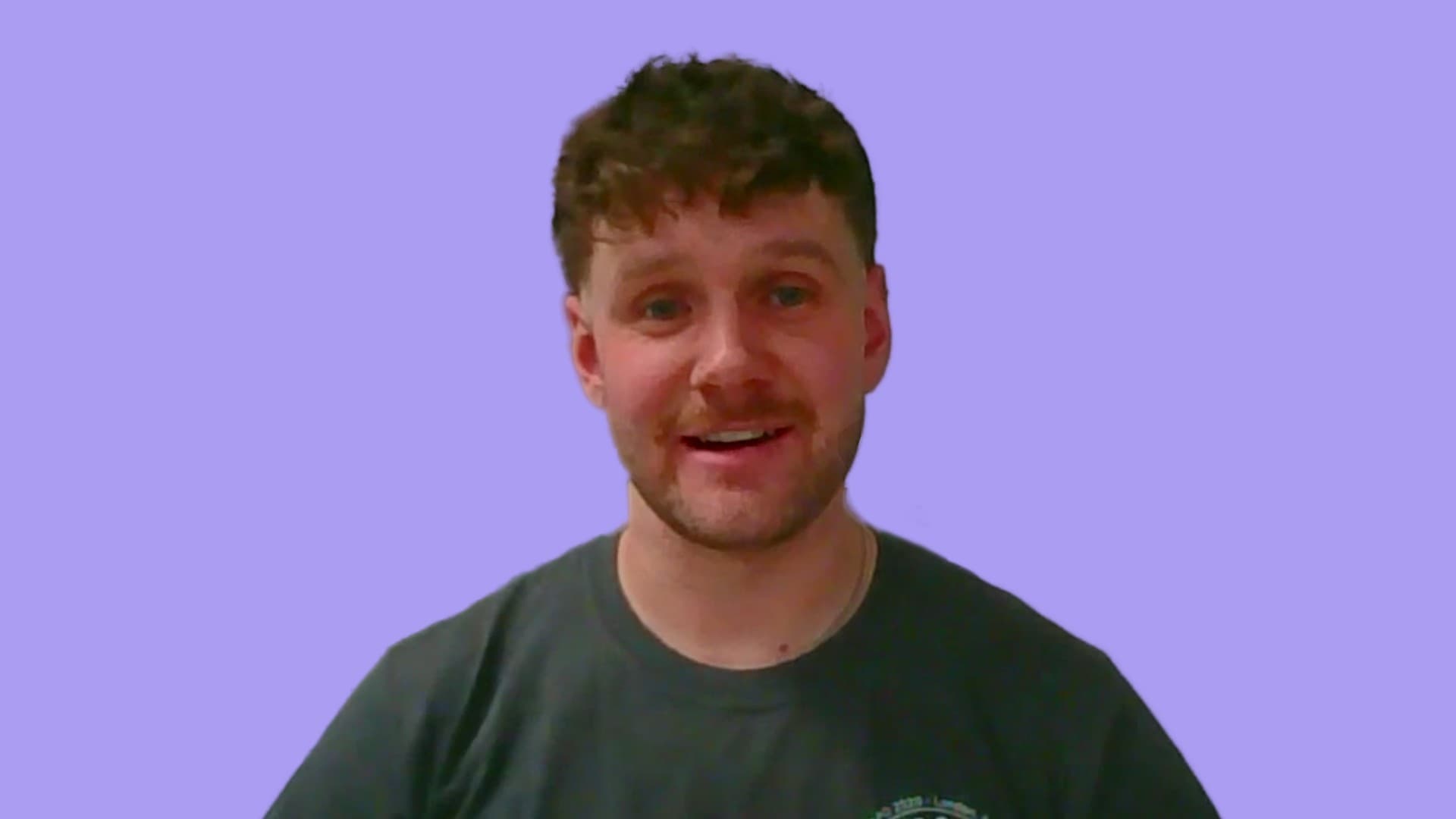
Meet Jim, a field archaeologist who loves working outdoors, unearthing treasures, and imagining the lives of those who came before.
So hi, I'm Jim Harris-Berry. I'm currently in Bedfordshire and I am a field archaeologist.
Well, the short answer is we dig holes. So we look at archaeology underneath the ground and we basically record it.
We gather our results that we find and then we put together a story of what was happening in the area hundreds, sometimes thousands of years ago.
So a typical day, we start by heading to our job site. That can be anywhere around the country, really.
We get there. We have a plan set out for where we're going to be digging. So this can be anything from ditches to pits, sometimes buildings.
And then we spend most of our day just digging these features, sometimes finding cool stuff, sometimes finding nothing.
And then we record these features, usually by taking photographs. And we then do drawings as well to show our sections, so the profile of the ditch or the feature.
And then once we record it, we then do paperwork. It doesn't sound very exciting, but it's a very important part. So initially, that tells us what we've just done, what our interpretation of it is.
So people can come back, look at all this information, and basically help build the picture of what's going on on this site.
So there's a big team of us. We range from graduate trainees who are just starting out in their career up to field archaeologists.
And then from the field archaeologists perspective, we have assistant supervisors, supervisors, and then project officers.
The project officer will be the person who is sort of in charge of the site and runs it day to day. They sort of deal with more of the, I don't want to say boring stuff, but more of the logistical things that are going on.
And then, so I'm currently an assistant supervisor. So I have a bit more responsibility in making sure other staff are okay, helping people to, if they have any problems or queries. Sort of running part of the logistical side of things as well.
So we have like mechanical excavators on site as well who take away all the topsoil and subsoil for us to get down to the archaeological layer. So part of my job is to watch those guys and make sure the level's correct so they're not either leaving too much on the top or they're not digging away archaeology that we need.
So there's a big range of us and then we have an office based team as well. So we have project managers who run the whole scope of the project. We have logistics guys who make sure all our tools and stuff are on site that we need. We have an environmental team, a finds department and lots of other people sort of in the background who keep the company moving smoothly.
Honestly, I feel like that question sort of changes over how long I've been there. It can range really.
The best thing I think at the moment I really enjoy the variety. And so, you know, not every day, the same, you can kind of you can turn up to site, you might dig something that, you know, is a little bit boring. You might dig something which is incredible, you know, you find some really cool stuff.
So I do a lot of metal detecting for the company. So I'm really interested in the metal finds from various parts of history. I feel like these tell a fantastic story on their own. They're very personable.
Sometimes when you're digging up a coin or even something very, you know, just a piece of pottery, for example.
Knowing that sometimes you're the first person to hold that artefact in, you know, potentially thousands of years is a pretty cool, pretty cool thing to think about.
And it also makes you think about the last person that held that, you know, who were they? What were they like? It's the closest thing you'll get to the past. It's amazing.
So it's very physical. It is essentially, you know, manual labour for eight hours a day.
It can be very, very tiring. You know, you are glad to get home sometimes at the end of the day.
And also, I would say one of our biggest challenges is definitely the weather. So we're out all seasons, you know, whatever's going on outside, we're out in there digging.
So sometimes when it's absolutely pouring down with rain and you're covered in mud head to toe trying to dig the bottom of a ditch which is, you know, you're knee high in water.
Sometimes does sit there and make you think about your career choice but we wouldn't be doing it if we didn't love it, you know. After when you come home and have a hot shower and sit down with a cup of tea or a beer or something, it's very rewarding.
So I probably didn't go the traditional route into getting into this job.
So I actually studied at university. I did an undergrad degree and a master's, but they were quite different to archaeology. So I did zoology for an undergrad and then I studied human evolution as a master's.
I'd just finished my master's degree and was kind of job hunting, looking for my next steps. I took up metal detecting as a hobby, something I was going to try. And just absolutely loved it.
Like it was amazing, really, really interesting, very, very calming, great for mental health. You're just kind of out in the field on your own with a friend for the day, digging up awesome stuff, and then you get to go home and research this stuff.
The company I currently work for were hosting an open day in the next town along from me. So I just went along to that to see what was going on there. A lovely Roman settlement that they found and they were showing people around.
I brought some of my metal detecting finds with me. I was due to have them recorded with a museum, but I just thought a group of archaeologists here, so why not show them the cool stuff that I found too.
I got chatting to a few people and they asked what I was currently doing. Just said I'd finished the masters and they were like, well, we have a graduate trainee scheme at the moment where if you've just finished a degree, you're more than welcome to apply for a job with us and we train you up for six months.
If you enjoy it, you then progress on to field archaeology. So I put an application in and then started maybe like a month later and haven't looked back. It's been brilliant.
I think there's probably a few. I think probably the one that sticks out the most at the moment is actually my first day on the job where we were in a site in Essex. I think it was a Bronze Age, Iron Age site.
And on my first day, I dug a double burial. So excavated two skeletons that were buried together, which, funny enough, doesn't happen all that often nowadays.
You sometimes come across these things in sites, but whether or not you get to dig them is kind of here or there. So having that on my first day was pretty incredible.
So I feel like I would tell myself not to necessarily listen to what people tell you in terms of, you know, career choices.
I knew that when I was much younger, probably primary school age, archaeology was something that I did look at getting into. Always had it in my head that that's what my career choice was going to be.
And then I just had quite a lot of teachers, who would be like, you know, it's not a very well paid job, you need to be very clever to be able to do that, you know. Kind of putting a lot of doubt into my mind.
So I kind of grew up thinking that that wasn't an option that was available to me. And that's something that I would say to anyone, don't take all of that stuff to heart.
You know, life has a very funny way of taking you off in different directions and different branches.
You know, if it's something that you really want to do, just go for it. Put your mind to it. You'll be surprised at how accessible a lot of these things are.
Related careers


You might also like

This page contains original content developed by Coffee With Ltd. You may share this page as a link but you must not copy the content or use it with AI tools. All rights reserved.